

 May 2014


Transistor arrives like a moody neon poem wrapped around a giant, mysterious sword - and yes, the sword is emotional. You play Red, a popular singer in the artful, slightly melodramatic city of Cloudbank, who starts the game by kneeling beside a fallen man clutching the titular Transistor. That scene sets up everything: your voice is stolen and trapped inside the weapon, the man's consciousness becomes your companion (and narrator), and the city starts turning into an uncanny blocky playground courtesy of a robot invasion known as the Process. Supergiant Games (the tiny studio that also brought you Bastion) made Transistor with a remarkably small team and a very large sense of style. The game blends real-time action with a tactical freeze-frame called Turn() that lets you plot wonderfully savage outcomes while moody synths and acoustic bits hum in the background. On PS4 it feels polished, intimate, and surprisingly tactical - like playing chess while wearing headphones and an emotional scarf.
Transistor's combat is the sort of mashup that sounds suspicious on paper and brilliant in practice. You run around isometric cityscapes and face the Process in both live battles and a frozen planning mode called Turn(). Hit Turn() and time slows to a stop long enough for you to issue a series of precise commands; it eats the action bar, which then refills slowly, so there's a pleasing give-and-take between patience and panic. Use Turn() too often and you get left watching your action bar like a teenager looking for Wi‑Fi. The Transistor itself is a toolbox of mayhem. Functions - 16 in total - are pulled from defeated foes and installed into the sword. Each Function has multiple personalities: it can be slotted as an active attack, combined as an upgrade to change how another Function behaves, or set as a passive that quietly does work in the background. Want a decoy that distracts robots while you snipe? Slot Spark() as passive. Want that same Spark() to split another attack into fireworks? Fuse it. The system is designed to encourage experimentation rather than encourage you to babysit a single overpowered combo for 20 hours. It borrows a little inspiration from card and strategy games - Supergiant mentioned Magic: The Gathering and tactical classics like Final Fantasy Tactics and Fallout in their design notes - and the result is a compact, elegant 'build' loop that rewards creativity. If you like tinkering, Transistor gives you meaningful toys: Limiters, which are optional debuffs you can wear in battle to earn extra experience, let you play at higher difficulty on purpose (for bragging rights or XP farming). Functions and Limiters also double as lore dispensers: play with them enough and the Transistor reveals backstory crumbs. That means learning new mechanics actually feels like learning more about the world and its people, not just unlocking another button to spam. The pacing is deliberate. Battles range from quick, twitchy encounters to slow, methodical duels where one bad move means a trip back to a checkpoint. Red earns experience and new abilities after fights, and the game funnels you through locations like Goldwalk, Highrise, and the increasingly processed parts of Cloudbank. Boss encounters are memorable - the Spine, for example, is the kind of giant enemy that demands respect and pattern memorization. Story-wise, the game keeps things deliciously mysterious. You learn that the Camerata, a cabal of administrators, engineered a way to 'integrate' influential citizens using the Transistor. The Process, initially a tool, eventually spirals out of control. As Red you confront members of the Camerata, discover their suicides (grim), and ultimately face choices that are morally messy and narratively satisfying. The ending - bittersweet and cinematic - ties the themes of voice, sacrifice, and reconstruction together in a way that will make you punch the air and then sit solemnly on a bench for a while. If Transistor had a subtitle it would be "Pretty Strategy for People Who Like to Feel Things." It's approachable enough for newcomers to tactical thinking, but deep enough that seasoned players will keep mixing Functions to see what new synergies they can find.
Art director Jen Zee and her tiny army of pixels turned Cloudbank into a stage set where Art Nouveau meets sci‑fi. The environments have that romantic, anachronistic flavor: elongated shapes, decorative patterns, and an elegant use of gold that makes the city feel like it was designed by a futurist couture house. The isometric camera is sharp and lets you appreciate the detail without getting lost in camera gymnastics. Visually, Transistor favors style over hyperrealism. Enemy designs are distinct enough that you can instantaneously tell what kind of trouble they're likely to cause, which is important when your tactical brain is trying to remember which Function to throw at which problem. When the Process 'Processes' parts of the city, those areas transform into blocky, almost minimalist white facsimiles of themselves - an unsettling but artistically satisfying way to visualize corruption. Audio is where Transistor really flirts with perfection. Darren Korb composed an electronic/post-rock soundtrack that mixes electric guitars, harps, accordions, mandolins, electric piano, and synth pads into something that feels equal parts haunting and comforting. Vocals from Ashley Lynn Barrett add a human element to tracks like "We All Become," and Korb even applied an EQ filter to the music during pause and Turn() menus to give it a distant, dreamlike quality. The soundtrack sold tens of thousands of copies in the first days after release, and it's easy to see why: the music isn't just background dressing, it actively shapes the mood of every scene. On PS4 the mix is clean, and voice work - particularly Logan Cunningham as the man's voice inside the Transistor - adds a delightful narrative breadcrumb trail throughout your journey.
Transistor is the kind of game that sneaks up on you with a gentle, stylish shove. It blends action and tactical planning in a way that feels modern and thoughtful, wraps the mechanics in a gorgeous Art Nouveau sci‑fi aesthetic, and backs it all up with a soundtrack that might legitimately be on your "feels" playlist. The narrative isn't a spoonful of clarity; it's more like a jar of memory jam - fragmentary, poetic, occasionally frustrating if you demand literal explanations, but ultimately satisfying. There are a few nitpicks. The story's mystery-first approach can feel a bit too cryptic for players who want every breadcrumb spelled out in neon. Also, the linear progression can make the loop feel repetitive if you're the sort who craves open-world wandering. But those are small complaints in a package that sold over a million copies by the end of 2015 and picked up a stack of awards and nominations for its art and audio. If you own a PS4 and enjoy games that reward experimentation, look great on a TV, and sound like your dreams got a soundtrack, Transistor is a strong buy. It's smart, stylish, and surprisingly touching. Plus, where else can you wield a glowy sword full of other people's memories and still get to feel like a tactical genius? Play it, listen to the music, and maybe - just maybe - don't get too attached to your voice. It might have plans of its own.
 Pyre on PS4
 NFL Quarterback Club 97 on PlayStation
 Coloball 2002 on PS2
 Combat Elite: WWII Paratroopers on PS2
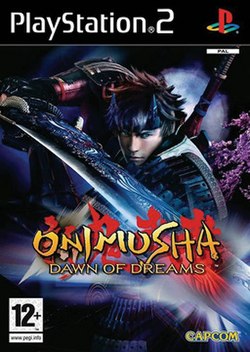
 Onimusha: Dawn of Dreams on PS2
 Disney's Chicken Little: Ace in Action on PS2
 Hades on PS5
 Bastion on PS4
 Bastion on Switch
 Hades II on Switch 2










 Another SquareThought Site