

 Feb 2016
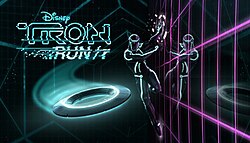

If you've ever wanted to sprint through a fluorescent cyber-grid while bobbing and weaving around laser barriers and very judgmental light enemies, Tron RUN/r is the virtual jogging program you didn't know you needed. Built by Sanzaru Games and stamped with the Disney Interactive Studios seal of neon approval, this little arcade runner straps you into a sleek disc-toting avatar and asks one simple question: how long can you not faceplant into the future? It bills itself as an "action arcade" game and, true to form, it's basically Temple Run with a glowstick set to maximum. The result is a short, punchy experience that captures the franchise's aesthetic and pairs it with a pulsing electronic soundtrack - which, yes, includes work from Giorgio Moroder, so even your grandma's disco playlist would approve.
Tron RUN/r is an endless runner at heart, which means the controls are refreshingly uncombed: run forward, slide left or right, jump, and hit things with a light disc when the game very politely allows you to. Levels are framed as short runs through the Grid where timing and reflexes decide whether you become a legend or a smear of pixel confetti. The pace is relentless in the best way - you're never given time to brood about life choices; you're far too busy avoiding electric fences and chasing combos. There's a surprising bit of tactical thinking tucked into the arcade sheen. Collectible mods and upgrades let you tweak your run: some shifts make you faster, some boost your score, and others change how the light disc behaves. This turns the game from pure reflex sponge into a scavenger hunt for synergies. Want to survive longer? Prioritize defensive mods. Want to feel like an overcaffeinated DJ? Stack score multipliers and hit every flashy target in sight. Runs feed into short-term progression that helps a run feel worthwhile even when you die in ways that are simultaneously unfair and oddly poetic. Combat is minimal but satisfying. Your light disc is both weapon and grappling hook for timing-based interactions, and there are bits of the game dedicated to disc-throwing sequences that break up the running monotony. The design wisely keeps sessions bite-sized: a typical run rarely overstays its welcome, making this ideal for subway commutes where you want instant dopamine without sinking into a three-hour commitment. The soundtrack plays a starring role in how the game feels. Giorgio Moroder and Raney Shockne set a synth-heavy, high-energy tone that's then remixed by artists tied to Warp Records - so when you're barreling through a corridor of death, you're also blessed with music that could double as a nightclub's power anthem. The score isn't just background noise; it injects personality into otherwise repetitive loops and helps the grid feel alive. Where the game stumbles is the long game. Endless runners live or die by variety and meta-progression, and while Tron RUN/r offers customization and score-chasing, some runs begin to blend into one another after a few hours. The single-player mode is perfectly serviceable for short bursts, but if you're hoping for the kind of deep longevity that keeps you playing for months, Tron RUN/r politely suggests you see other titles. Critics took note: the game received mixed reviews and sits around a mid-60s score on Metacritic, which feels about right - it's fun, but not revolutionary. In short, gameplay is snappy and accessible with enough upgrade toys to keep things interesting for a while. It's an arcade snack: tasty, energizing, and best enjoyed in multiple modest helpings rather than one colossal feast.
Visually, Tron RUN/r is basically a love letter to everything neon. Using Unreal Engine 4, Sanzaru nails the franchise's signature glow: stark blacks punctuated by razor-bright blues, oranges, and cyans. The levels look like someone digitized an '80s nightclub and gave it a sci-fi makeover. That aesthetic works beautifully for an arcade runner because visual clarity matters - you need to see traps and gaps before your reflexes betray you - and the game balances style with function. There's also a pleasing variety in the set pieces, from sterile server-room corridors to wide-open arenas that scream "I hope you like dodging lasers." Particle effects are used liberally but not annoyingly; explosions and light trails feel tactile without turning the screen into visual mush. Character models are more about silhouettes than faces, which is both thematically appropriate and helpful when you're moving at blinding speed. If Tron RUN/r has a graphical Achilles' heel, it's that the flashy visual language sometimes hides a lack of depth in level design. The game shines in short bursts, but repeated runs reveal a limited pool of track chunks, so you'll occasionally get deja vu like a glitchy Spotify playlist. Still, for what it's trying to be - a brisk, stylish arcade experience - the graphics do almost all the heavy lifting, selling the illusion of being inside a glowing circuit board and looking cool while doing it.
Tron RUN/r is not trying to be an epic, sprawling narrative experience; it's a neon-flavored sprint session with a killer soundtrack and enough upgrade toys to chase scores like a competitive kid in a candy store. Sanzaru Games and Disney Interactive hand you an attractive, fast, and often joyful runner that nails the vibe of the TRON universe even if it doesn't quite reinvent the wheel. Some repetition and limited long-term variety keep it from being a must-buy, but for brief, electrified play sessions or anyone who wants to feel like a disco samurai for 20 minutes at a time, it's worth a spin. Score-wise, the game sits comfortably in the mid-6 range for good reason: it's polished, fun, and stylish but not endlessly deep. If you already love TRON's aesthetic or you're after a rhythmic, arcade-style runner with a banging soundtrack (did I mention Giorgio Moroder?), you'll get your money's worth. If you need a game to live in for months, this will be more of a bright, enjoyable fling than a long-term relationship. Either way, boot it up, crank the synths, and try not to fall off the grid - because when you do, the grid claps back with style.
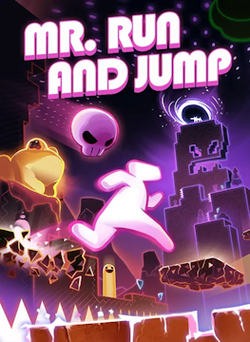
 Mr. Run and Jump on Switch
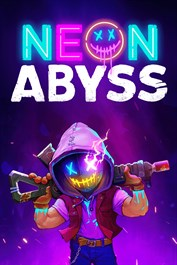
 Neon Abyss on Switch
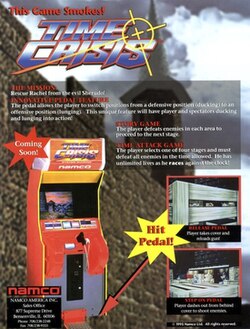
 Time Crisis on PlayStation
 Disney's Chicken Little: Ace in Action on PS2
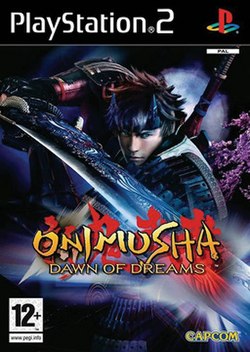
 Onimusha: Dawn of Dreams on PS2
 Oretachi Game Center Zoku: Rabio Lepus on PS2










 Another SquareThought Site