

 Oct 2024
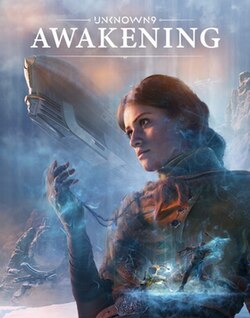

There was a time when a new adventure game arriving in the magazine postbag made you sit up, check the date and wonder whether you could afford another late-night session. Unknown 9: Awakening arrives waving the flag of transmedia ambition - a bruising, globe-trotting yarn stitched to podcasts and comics - developed by Montréal's Reflector Entertainment and published by Bandai Namco. It plants itself in northern India in the early 1900s and asks you to step into the shoes of Haroona, a Quaestor with psychic tricks, an airship called the Morning Star, and a serious vendetta against a fellow mystic named Vincent. British actress Anya Chalotra lends her face and motion to Haroona, and the makers throw in body-swapping, clairvoyance, and a Fold-dimension for good measure. The intent is grand; the execution is uneven.
If you grew up on third-person adventuring, Unknown 9 will ring familiar bells. You navigate environments from a shoulder-high camera, trading between melee, some ranged confrontations and stealth. The combat is serviceable rather than inspired - it has the occasional rhythmic beat where a successful parry or psychic shove feels satisfying, but too often encounters dissolve into repetitive button-pressing or clumsy enemy aggro. The stealth mechanics offer an alternative to direct conflict, and on a good run the game rewards patience and planning. On a bad one, poor AI and inconsistent detection make stealth less a tension-filled sleuthing exercise and more a dice roll. What sets Awakening apart - and what it should be praised for even in its more ham-fisted moments - is the suite of Umbric abilities. Haroona can tap into invisibility, possession and a body-swap power that allows her to inhabit other characters or bodies to open new traversal and puzzle options. Clairvoyance works as a practical tool; it peels back the veil on enemy positions and map hints, which is handy when the level design wants you to scout before storming. These powers are the game's most interesting toys, and they provide genuine narrative coupling: you feel like a mystic and not just a swordswoman wearing a cloak. Where the gameplay falters is in polish and depth. Several reviewers observed a 'low budget' sheen, and they were not wide of the mark. Encounters are padded with padding; the level gating sometimes forces fetch quests under the guise of 'investigation', and technical hiccups - collision oddities, awkward animations or moments of jank - interrupt immersion. The body-swap and psychic suite need more mechanical investment: after a handful of clever uses, the game leans on them to carry the story rather than evolving them into a broader systems playground. The game does, however, include a multiplayer mode and a handful of optional challenges that extend playtime for completionists, though neither elevates the core loop markedly. Narratively, Awakening does better than the mechanics. The story gambit - civilizations rising and falling in endless Cycles, nine immortals called the Sahin manipulating history - is the sort of pulpy, mythic conceit that 1990s magazines admired for ambition. Haroona's quest to avenge her mentor Reika and her eventual discovery of the Morning Star crew (Luther the old cowboy and Buchra the engineer) gives the plot a ragged, likable cast. The twists - Vincent's scheme to free a Fold entity named Seshin, Reika's uneasy alliance, and Haroona's eventual ascension into the Unknown 9 - are serviceable and often intriguing, even if they occasionally overreach for thematic heft. Critics who praised the game tended to point to this story-driven backbone as the title's saving grace.
Rendered in Unreal Engine 4, Awakening exhibits a tug-of-war between cinematic aspiration and budgetary reality. Some vistas - sun-stuffed deserts and the grime-and-brass of Vincent's lairs - can be genuinely striking when the light catches them right. Character faces, thanks to Anya Chalotra's body- and motion-capture, deliver personality and an often compelling performance. The motion capture reportedly used traditional directorial techniques, and that effort shows in several cutscenes that land emotionally. On the other hand, texture pop-in, occasional character-poly oddities and a handful of animation slips remind you this is not a triple-A behemoth. Multiple outlets compared the game's visual fidelity and polish unfavourably to larger productions and described a 'bargain bin' feel in places. It's fair: the art direction is frequently imaginative and the world design carries charm, yet the finishing - lighting consistency, NPC animations, and collision - is where it loses composure. Technical reviews were blunt: a few good ideas cannot always paper over the rough edges of execution.
Unknown 9: Awakening is a curious artifact: an ambitious transmedia seed planted in an uneven soil. It is a story-first adventure with a handful of genuinely clever mechanics - the Umbric powers are rewarding when allowed to breathe - and a narrative voice that likes to play with myth and pulp in satisfying ways. Yet the playing field is littered with quality-control issues and a lack of mechanical depth that would have been forgivable if the rest of the package felt tighter. The critical consensus landed firmly in the 'mixed' column, and commercially the game underperformed, leading Bandai Namco to cancel planned sequels and Reflector to reduce staff. For a player seeking a narrative outing with occasional sparks of brilliance and a taste for mystical adventure, Awakening is worth a rental or a sale-price purchase. For anyone wanting a smooth, mechanically rich, fully polished blockbuster experience, this title will feel like a project that bit off more than it could chew. It earns respect for its guts and concept - a trait old-school reviewers admired - but not enough polish to recommend without reservations.
 XCOM: Enemy Unknown on PS3
 Unknown 9: Awakening on Xbox Series X/S
 Tintin: Destination Adventure on PlayStation
 Disney's Chicken Little: Ace in Action on PS2
 One Piece Grand Adventure on PS2
 Taiko no Tatsujin: Dokodon! Mystery Adventure on Switch










 Another SquareThought Site