

 Jun 2017
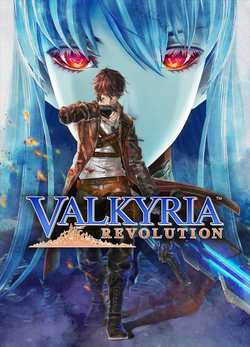

Valkyria Revolution is the franchise's attempt to stop being the cute watercolor tactical JRPG cousin and instead aggressively bench-press its way into real-time action-RPG territory. On PS4 the result is an interesting catalogue of design experiments: a squad-based action system that borrows strategy optics, an AI priorities scheme to manage companions, and a deliberate art pipeline called the Gouache Drawing Engine intended to sell a painting-like aesthetic. It arrived to mixed reviews that praise the ambition and music but complain about gameplay friction, story delivery mechanics and a suspiciously large number of loading interruptions. This review dives into the nuts and bolts - the systems, the pipeline choices, what the demo changed mid-development, and where those technical choices either sing or grind your controller into a sad, sticky paperweight.
At the mechanical core, Valkyria Revolution replaces the turn-based, command-point choreography of Valkyria Chronicles with a single-character-at-a-time, real-time action loop that still tries to keep one foot in strategy. You bring a four-person squad to each mission (shocktrooper, scout, shield-bearer, sapper by archetype), control one avatar directly, and influence allies via a pre-battle "Priorities" system. That architecture is interesting from a systems-design perspective because it attempts to trade direct micro-management for high-level tactical directives: instead of queuing precise actions you tune ally behavior ahead of time and then adapt on the field. The team pushed several technical mechanics to make that hybrid feel tolerable. An action gauge for allies and enemies gates activity windows, which prevents the battlefield from becoming an unpoliced blender of input spam. There is also an option to freeze time while using weapons or abilities - effectively a tactical slow-down that gives players a temporal affordance to target or chain attacks. Those are explicit concessions to the player: they acknowledge that an action-RPG that wants strategic weight needs pausing or gating to allow decision-making. The game introduced these features after a public demo and significant player feedback; the devs admitted the initial demo felt too action-forward and removed a lot of the strategic feel, so they added the gauge and the stop-time to restore some deliberation. Resource mechanics sit squarely in the strategic column. Each character carries a melee weapon (permanently assigned to that character), a long-range weapon, a grenade, and an item pouch. Long-range weapons and grenades have finite ammo that is only refillable by capturing strategic bases on the map. That design forces an objective-driven flow: capturing zones is not just about score or map control, it is logistics. It's a neat way to bind macro objectives to micro-tactics, and it creates decision tension - do you push deeper and risk ammo starvation, or consolidate your hold on resupply points? Weapon and alchemy customization lives at Basil's Workshop between missions; melee upgrades are persistent but consume alchemy resources instead of money, creating a second economy the player must manage. Alchemy is the game's magic system and is treated like a class-augmenting modular system: items equipped change cast effects and affinities. Sappers, for instance, lean on alchemy for long-range and area-denial roles. The decision to attach most melee weapon identity to characters while allowing ranged and alchemical loadout swaps creates a hybrid permanence vs. flexibility tradeoff. It's mechanically interesting because it anchors character identity (good for narrative and player attachment) while leaving the tactical toolbox open. Where design meets friction is in presentation and integration. The game leans heavily on cutscenes and story framing delivered by an in-world narrator/teacher device; several critics flagged the frequency and length of those interruptions as breaking combat flow. The permanent-death mechanic is another bold technical choice: death can have consequences on character-specific events, which is good for perceived stakes, but the team softened the blow by allowing retries. From a systems standpoint this is smart: you preserve the fear of loss while not permanently gating players from the full experience. Unfortunately, implementation inconsistency - heavy-handed cinematics, frequent loading screens - undermines the tension the systems are meant to create. When the punishment for losing is a long trip through menus and load bars, the emotional punch dissipates.
The Gouache Drawing Engine is the headline tech choice here. It's explicitly described as an attempt to reproduce a painting-like visual language: think brushstrokes, textures, and a slightly stylized palette intended to set the game apart from photoreal pushers. On paper that's a great idea - a non-photoreal pipeline can create distinct brand identity and mask lower-fidelity assets. The opening story sequences and some cutscenes were described as "gorgeous" in reviews; orchestral recording and carefully staged shots help with that polish. The soundtrack itself, scored and produced by Yasunori Mitsuda and recorded with the Tokyo Symphony Orchestra, massively boosts perceived production values, and Sarah Àlainn's vocal pieces add an unexpectedly cinematic finish. The problem is the mismatch between those high-production presentation moments and the day-to-day visuals and animation on the battlefield. Several outlets called the general graphical quality lackluster and critiqued cutscene animation and framing as subpar despite strong art direction. The gulf suggests the studio prioritized a small number of high-fidelity cinematics and a big-score audio pipeline while the core in-game assets and animation pipelines received less refinement. The result is an inconsistent visual experience: moments of real aesthetic craft bookended by middling in-engine animations and texture work. From a performance and UX standpoint, the frequency of loading screens is worth calling out as a technical design failure. Loading and scene transitions are not just annoyances; they are interruptions that erode both immersion and the impact of the tactical mechanics (base capture, ammo logistics, and permadeath). If a game's systems are tuned to create tension and you keep pausing that tension for technical overhead, the psychological architecture collapses. The demo-feedback loop that changed core battle mechanics is a positive sign of iteration, but it appears not all downstream pipeline issues (animation polish, transition optimization) were fully resolved before launch.
Valkyria Revolution is a fascinating case study in hybrid game design: it tries to marry real-time action with strategic scaffolding and makes a number of technically interesting choices to do so (AI priorities, action gauges, time-stop, logistics via base captures, and a two-currency upgrade system). The devs listened to demo feedback and adapted core systems, which is commendable. Where it stumbles is in execution and consistency: presentation moments and audio production are top-tier, but in-engine animations, pacing, and a high number of load interruptions dilute the gameplay experience. Critics were right to call out repetitiveness and the intrusive storytelling cadence. If you study game systems or like dissecting how UX and engine choices interact with design goals, this title offers a lot to chew on. If you want a tight, polished action-RPG experience on PS4, you will probably be left wanting. My score reflects that split personality: interesting and sometimes excellent in parts, but uneven enough that the whole doesn't quite cohere.
 Valkyria Chronicles 4 on Switch
 Valkyria Chronicles 4 on PS4
 Combat Elite: WWII Paratroopers on PS2
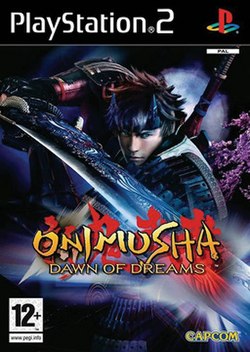
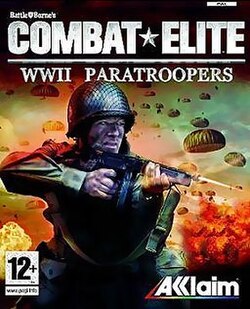 Onimusha: Dawn of Dreams on PS2
 Disney's Chicken Little: Ace in Action on PS2
 Tokyo Xanadu eX+ on PS4










 Another SquareThought Site