

 Aug 2018
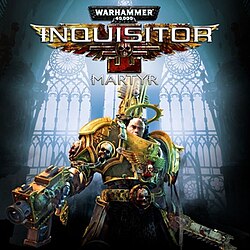

If you enjoy being told you are humanity's last hope while wearing an overcoat that costs more than your spaceship, Warhammer 40,000: Inquisitor - Martyr for PS4 has your number. NeocoreGames took the grimdark universe, shook it into a top-down action RPG, and handed players a pile of guns, psychic powers and moral ambiguity to stew in. The result is a faithful Warhammer experience: gothic, loud, and fond of shouting about Chaos while politely asking you to grind for another ten hours. The game launched for PS4 in August 2018 after a PC debut in June, and sits somewhere between Diablo-style loot scavenging and a narrative that occasionally remembers it has one. Martyr's strengths are its atmosphere and customization; its tempering factors are mission repetition, spotty technical polish, and a pacing problem that feels suspiciously like leg day for your patience. For fans of the setting, it's reassuringly Warhammery. For everyone else, it's an expensive hobby in which the hobby is pressing R1 and hoping for purple drops.
Martyr plays like someone carefully studying Diablo, then deciding it would be funnier if everything were ten times darker and contained more pointy bits. The camera is top-down, the combat leans heavily on action-melee and ranged-and there's an RPG backbone of levels, skills and number-crunching gear. You pick an Inquisitor class and outfit them like a small, grim crusade: Psyker, Crusader, Assassin, and (in the Prophecy expansion) the Tech-Adept who brings robot friends to the massacre. Classes feel distinct on paper. The Psyker casts battlefield-altering area effects and debuffs, which is handy when enemies refuse to queue politely. The Crusader is slow but tanky, perfect for players who enjoy being a moving wall. The Assassin trades staying power for delightful fragility and satisfying burst damage. The Tech-Adept, introduced in Prophecy, adds a summoning twist: if you ever wanted an army of tiny mechanical excuses to distract enemies while you loot, this is your class. Combat is also forgivingly chaotic. There's a cover system, which is unusual for an isometric ARPG and makes firefights feel a bit more tactical-until someone breaks the cover and everything becomes melee, screaming and rocket-propelled. Environments are destructible enough to justify shooting everything you see, which is good because the game rewards exploration and the occasional 'shoot-the-floating-gothic-statue' solution. Missions lean on the usual repertoire: clear this area, retrieve that artifact, and repeat-sometimes to the point where 'repeat' is practically the tagline. Martyr offers solo play and co-op. Solo suits players who enjoy sinking into customization menus and feeling morally dubious alone; co-op makes firefights resemble well-coordinated chaos, assuming your teammates don't accidentally lure a boss into a pit. The loot and progression systems are deep. If you like tinkering-respeccing, rolling drops, studying mod slots, rerolling perfection until your controller weeps-you'll be entertained for a long time. If you're on a mission for variety, the game occasionally forgets you exist. Story-wise, the game opens with an intriguing hook: a lost Fortress Monastery known as the Martyr reappears after 5,000 years, and you are sent to get answers, which unsurprisingly leads to amnesia, secret experiments and an Alpha Pariah with the power to make daemons cry. The plot ambles through Warhammer staples-Eldar, Chaos scientists, prophetic artifacts like the Crown of Emptiness-sometimes with cinematic flair and sometimes with the subtlety of a bolter round to the chest. Prophecy expands the main campaign, offering new missions and enemies, and introduces the Tech-Adept along with more story beats around the Alpha Pariah and closing a dangerous Warp rift called the Dark Nexus. Where the game stumbles is repetitiveness and pacing. Critics weren't wrong: missions can feel like a looping bell tower of the same three tasks. Combat, while satisfying at moments, has been described as in need of polishing-hits sometimes feel floaty and enemy patterns can be either predictable or arbitrary. Technical hiccups and performance issues were noted on launch, and while patches addressed some problems, the console experience still carries the memory of an engine that occasionally pauses for existential dread. That said, fans who prioritize setting, loot, and the slow accumulation of power will find enough here to justify the slog.
Martyr's visuals are promising in that it knows exactly how to look like an oppressive future where everything has either candles or spikes. The environments sell the Warhammer universe well: gothic architecture, rust, and the kind of grime that suggests the Imperium's janitorial budget is a myth. Detail on character models and enemy designs is satisfying, particularly for major set pieces and boss encounters. The destructible environments add visual punch when fights get messy, and the camera gives a broad enough view to appreciate the scale of a ruined monastery or a starship hangar. On PS4, the game is competent rather than jaw-dropping. Textures and effects do the job, but you'll notice framerate dips and occasional pop-in if you squint and judge harshly. Lighting helps the mood-thanks to plentiful darkness and dramatic highlights-but it can't completely hide moments when the engine seems to be catching its breath. The Prophecy expansion brought additional locales and assets that feel like an upgrade in variety, and the Tech-Adept's robotic minions are a joy to watch explode in increasingly mechanical ways. Overall, if you want photorealism, look elsewhere. If you want atmosphere, silhouettes and bolter fire, Martyr delivers.
Warhammer 40,000: Inquisitor - Martyr on PS4 is a dedicated, occasionally brilliant interpretation of grimdark role-playing that knows how to be magnificent and monotonous in nearly equal measure. NeocoreGames nailed the setting and the loot loop for players who love to tinker, and the Prophecy expansion smartly broadened options with the Tech-Adept and extra narrative. Critics pointed out repetitive mission design, uneven combat polish, and technical rough spots-and those are fair complaints. If you adore the Warhammer universe and enjoy the patient accumulation of power via gear and skills, Martyr is a worthwhile time sink that scratches an itch no one else was quite catering to on consoles. If you prefer games that move like a story rather than a conveyor belt of objectives, or if you get bored when the mission types begin to feel like variations on "kill repetitive thing," this might not be your holy relic. For everyone else, prepare to preach to the void, loot regularly, and enjoy a sizable chunk of grimdark consolation prize. It's not perfect, but in a universe that has more heresy than hugs, it's admirably committed to the bit.
 10,000 Bullets on PS2
 Warhammer 40,000: Chaos Gate - Daemonhunters on Xbox Series X/S
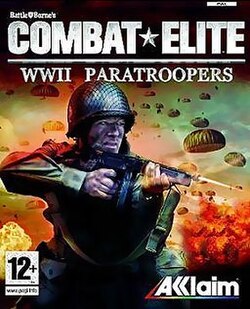
 Combat Elite: WWII Paratroopers on PS2
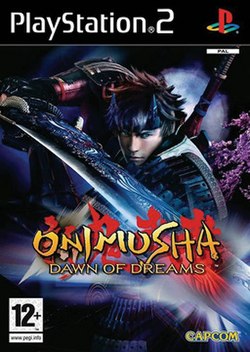
 Onimusha: Dawn of Dreams on PS2
 Disney's Chicken Little: Ace in Action on PS2
 Tokyo Xanadu eX+ on PS4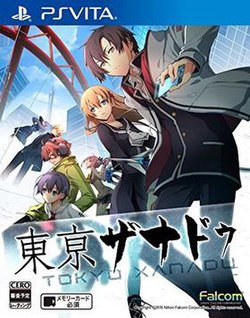
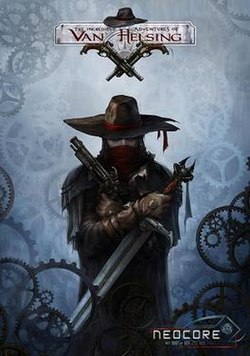 The Incredible Adventures of Van Helsing III on PS4
 The Incredible Adventures of Van Helsing on PS4










 Another SquareThought Site