

 Aug 2023
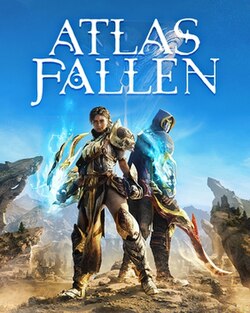

Atlas Fallen hands you an ancient gauntlet and the encouragingly vague job title of "sand manipulator." On PlayStation 5 this translates to an action RPG where your primary hobbies become turning sand into swords, dodging like your Wi‑Fi depends on it, and occasionally raising buried objects because the desert has opinions on where secrets should be kept. Deck13 Interactive clearly wanted to keep pace fast and shiny rather than stomp into full Soulslike territory; they say it's inspired by God of War and Horizon, which mostly means it prefers momentum and spectacle to your liver's ability to take repeated punishment. The game launched with a mixed reception, which is polite developer-speak for "Some people loved the gauntlet, others wanted a refund on the sand." For the record, I tried to return a dune once; the Post Office refused. On PS5 Atlas Fallen arrives looking like a current-gen desert action game: fluid combat, a believable open world of dunes and relics, and a handful of rough edges that rear up like tumbleweeds when you're not looking. If you wanted a brutal, methodical challenge a la previous Deck13 titles, this is not that. If you wanted to be a sand-wielding parkour ninja with occasional body-targeting mechanics and a co-op friend to watch you shine, then congratulations, the gauntlet fits.
Combat is the part of Atlas Fallen that will either make you grin like a person who just discovered the perfect gif, or sigh like a moviegoer who left halfway through the credits. Your avatar-customizable, which means you can look exactly like you or at least an improved cartoon version-wields a gauntlet that converts sand into weapons. There are three weapon archetypes in the game, though you're limited to carrying two at once. Switching them is part of the choreography. Deck13 wanted speed and fluidity: dodge, counter, and block form the backbone of encounters, but the fun bit is building momentum. Each successful attack stacks momentum until your weapon transforms into a suped-up variant and grants a flashy, devastating skill. It feels satisfying because the game rewards aggression with spectacle rather than making everything about patient, clinical hits. You will still be blocking and parrying, because enemies hit like they pay rent on your face, but the flow rarely stalls into tedium. Movement is engineered to be part of combat and exploration. The gauntlet lets you glide across the desert, air dash, and glide literal distances that would make wings jealous. The open world is divided into regions with side quests and NPCs who will give you errands, secrets, or the emotional support only a desert stranger can provide. Buried objects can be raised to reveal hidden paths and caches, so exploration is less rote and more archaeological with a touch of greed. As you progress, you discover "Shards" and "Catalyst Pieces" which upgrade the gauntlet and widen your toolkit for both traversal and fighting. If you want structure, the game includes three difficulty modes: its hard mode is designed with the Soulslike crowd in mind, which is Deck13 quietly nodding to their past without inviting them to move in. The design also incorporates body-targeting from The Surge series, letting you aim for specific enemy parts if you enjoy dismemberment as a strategy rather than an overreaction. For the social among you, there's two-player cooperative multiplayer so you can bring a friend who either complements your skills or is just there to watch you accidentally turn a boss into a sand sculpture. The developer's Fledge engine does the heavy lifting. The combat occasionally hits minor rough patches-momentums that don't snap quite as cleanly as you'd like, or enemy telegraphs that feel a hair inconsistent-but those are more mood blips than systemic failures. The game was delayed from May to August 2023 for polishing (and to include a full German voice-over at launch), which shows in some places but not uniformly across the map. A free update called "Reign of Sand" arrived in August 2024 adding new areas, quests, updated voice-over, and a reworked opening act, which helps smooth the early-game roughness and makes the experience feel a touch more considered. Preorder bonuses existed, because of course they did; the "Ruin Rising Pack" added cosmetics and essence stones if you feel emotional about appearance customization.
On PS5, Atlas Fallen looks and performs like a desert postcard rendered by a team that sometimes wanted to doodle in the margins. Sand manipulation effects-swords, whips, and other convenient extensions of your gauntlet-are satisfyingly tactile. Weapon transformations are flashy in a way that feels earned, with visual cues that match the combat rhythm. The environments vary by region and mostly keep things interesting: dunes, ruins, and the occasional cliff that says "parkour me." The Fledge engine handles lighting and particle effects well when you're near the camera's favored angles. That said, there are visual inconsistencies. Some areas display pop-in or texture smoothing that breaks immersion if you're looking for photorealism, and NPC animations can be stiffer than the drama at a small-town town hall meeting. Performance on the PS5 is generally smooth, but don't expect the kind of technical perfection that will make benchmark sites swoon. The aesthetics have personality, which helps-sand is used not just as a backdrop but as a design motif-so the visual presentation rarely feels like a missed opportunity even when it shows its seams.
Atlas Fallen is an odd, likeable creature: not bloodthirsty enough to be a Souls successor, not opulently original enough to rewrite the action-RPG rulebook, but fluent in the little pleasures of momentum-based combat and desert gadgetry. If you enjoy moving quickly, chaining attacks, and turning the world into a personal crafting table for weapons, this will give you a solid handful of enjoyable hours. If you are allergic to minor polish issues, occasional visual roughness, or the feeling that the story could have been more ambitious, you will be muttering into a controller. The reception was predictably mixed; it scores around the middle of the road because it does a lot of things well without committing to being the best at any one of them. The Reign of Sand update addressed a few early complaints and shows that Deck13 is willing to keep improving the game post-launch. For PS5 owners who want an action-RPG that emphasizes speed, spectacle, and a gauntlet that makes you feel like both an archaeologist and a very petty god, Atlas Fallen is worth a try. For completionists who demand technical finesse and narrative depth in equal measure, leave a bookmark and check back if the developers keep polishing. Score: 6.5/10.
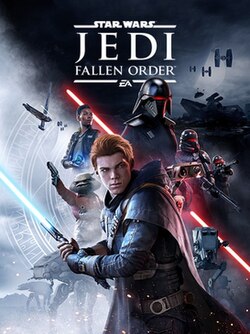
 Star Wars Jedi: Fallen Order on PS4
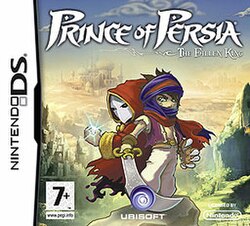
 Prince of Persia: The Fallen King on DS
 Combat Elite: WWII Paratroopers on PS2
 Onimusha: Dawn of Dreams on PS2
 Disney's Chicken Little: Ace in Action on PS2
 Tokyo Xanadu eX+ on PS4
 The Surge 2 on PS4
 Atlas Fallen on Xbox Series X/S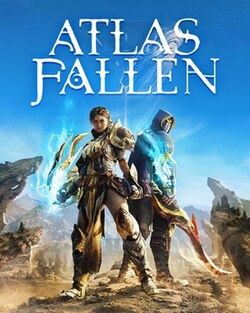










 Another SquareThought Site