

 Sep 2026
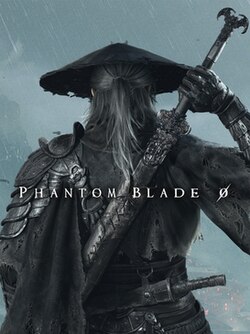

If you've ever wanted to play a kung-fu movie where the hero gets framed, given 66 days to live, and still manages to look cool while doing it, Phantom Blade Zero is your cinematic joystick. You play as Soul, an elite assassin whose heart is on a questionable medical timetable and whose social calendar revolves around stabbing conspiracies. S-GAME has taken its Rainblood roots, fed them a diet of steampunk bolts and cyberpunk neon, then let a wuxia masterclass loose on Unreal Engine 5. The result is a game that smells faintly of incense, gun oil and vengeance-and somehow still dances along to an electronic-erhu soundtrack without missing a beat.
Combat in Phantom Blade Zero is the video-game equivalent of doing parkour while arguing with your enemies' life choices. Soul can lug two primary weapons and two secondary 'phantom edges' at once, which sounds sensible until you realize phantom edges can be anything from cannons to lances to hammers. Yes, you can be dramatically swift and then, two seconds later, surprisingly blunt. Blades are the bread-and-butter: fast, fluid, cinematic. Each blade has a power surge-basically an ultimate move that makes enemies and your controller regret their life choices. Secondary weapons bring unique mechanics and are designed so each feels novel rather than copy-pasted. That design philosophy is a blessing; switching from a dance-like sword to a thunderous hammer feels legitimately different, not like wearing the same outfit with different shoes. The game isn't button-mashing cosplay. There's a resource called sha-chi that governs heavy attacks and blocks, so defense isn't a free pass: blocking too much will empty your spiritual stamina and make you regret your life decisions. Enemies telegraph brutal and killer moves with color cues-brutal moves will punish careless blocking and killer moves demand precise dodging. Pull off a parry against a brutal move or dodge a killer move at the last second and you'll trigger a 'ghostep'-basically Soul teleporting behind his foe and posting up like he owns the moment. Master these and you feel like an unforgiving ballerina of violence. Tinkerers and completionists will be delighted. There's a proper skill tree, and every weapon has its own upgrade and evolution system that unlocks new moves and animations. This matters because the game embraces semi-open world design: regions are seamlessly connected, some areas will be blocked off until you nab the right tools or weapons, and the map encourages non-linear exploration. Side quests aren't mere fetch errands; they tell other characters' stories and can actually alter the main plot, culminating in one of eight distinct endings. If you thought your choices only mattered for emotional blackmail, Phantom Blade Zero says otherwise. Encounters are choreographed in the wuxia spirit. Enemy AI works on both individual and collective behavior, so a brawl with three foes feels like an organized performance rather than random button-synced chaos. Sometimes several enemies will execute what is basically the same scripted move in formation, which looks dramatic while keeping fights readable. Multiple difficulty options, plus a New Game Plus mode, mean whether you want to breeze through the plot or treat every skirmish like a grade-A stress test, the game has you. If there's a caveat, it's the learning curve. Sha-chi management, weapon synergies, parry timings and area-locked progress can overwhelm casual players at first. But this isn't a fault as much as a personality quirk: Phantom Blade Zero wants to be learned, respected, and occasionally feared. Once it clicks, it's very hard to stop.
Phantom Blade Zero shows off Unreal Engine 5 like a gymnast showing off impossible flexibility. The visuals blend Ming-dynasty architecture with steampunk clank and cyberpunk glow in a way that reads like a historical cosplay convention for rogue inventors. S-GAME scanned real-world temples, village homes, and relics and even had young artists paint guide maps with Chinese brushes on Xuan paper-so when the game says it's rooted in Chinese cultural textures, it means it. Character faces lean on 3D scans and facial capture, which gives major players a photorealism edge during close-ups and those dramatic finishers where the camera suddenly remembers cinema. Motion capture and live-action martial artists were used to shape the movement, and the action director pedigree (hello Kenji Tanigaki) shows. Animations flow, transitions between moves feel intentional, and the wire-rigged acrobatics make wall runs and teleporting backflips less videogamey and more 'did I just watch a stunt double replace my controller?' The world design cleverly mixes dark-fantasy horror beats (Pang Town has music that's deliberately off-kilter) with the free-spirited swagger of the jianghu. Speaking of music: composer Caisheng Bo pairs traditional instruments like the erhu with retro electronic elements, and in places like Pang Town he toys with septuple meter to make the soundtrack unsettling in a very stylish way. In short, the audio-visual pairing does heavy lifting-cinematic finishers, sweeping vistas, and cramped temple interiors all get their moment to shine. One minor worry: ambitious visual design and motion-capture fidelity demand technical polish. On PS5 this should be manageable, but it's the sort of game where frame-rate hiccups or clipping could be glaring because the action relies so much on timing and camera flow. S-GAME's motion-capture approach-using actual martial artists and minimal post-speeding-bodes well for natural animation, but we'll be paying attention to performance on launch day.
Phantom Blade Zero arrives like a flashy, elegant assassin at a party you didn't know you were invited to. It's stylish, ambitious, and surprisingly thoughtful about the cultural traditions it borrows: the kungfupunk aesthetic, the martial philosophy of offense-as-defense, and the use of real-world craft for weapons and architecture give the game a grounded authenticity. Combat is the star-fast, precise, and rewarding once you stop treating it like a brawler and start treating it like choreography. The semi-open structure, weapon evolution systems, four-weapon loadouts, and multiple endings mean there's a lot to sink your teeth-and blades-into. If you're into high-skill action, attention to cultural detail, and a world that rewards exploration and replay, Phantom Blade Zero is a must-watch and likely a must-play on PS5. If you prefer your games spoon-fed, the initial complexity and the sha-chi bookkeeping might grumble at your patience. Either way, S-GAME has put together something that feels like the spiritual rebirth of their earlier work while staking a claim as a big single-player showpiece. Score-wise, it's an enthusiastic 8/10: ambitious, often brilliant, and only a few technical and accessibility clouds away from sheer greatness. Dust off your blade, manage your sha-chi, and get ready to spend 66 days making very satisfying life choices.
 Zack Zero on PS3
 Onimusha Blade Warriors on PS2
 Combat Elite: WWII Paratroopers on PS2
 Onimusha: Dawn of Dreams on PS2
 Disney's Chicken Little: Ace in Action on PS2
 Tokyo Xanadu eX+ on PS4










 Another SquareThought Site