

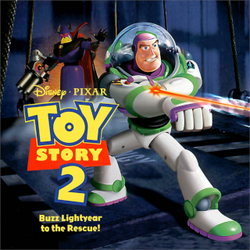

If you've ever wanted to live out the dream of being a space ranger who moonlights as a toy-sized parkour freak, Toy Story 2: Buzz Lightyear to the Rescue! for PlayStation will let you do that - in a very family-friendly, slightly imperfect way. The game straps you into Buzz's plastic boots for ten main levels and five boss arenas that borrow scenes and locations from the movie. The focus here isn't brutal difficulty so much as variety of tasks: platforming, timed races, mini-bosses, fetch quests, and the occasional aimy-shooty first-person moment. For players who grew up on 3D platformers of the late '90s, it's a nostalgic romp. For people who like their challenges to be fair and explicit rather than artificial, it has both charms and a few aggravations.
The core structure is simple and clever: Buzz navigates large, themed levels hunting Pizza Planet tokens. Each of the five tokens per level is a little design essay in skills: one might demand combat and pattern reading, another a puzzle that rewards spatial reasoning, a third a timed sprint that tests both platforming precision and calm under pressure, and others send you on scavenger hunts where observation and methodical searching win the day. On paper, that mix gives the game surprising depth - in practice, the balance swings toward accessibility, but not without moments that genuinely test you. Buzz's move set is designed for a kid-friendly but expressive platformer. You have a wrist laser that can be tapped for quick hits or charged for heavier damage, and you can flip into a first-person view to aim - this duality asks players to switch contexts: close-quarters platforming versus deliberate aiming. The spin attack and its charged variant offer a crowd-control option, but mastering its range and timing is essential during mini-boss encounters. The wings provide a double jump that changes the calculus of every gap and ledge; learning to treat the double jump like a separate resource rather than a freebie is the mark of someone moving past the basics. Five boss levels punctuate the adventure, culminating in a final face-off with Stinky Pete. Bosses are where the game's design actually tightens: patterns to learn, weaknesses to expose, and movement windows you have to exploit. These fights reward patience and pattern recognition far more than raw twitch speed. Several critics praised the boss design as one of the game's smarter aspects, and it pays off for players willing to learn the opponents instead of button-mashing. The token objectives are where skill differentiation becomes interesting. Timed trials force clean platforming - accurate jumps, well-timed stomps, and the occasional cleverly placed grappling hook sequence - while race objectives demand optimal routing and knowledge of level shortcuts. The game peppers levels with 50 coins that you can gather and trade for an extra token, which nudges completionists into careful exploration and map memorization. Some tasks are gated behind special power-ups that are unlocked by finding Mr. Potato Head's missing parts; this adds a mild Metroidvania flavor because certain areas become meaningful only after you retrieve a tool. Those power-ups - a protective barrier, rocket boots for bursts of speed, a homing disk launcher, a grappling hook, and hover boots - force you to think about tool-assisted platforming. Knowing when to use the rocket boots for momentum versus when to preserve precision for a narrow platform is a small but satisfying strategic layer. Now for the less heroic stuff. The PlayStation version's camera and control feel are generally better than on other platforms, but the camera still has an awkward streak that can turn a precision jump into a frantic prayer. Platforming in the late '90s 3D space often meant learning to manage the camera as a skill in its own right, and Toy Story 2 is no exception: camera fights you occasionally, and you fight back by mastering fixed angles, crouching vantage points, or switching to first-person for tricky shots. The game's AI banter is adorable until it isn't; non-playable characters recycle a limited set of phrases and the repetition chips away at immersion, which is a small mental penalty when you're trying to stay focused on a tricky timing challenge. Difficulty-wise, the game sits closer to 'approachable' than 'sadistic.' Critics often flagged it as too easy for hardcore platformer veterans, but that design choice makes it far kinder to younger players and completionists who enjoy exploration over repeated trial-and-error. If you want to stretch yourself, go after every coin and every optional token, master every race, and avoid using power-ups until absolutely necessary - that's where the game can be surprisingly demanding. Conversely, the Dreamcast port's overly sensitive analog stick and the N64 version's frame rate and pop-up issues made platforming artificially harder on those systems; on PlayStation the balance is cleaner and the skill ceiling feels more about player ability than technical shortcomings.
On PlayStation the game shines for a late-1999 licensed platformer: bright palettes, crisp character models, and full-motion video clips that play between levels to reward progress. Those FMVs were a big part of the PlayStation experience and elevate the cinematic feel; reviewers singled them out as a highlight. The Nintendo 64 cartridge couldn't carry the clips, so it used screenshots and text instead, and critics repeatedly favored the PS visuals over the N64's blur and pop-up problems. The Dreamcast version promised sharper visuals but reviewers found the port uneven; some lauded the cleaner FMVs, others grumbled about bland scenery and monotonous textures. For the player, the practical implication is this: on PlayStation the visuals and cutscenes help you stay engaged, which reduces frustration during tougher sections. The game's sound and music are jaunty and appropriate, though some critics noted repetition; this matters because repetitive audio can make repeated attempts at the same challenge feel grindy rather than triumphant.
Toy Story 2: Buzz Lightyear to the Rescue! on PlayStation is not a gauntlet of platforming cruelty, nor does it pretend to be. It rewards exploration, observation, and methodical skill-building more than raw reflexes. If you enjoy mix-and-match challenges - timed runs, puzzle-solving, boss pattern learning, and tool-based gating - the game offers plenty of bite-sized tests that cumulatively add up to a respectable challenge. The awkward camera occasionally tries to steal your jumps, and repetitive NPC chatter is a minor annoyance, but the PlayStation edition's stronger controls and FMV presentation make it the best way to experience this particular Buzz-shaped exercise in nostalgia. Score-wise, think of it as a competent and charming platformer that leans toward the accessible side: solid for families and completionists, enjoyable for nostalgic adults, and still capable of putting your timing and planning to the test if you want to push it.
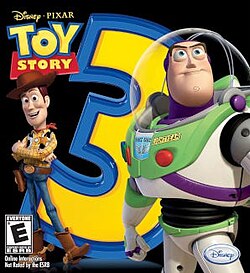 Toy Story Racer on PlayStation
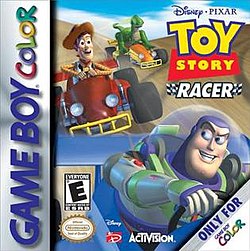 Disney/Pixar's Toy Story 3 on DS
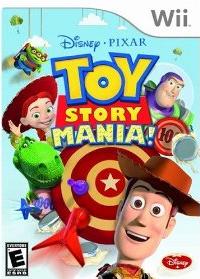
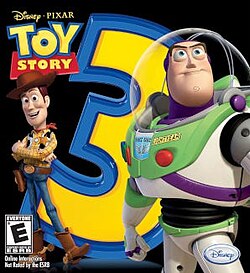 Toy Story Mania on PS3
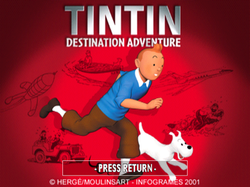
 Tintin: Destination Adventure on PlayStation
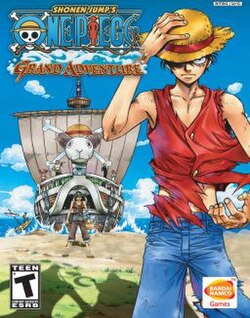
 One Piece Grand Adventure on PS2
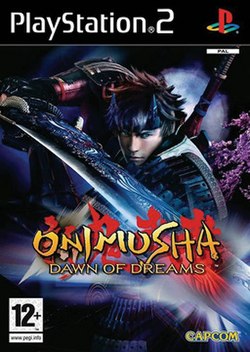
 Onimusha: Dawn of Dreams on PS2
 Taiko no Tatsujin: Dokodon! Mystery Adventure on Switch
 Lego Star Wars: The Complete Saga on PS3
 Lego Star Wars: The Video Game on PS2
 Lego Star Wars: The Skywalker Saga on PS5
 Lego Harry Potter: Years 1–4 on PS3
 Lego Harry Potter: Years 1–4 on DS












 Another SquareThought Site