

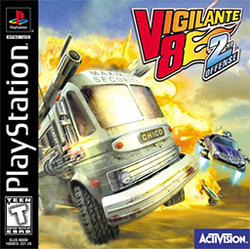

Vigilante 8: 2nd Offense takes the car-combat blueprint and slaps on more chaos, more characters, and a surprisingly RPG-ish upgrade loop. If you remember the first Vigilante 8 as a glorified demolition derby with attitude, the sequel is that, but with salvage points, weapon combos, and enough environmental nastiness to make you respect cover as if it were a warm blanket in winter. This review zeroes in on what actually makes the game challenging and what skills you need to survive, thrive, and occasionally explode dramatically in a fiery ball of retro polygonal glory.
The game's structure is mercifully straightforward: you pick a vehicle, pick a mode (Quest Mode, Arcade, or one of the multiplayer options), and then proceed to make every other vehicle regret picking the same map. What complicates - and ultimately deepens - the challenge is a handful of systems that reward competence instead of button-mashing luck. Salvage Points are the core of the game's strategic layer. Every destroyed opponent coughs up salvage, and spending those points to upgrade offense, defense, speed, and targeting changes how your car behaves. This isn't a cosmetic vanity metric: a fully upgraded vehicle actually turns into a different design and handles differently, so the upgrade choices you make alter your playstyle. Managing salvage becomes a resource-management mini-game. Do you funnel points into survivability to outlast a Grand Melee deathmatch, or do you double down on targeting and offense and risk becoming a glass cannon with a rocket launcher fetish? Savvy players plan their route through objectives and skirmishes to harvest salvage efficiently, so situational awareness and a ruthless eye for timing are essential. Weapons are more than just one-button spam. The original five staples - mines, rockets, autocannons, homing missiles, and mortars - get joined by flamethrowers, and each weapon gains three special attacks triggered by directional pad movements. That means mastery is twofold: you need to know the weapons' baseline stats and also learn the motion inputs to unleash the specials. Those specials are not just flair; they can turn the tide in a crowded arena. Learning when to trigger a weapon's special instead of firing normally is a skill that separates lucky beginners from methodical veterans. On a practical level, this rewards muscle memory and pattern recognition: you start anticipating enemy movement and respond with the right special attack rather than praying to the auto-aim gods. Movement options and environment interaction add another layer of challenge. Scattered power-ups give temporary locomotion changes like hover pods, skis, and outboard motors, which let you traverse tricky zones faster or with different handling. Stages contain interactive features and traps, so mastering momentum and positioning is crucial. The physics aren't arcade-floating bliss; critics called the model "aggravated," which translates into a learning curve where momentum and collision feel floaty but consistent. Expect to adapt to quirks: skidding into an oil slick won't just look silly - it will cost you salvage, position, and perhaps dignity. Multiplayer and AI modes force different skill sets. Grand Melee deathmatches throw multiple AI opponents at you simultaneously; surviving is about threat prioritization and controlled aggression. Arcade and two-player cooperative modes push teamwork and role specialization. One player can be the draw-fire juggernaut while the other collects salvage and supports with mobility pickups. Quest Mode adds mission objectives on top of combat, and completing secondary objectives unlocks secret characters, nudging players to diversify strategies instead of repeating the same grind. The total skill package the game demands: spatial intelligence (reading the map and using cover), resource allocation (spending salvage wisely), input precision (executing weapon specials reliably), vehicular control (learning how upgrades change handling), and situational prioritization (which enemy to disable, when to flee, when to commit). If you're the type who gets bored with button-mashers, Vigilante 8: 2nd Offense rewards methodical play. That said, the satisfaction really clicks when you string together a run: scavenging salvage, upgrading for a specific role, and then using weapon specials and environment traps to dismantle a small convoy like a demolition crew with a PhD in chaos.
Technically this is a late-PS1 title, so the visuals are appropriately crunchy and retro: chunky polygons, bold color palettes, and expressive particle explosions. The PlayStation version was praised for improved car and environment variety compared to its predecessor, but reviewers noted the graphics were similar to the first game rather than a leap forward. That means you'll get distinctive vehicle silhouettes and readable stages - important for a game where split-second positioning matters - but don't expect silky framerates or texture detail that holds up under microscope scrutiny. Where the graphics help the challenge is clarity. Enemies telegraph enough so you can plan your response, pickups are visible from a distance, and stage hazards are distinct. This visual readability is crucial: in a frantic Grand Melee, clear visual cues allow you to make the tactical decisions the game expects. On the downside, the physics and collision sometimes clash with the visuals; you might think you have cover and then find a bounced projectile had other plans. That quirk raises the difficulty ceiling in a way that feels equal parts unfair and characterful - like a grumpy instructor who occasionally trips over his own clipboard.
Vigilante 8: 2nd Offense isn't trying to be a simulation of vehicular warfare with a complex learning curve; it wants to be a carnivorous arcade with an appetite for skill. Its upgrades, weapon specials, and environment interactions combine to create a game where planning and execution matter. If you approach it as a shallow smash 'em up, you'll have fun, but you'll miss out on the systems that make the game genuinely satisfying once you start getting good. The difficulty comes from a blend of resource management, execution demands, and physics quirks. Players who develop map sense, master weapon inputs, and think about salvage choices will find a rewarding challenge. The PlayStation version's favorable reception was earned for these design beats, even if the visuals and physics show their age. For anyone who likes their vehicular combat with a touch of strategy and a lot of boom, 2nd Offense is worth rolling the dice on - preferably at high speed and with both hands firmly on the controller.
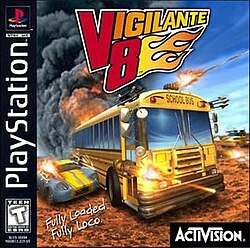
 Vigilante 8 on PlayStation
 PixelJunk Racers on PS3
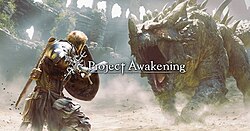
 Project Awakening on PS4
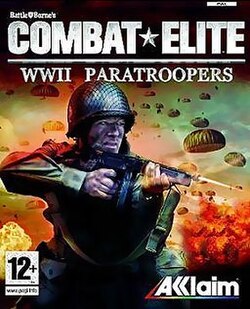
 Combat Elite: WWII Paratroopers on PS2
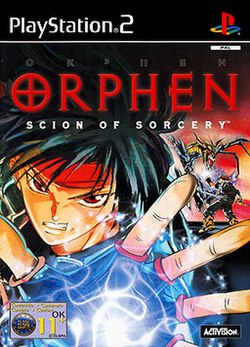
 Orphen: Scion of Sorcery on PS2
 Monster Hunter Stories 2: Wings of Ruin on Switch
 Transformers: Revenge of the Fallen on PS3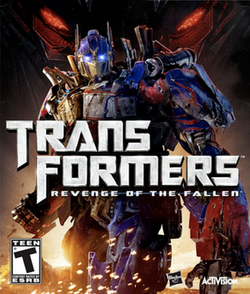












 Another SquareThought Site