


Wangan Trial is the PlayStation entry in Genki's street-racing lineage, arriving in 1998 to hug the neon-lit concrete of Tokyo's Wangan. If you came expecting an arcade-speed adrenaline bath with flawless presentation, prepare for mixed feelings: the game wears its ambition on its sleeve but sometimes trips over its own hardware. The important thing for players looking for a real challenge is that Wangan Trial doesn't hand out forgiveness. It asks you to master raw speed management, track memory, and split-second decision-making if you want to progress. It also pairs that demand with a cheerful dose of FMV co-driver commentary that will either fire you up or make you want to slam your head into the dashboard.
The core loop in Wangan Trial is deliciously simple and brutally honest: pick one of a handful of sports cars, pick a highway, and beat everyone else. There's no story padding; progression is binary - finish first or you do not advance - which makes every race feel like a gauntlet. This design choice turns the game into an exercise in skill refinement. First, you need absolute route knowledge. The game offers five highways and the slightest misread on a high-speed sweep can cost you the lead. Memorize the corners, learn where the long straights hide nasty braking zones, and internalize sightlines. Wangan racing rewards anticipation over reaction. Car selection matters more than you might expect. Each vehicle has a subtle handling personality, and part of the challenge is matching driving style to chassis. One car might be twitchier in the rear-end at speed and demand feather-light throttle modulation; another might understeer out of corners, forcing you to alter your line and brake earlier. The PlayStation-era physics here aren't aiming for ultra-simulation fidelity, but they do require finesse: throttle control on corner exits, cautious braking into tight turns, and using weight transfer to sneak the nose through an apex. If you just mash the accelerator and hope, the game will gently - or not so gently - eject you from first place. Braking is a skill often underestimated in arcade racers, but Wangan Trial treats it like a sacred art. The highways are built for high-speed runs and braking late is tempting. Learning where you can trail-brake and where you must scrub speed cleanly is critical. Precision braking plus smooth throttle reapplication on exits is the most reliable way to outpace opponents without overheating your own nerves. Drafting plays a role on the longer stretches; get behind a rival, then slingshot past on the outside, but time that move carefully or you'll undercut your speed with a poor line. The co-driver system is a weird little pressure mechanic. Ten different FMV co-drivers will chirp at you between runs, judging your performance. They do not affect physics, but they act as a feedback loop: if the co-driver is scathing, you know your crashes were embarrassing. Use those quips as calibration. If the FMV says your cornering is sloppy, tighten lines. If she compliments your top speed, keep poking at the straightaways. Call it psychological tuning. Multiplayer is handled by a split-screen 'Battle Mode.' This mode amplifies the skills the single-player demands: spatial awareness, defensive driving, and reading an opponent's tendencies under pressure. Split-screen racing on old hardware can be a test of both your driving and your tolerance for visual compromises, but it is here where the game's raw competitiveness shines. Two players racing on the same highway is a tight, frantic dance of blocking, opportunistic overtakes, and bait-and-switch maneuvers. One of the more subtle challenges is the camera choice. You can race from two external angles or an in-car view. The external views give you better peripheral awareness and make high speeds easier to judge; the cockpit view improves immersion but punishes imprecision. Choosing a camera becomes a trade-off: immersion versus practical reaction time. Master players will switch views depending on the track and their comfort with each car. Wangan Trial is not generous with second chances. The finish-first requirement raises stakes to an almost arcade-competitive level. This makes the learning curve steeper but ultimately more rewarding. You will die and restart a lot, and you'll be better for it. The game rewards repetition, attention to small inputs, and a willingness to adapt to handling quirks. Expect to grind a few sections until you can thread corners cleanly at speed, but when you string together the perfect run, it feels legitimately earned.
Visually, Wangan Trial inherits some of the rough edges critics pointed out across the series. The PlayStation hardware doesn't exactly sparkle here: textures are blocky, and draw-in on long urban vistas is noticeable. That said, visual fidelity isn't the primary challenge. The graphics can interfere with gameplay, because shoddy pop-in and awkward frame pacing make precise timing harder; at high speeds you need to make split-second judgments and the visual hiccups can feel like the game smacking your hands away. The FMV co-drivers are tacky in places and were called out by reviewers as a gimmick - they won't win awards, but they deliver personality. If you can forgive the dated presentation and occasional rough edges, the visuals serve a functional purpose: they paint the urban runway well enough to let you focus on learning lines and braking points.
Wangan Trial is a niche challenge masquerading as a conventional racer. It lacks some polish - notably in sound, FMVs, and graphical finesse - but it compensates with a terse, unforgiving design that will teach you core racing skills the old-school way: through repetition, humiliation, and tiny incremental improvements. If you want a comfortable cruise with cheering crowds, look elsewhere; if you want to hone throttle control, braking precision, line discipline, and split-second decision-making against a ruthless first-place-only progression, this PlayStation curio is worth a look. The reward is not cinematic presentation but that sweet sting of finally nailing a perfect run and watching the game begrudgingly hand you the lead. Give it time, and it will turn you into a cleaner, more deliberate racer - or it will make you swear at a co-driver on a tiny CRT screen. Either outcome is character-building.
 Urban Trial Freestyle on PS3
 Urban Trial Playground on Switch
 Roary the Racing Car on DS
 Team Sonic Racing on Switch
 Garfield Kart: Furious Racing on Switch
 Ben 10: Galactic Racing on PS3
 BRAHMA Force: The Assault on Beltlogger 9 on PlayStation
 Jade Cocoon: Story of the Tamamayu on PlayStation
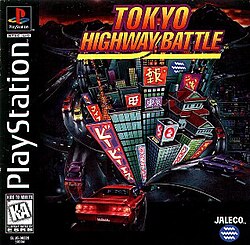
 Tokyo Highway Battle on PlayStation
 Demon Chaos on PS2












 Another SquareThought Site