

 Jul 2007
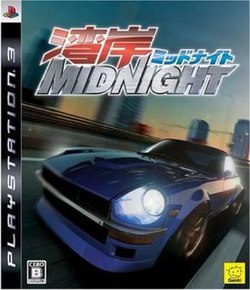

There is a certain stubborn seriousness to Wangan Midnight that would have made the mid-1990s import column amble over the border with a battered VHS of the manga's anime and a pocket full of yen. Genki's PlayStation 3 outing borrows its spine from Michiharu Kusunoki's celebrated comic and dresses it in the sort of glossy, late-decade presentation that promised the future of console racing. The game is, at its core, a highway romance: cars that feel like characters, rivalries that read like soap opera arcs and long, fast stretches of nocturnal concrete where reputations are made and engines die spectacularly. Wangan Midnight is not trying to be Gran Turismo with a cappuccino. It trades exhaustive simulation for drama and scenario, and it does so with a card-based customization system and a story mode that follows the manga's protagonists from the Devil Z's resurrection to high-speed grudges on the Wangan. The presentation is Full HD 1920x1080 at 30fps, a technical calling card in 2007 for a title that wants to look like a glossy, moving poster of Tokyo at night. For the import crowd and franchise devotees, there is much to admire; for the casual racer expecting a full-simulation toolkit, this is a focused, character-driven highway racer with a few idiosyncratic choices.
Gameplay divides itself cleanly into modes that will please different kinds of night-time motorists. Story Mode is the backbone, dutifully following the manga's plot through the perspective of the main characters: Akio Asakura with the Devil Z (a restored Fairlady Z S30), the enigmatic Tatsuya Shima and his RUF-tuned Porsche 'Blackbird', Reina Akikawa's R32 GT-R and a roster of other tuned icons. The narrative approach is very much of the era when developers believed players wanted to be guided through a cast list rather than dropped into an empty world with only a stopwatch. Each character arc unlocks scenarios and cars, and the voice cast largely mirrors the anime, lending an earnestness to the cutscenes that will be familiar to fans. Time Attack and Free Run provide more classical content: shave tenths off lap times or simply burn rubber with no opponent in sight. One Match gives you quick head-to-head bouts against the game's characters, suitable for those who prefer short, sharp races. Wangan Connection is the online component, allowing up to four players to create, host and join games; in practice it offers a competent online framework for the moment but lacks the depth of ranked ladders or persistent online economies that later racing titles refined. Two unlockable modes broaden the experience: Survival Mode (divided into Rookie, Runner and Monster classes) is a gauntlet of opponents with escalating challenge - 20 rivals on the C1 for Rookie, 50 on the New Belt Line for Runner and 99 on the Wangan and Yokohane for Monster - and plays like an endurance test for both car and driver. Maximum Speed Mode sends you to the Yatabe Test Course where the goal is brutally simple: go as fast as possible without blowing your engine. It is in these extremes that the game's mechanical personality becomes clear. Speed and heat management are not abstract numbers; they are the rules of engagement. Arguably the most idiosyncratic system in Wangan Midnight is its card-driven tuning mechanic. There are 128 cards to collect offline, and they fall into distinct 'Ability' categories: Tuner (rose), Body (yellow), Setting (green), Miscellaneous (blue) and Engine Resistance (purple). Cards are awarded for completing missions in Story, Time Attack, Survival and Maximum Speed modes, and some cards demand online play to reach certain User Levels. Cosmetic customization is limited - bonnet, muffler and rear spoiler, with preset paint jobs and stickers for some bonus cars - but performance upgrades are gated behind the card system, which ties progression to specific challenges rather than a simple currency. This design keeps unlocks feeling earned but can also be frustrating for players who prefer free-form part shops and endless tweaking. Vehicle selection is faithful to the source material: licensed cars from Nissan, Toyota, Mitsubishi, Mazda and Subaru, plus a single European entry in the RUF-tuned Porsche. There are crossover cars and bonus vehicles drawn from Genki's own Shutokou Battle series, unlocked by completing Survival Mode's Monster class. Fans will appreciate the attention to the cast and their machines; newcomers can enjoy the varied handling between a brooding Devil Z and the surgical Blackbird. The balance favors high-speed, high-stakes highway duels over technical cornering, and the game's tracks - centered on the Shuto Expressway's Bayshore and related routes - are designed with long straights and sweeping curves that reward bravery and aerodynamic faith.
Graphically, Wangan Midnight is a study in contrasts. On one hand, Genki delivered a Full HD product that uses the PS3's power to render neon-bathed motorways and reflective bodywork with convincing sheen. The promotional videos and the game's opening sequences boast glossy car models and urban lighting that capture the manga's nocturnal glamour. On the other hand, frame pacing at a locked 30 frames per second can reveal rough edges: pop-in on distant objects, a few texture softening moments and the occasional collision animation that lacks the satisfying crunch one might expect after a high-speed miscalculation. The cars are lovingly modelled, and the variety of liveries and the presence of character-specific versions add visual reward for completionists. Cutscenes and voice work are serviceable, with the voice cast taken largely from the anime; presentation values are consistent with a game that knows its audience. The environments-C1, New Belt Line, Wangan and Yokohane-feel evocative rather than fully simulated, which suits the game's emphasis on cinematic races rather than encyclopedic roadway fidelity. If you approach Wangan Midnight as a mood piece-Tokyo at night, the hum of engines and the tension between two drivers-it succeeds. If you demand photo-realistic textures and frame rates that make steering feel like wielding a scalpel, you may be left wanting.
Wangan Midnight on PS3 is both a love letter to a beloved manga and a competent, if eccentric, highway racer. In the fashion of serious 1990s reviews that treated imports like rare vinyl, this title is best appreciated with context: it knows exactly who it is catering to. Fans of the comic and players who want character-driven scenarios, high-speed duels and a progression system that rewards mission mastery will find a rich catalogue of cars and narratives. The card system is clever in principle but will grate on those used to unfettered customization shops. The graphics and Full HD presentation make the game look arresting in screenshots and on a living room TV, though technical compromises prevent it from being an unquestioned visual tour de force. There is a distinct pleasure in piloting the Devil Z or hunting the Blackbird on a long runway of Tokyo asphalt; survival runs and maximum speed trials offer the kind of challenge that car enthusiasts will enjoy calibrating to their own nerves. It is not the most universally accessible racer of its generation, but for the audience it targets, Wangan Midnight delivers a focused, narratively rich, and occasionally thrilling highway experience. The game's re-release as a PlayStation 3 the Best title in Japan the following year is testament to its local appreciation. Consider this a competent import: stylish, occasionally infuriating, and sincere - the kind of title that will live on in memory for its characters and its long, lonely night runs down the Wangan.
 South of Midnight on Xbox Series X/S
 Midnight Run: Road Fighter 2 on PlayStation
 Tintin: Destination Adventure on PlayStation
 One Piece Grand Adventure on PS2
 Taiko no Tatsujin: Dokodon! Mystery Adventure on Switch
 Onimusha: Dawn of Dreams on PS2
 BRAHMA Force: The Assault on Beltlogger 9 on PlayStation
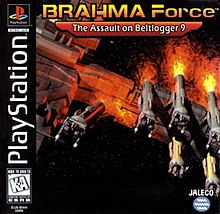 Jade Cocoon: Story of the Tamamayu on PlayStation
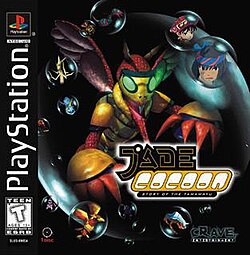 Tokyo Highway Battle on PlayStation
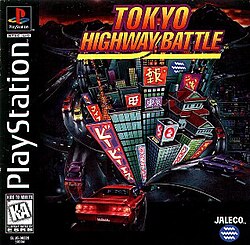 Demon Chaos on PS2
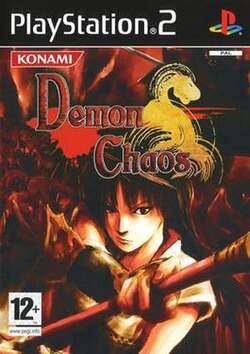 Populous DS on DS










 Another SquareThought Site