

 Jun 2026
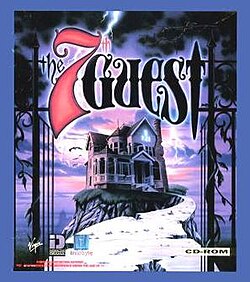

I remember the first time a CD-ROM sat in my drive and changed the shape of what games could be: marauding full-motion video, photoreal pre-rendered rooms and puzzles that felt like toys from another era. The original 1993 'The 7th Guest' was one of those watershed moments, a haunted mansion built out of bitrate and bravado. The remake landing on Nintendo Switch 2 in 2026 is not a mere coat of paint; it is a conscious effort to translate a landmark interactive movie into a modern, multi-platform experience while keeping the creak in the floorboards. If you spent your adolescence glued to VGA screens or if you are approaching Stauf's house for the first time, this version asks the same question as always: can a house of puzzles still scare and delight in equal measure?
Gameplay here is faithful to the original's bones: you explore a mansion in first person, solve a string of logic puzzles and watch narrative segments that gradually reveal Henry Stauf's cruelty and the tragic night that binds the mansion. The remake preserves the 21-core-puzzle structure but does not stop there. Several entirely new games have been added, rooms opened that were only hinted at before, and the final act has been reworked so that the player now competes directly with Stauf for Tad's soul - a change that shifts the crescendo from passive revelation to active confrontation. Puzzles still run the old gamut: cake-slicing fairness, letter-lens wordsmithing, mazes, Simon-like sequences and the fiendish Ataxx/Reversi challenge that once made many players grind their teeth into the carpet. The hint book returns with its old rules: consult twice for clues, a third consult hands you the solution but forfeits the following story clip. That mechanic remains one of the game's small masterpieces; it balances player pride against the appetite for story and keeps the tension between puzzle and plot alive. The remake is kinder in some areas - a map, the ability to skip scenes, and more forgiving navigation - yet it refuses to dull the harder puzzles. For the purist who still revels in brain-teasing cruelty, the option to swap to 'retro' control and audio modes is a welcome nod. The original relied on FMV that addressed the player directly; actors often stared down the camera to react to choices. The remake substitutes volumetric video and newly filmed sequences in several places, a technological upgrade that makes character movement and facial geometry feel less like taped theater and more like an inhabitant of the space. Character redesigns are pronounced: faces are less stagey, costumes feel more textured, and several plot beats have been expanded or altered - notably, Julia's fate is now staged as a regression to nonexistence, and the ending has been altered so players contest Stauf in a final gambit rather than watch events replay into purgatory. These are brave creative decisions: they shift tone slightly toward confrontation without abandoning the game's original, elegiac mystery. On the Nintendo Switch 2, controls are handled intelligently. Touch, Joy-Con motion and Pro Controller all feel supported; the game benefits from the Switch 2's increased bandwidth and hardware decoding when streaming volumetric scenes. Portable sessions feel comfortable, though some of the finer cursor work and tile arrangements are best experienced with the Pro Controller or in docked mode. The remake also preserves accessibility features introduced in the 25th Anniversary Edition: alternate soundtracks, subtitle options and the retro mode that returns the MIDI/adlib flavor for purists who still miss the synthesized hiss of early '90s audio rigs.
Graphically, the remake wears both old scars and new victories. Where the 1993 original stunned with 24-bit Super VGA pre-renders and full-motion video that pushed CD-ROM boundaries, the 2026 remake uses volumetric video for character scenes and new real-time lighting in pre-rendered rooms. The mansion's textures are denser, the dust motes and varnish gleam more convincingly, and volumetric captures give actors a dimensionality that FMV never could. The remake's cinematic approach keeps the camera 'on rails' in many respects, a stylistic choice that preserves the original's haunted-house museum vibe but occasionally limits spatial freedom compared with modern free-roam adventures. Audio remains a strength. George Sanger's leitmotif for 'The Game' - that memorable melody that threaded character themes like a musical seam - is present and honored, with new orchestrations alongside the option to revert to the original synths. The soundtrack continues to act like another character, shifting styles when two characters collide and ratcheting tension when Stauf taunts you. The volumetric scenes come with cleaner dialogue and fewer of the 'blue-screen auras' that the original famously had and then embraced as an aesthetic flourish. On Switch 2 hardware the audio staging is excellent: spatial cues and dynamic range make night-time exploration genuinely unnerving. There are trade-offs. Not every new room feels necessary - some additions pad runtime more than they deepen the mystery - and a few puzzles feel mechanically disconnected from the house's atmosphere. Players who remember the cassette-like jump cuts of early FMV may find the volumetric scenes curiously modern, less like spooky theatre and more like small, sculpted plays. That is neither strictly better nor worse, merely different. The remake's graphical language is an admission that horror need not live only in grainy tapes and low-resolution shock.
If you loved the original, this remake is a respectful and occasionally bold companion that both preserves the ancient bones and grafts on modern sinew. Vertigo Studios has kept the game's most important bargain intact: puzzles are still puzzles, the house still tells its story in clipped cinematic increments, and Stauf still has that knack for saying things designed to make you uncomfortable. The volumetric video and new puzzles freshen the experience without betraying it, though the tonal adjustments - particularly the rewrite of Julia's fate and the new final contest with Stauf - will not please every nostalgist. For newcomers, the remake is an approachable introduction to an adventure that was once a technical manifesto and now reads as a historical curiosity reimagined with contemporary tools. This is not an uncompromising heir to modern horror; it is, happily, something else: a carefully renovated antique that remembers its provenance and refuses to be turned into a genre boilerplate. On Nintendo Switch 2 it plays well in any mode and still offers that rare combination of brainy puzzles and cinematic unease. If you want to be challenged, unnerved and occasionally mocked by a puppet-master in an anagrammatic name, 'The 7th Guest Remake' is a worthy house to revisit. Recommended for puzzle fans, haunted-house connoisseurs and anyone curious about how a 1993 killer app grows up in 2026.
 Toki on Switch
 XIII on Xbox Series X/S
 Tintin: Destination Adventure on PlayStation
 Professor Layton and the Last Specter on DS
 Puzzle by Nikoli 4: on PS4
 Twinbee Taisen Puzzle Dama on PlayStation










 Another SquareThought Site