

 Mar 2026
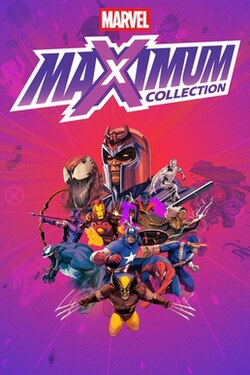

There are two types of reissues: the reverent museum piece that treats every pixel like a priceless fossil, and the no-nonsense arcade cabinet plunked back into the corner of a pizza parlor so you can thrash it on a Friday night. Marvel MaXimum Collection sits squarely in the latter camp, wearing its retro soot with pride. Published by Limited Run Games and running on their Carbon Engine, this 2026 compilation bundles six Marvel-licensed titles originally released between 1990 and 1995. It's the sort of product that makes you reach for a wristband and a bowl of fluorescent cheese dip, then remember that in 2026 you simply pair a Pro Controller and hope the rewind button absolves your past mistakes. As a 1990s-style critic with a fondness for shoulder pads and cartridge dust, I appreciate the honesty here. This is not a selective remaster that rewrites history - it's an anthology of quirks, questionable hitboxes and unabashed nostalgia. For players who cut their teeth on Genesis and SNES controllers, and for younger gamers curious about the era when Spider-Man and Venom beefed up the supermarket brawls, MaXimum Collection delivers a compact classroom of design choices that were once fashionable and are now vintage curiosities.
The compilation's roster reads like a who's-who of Saturday-morning hand-to-hand combat. You get Silver Surfer (NES), Captain America and The Avengers (arcade/console variants), the arcade edition of X-Men (with delightful six-player mayhem), Spider-Man and the X-Men in Arcade's Revenge (portable and console versions), Spider-Man and Venom: Maximum Carnage, and Venom/Spider-Man: Separation Anxiety. That sounds like a lot of muscle, and it is - though the muscle is occasionally mismatched. Gameplay is a mixed bag in the best possible way: each game is preserved with its original rules, quirks, and, yes, frustrations. Silver Surfer is the odd duck - a side-scrolling shooter in suit - that still makes you wonder whose bright idea it was to give Galactus a cameo in a NES title. The brawlers (Maximum Carnage, Separation Anxiety, Captain America and The Avengers) scratch that primal beat-'em-up itch: waves of goons, special moves that pop with pixelated flourish, and bosses that exist solely to consume your limited lives. Arcade X-Men remains the stand-out party feature; Limited Run has blessed it with rollback netcode, supporting up to six players online. When it works, the experience is gloriously anarchic - more arcadelike than most modern attempts at retro multiplayer. Mechanically, the collection leans hard into authenticity. Hit detection can be stubborn, platforming sections are occasionally spiky, and difficulty spikes occur like surprise guest stars. Thankfully, the package includes modern conveniences that make these relics playable in the 21st century: rewind, save states, toggleable cheats, and visual filters. Want to rewind a boneheaded fall or reload from a recent checkpoint instead of repeating the same boss for the 17th time? You can. Want the full CRT scanline fidelity because you're performing a living-room séance for your old CRT set? There's a filter for that too. These options are not tacked on like garnish; they're integrated in a way that respects the originals while acknowledging that not everyone wants to suffer through an entire cartridge's worth of cheap deaths. The supplementary features - a music player, original box art, manuals and gallery materials - are where the collection feels like a proper archive instead of a barebones emulation dump. Opening a digitized manual and reading developer notes and cheesy in-universe copy is a small pleasure that connects you to the era. The inclusion of multiple versions of certain games also invites direct comparison: Genesis and SNES renditions of the same title reveal how platform idiosyncrasies once shaped game design decisions. For purists, that's a goldmine; for the casual player, it's evidence that once upon a time companies shipped different flavors of chaos on purpose.
Graphically, MaXimum Collection is faithful and unpretentious. These are pixelated artifacts, not attempts at contemporary sheen. The Carbon Engine provides solid emulation and upscaling that keeps sprites crisp on a Switch screen without washing out the original palettes. Optional visual filters, including CRT and scanlines, do a respectable job of simulating old displays; they won't fool anyone who still owns a PVM, but they add a comforting patina. Some titles, especially the arcade ports, retain more detailed artwork and smoother animation, while NES entries show their age with limited palettes and coarser sprite work. On Switch handheld, the games look appropriately snug - colors pop, text remains legible, and the pixel geometry is stable even in hectic moments. Docked, the experience is sharpened for TV play, though the jump from portable clarity to a large screen can expose sprite limitations and occasional scaling artifacts. The presentation package - the galleries, box art scans and manual reproductions - is where the collection gets genuinely classy. Seeing the original marketing copy and instruction booklet art next to the game itself is like staging a mini retrospective in your living room; it adds context that a standalone ROM dump lacks. If you're asking whether this collection beautifies the originals, the answer is no, and that's intentional. It chooses preservation over gloss, enhancement through options rather than interference. For players who want a modernized facelift, this might feel like a missed opportunity. For those who value authenticity and a few well-placed QoL add-ons, the graphics are presented with respect.
Marvel MaXimum Collection is an honest, intermittently brilliant time capsule - not a definitive restoration, but a competent and caring curation. Critics' scores landed in the mixed range for a reason: the appeal hinges on your tolerance for dated design. If you grew up eating quarters and memorizing boss patterns, you'll find this collection a delightful shelf of old friends, restored with sensible modern tools. If you're seeking a best-of bundle that smooths every rough edge, this package will occasionally remind you why difficulty curves once resembled brick walls. The inclusion of rollback netcode for arcade X-Men is an unexpected feather in the cap and justifies the purchase for anyone who remembers the pure chaos of six-player smackdowns. The convenience features - rewind, save states, cheats, filters - are implemented with taste; they make the games accessible without rewriting history. Presentation extras like the music player and gallery elevate the package into something more archival and less transactional. For the price-conscious Switch owner, the verdict is pragmatic: recommended for collectors, nostalgia-seekers, and beat-'em-up completists; optional for newer players curious about 1990s licensed brawlers. It's a compilation that acknowledges its own imperfections and straps an eject button to them. Consider this a respectable anthology with personality: the kind of product that would have made our print magazine's letters page light up in neon. Score: 7/10 - a solid release that remembers the past without pretending it was flawless.
 Street Fighter 30th Anniversary Collection on PS4
 Bubsy in: The Purrfect Collection on PS5
 Disney's Chicken Little: Ace in Action on PS2
 Onimusha: Dawn of Dreams on PS2
 Tokyo Xanadu eX+ on PS4
 Action Man: Operation Extreme on PlayStation
 Bubsy in: The Purrfect Collection on Switch










 Another SquareThought Site