

 Oct 2020
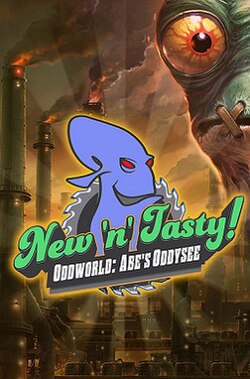

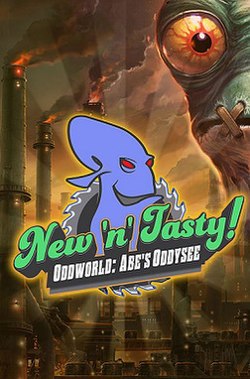
Oddworld: New 'n' Tasty! is the polite-yet-savage makeover of 1997's Abe's Oddysee - a ground-up remake that dresses old-school level design in modern 2.5D clothes. Built by Just Add Water using Unity, the project was explicitly a recreation rather than a throwback: maps, puzzles and story beats are faithful to the original blueprint, but every asset, animation and camera angle has been reimplemented. On Switch the result is a mostly successful technical port that keeps the game's puzzle-first DNA intact while trading some graphical headroom and frame-rate bragging rights that you might find on PS4 or high-end PC. If you're into tight puzzle design, quirky tech choices and the occasional corpse-comedy ragdoll, this is the kind of remaster that actually earns the word "reimagined."
At the mechanical core New 'n' Tasty! remains a sidescrolling puzzle-platformer where the player's toolset is cleverness rather than fists or guns. Abe cannot attack directly; his toolkit consists of GameSpeak (which has been expanded with more voice variants), chanting to open portals, telepathy to possess Sligs, and environmental trickery that ranges from setting traps to recruiting other Mudokons. The remake pumps up the scope: Mudokons to rescue increase from 99 in the original to 299, secret areas were preserved and often expanded, and several mechanics (quicksave, rebalanced checkpoints and difficulty presets) were added to modernize the experience. From a systems perspective the move to a 2.5D Continuous Scrolling model is the headline change. The original used flip-screen areas (you could reset a room by exiting and re-entering) but Unity-powered realtime streaming means the remake runs puzzles, AI and cameras continuously. That required Just Add Water to rethink enemy resets and checkpoint spacing - they increased checkpoint frequency so most failures require redoing at most three screens, and added Quicksave to alleviate trial-and-error frustration. Difficulty modes tweak variables such as Abe's health and enemy reaction times; the "Hard" preset is tuned to approximate the original's punishing curve. AI behavior is an interesting technical wrinkle. The game introduces more random generators in enemy movement and Slig patrols, and flying mines have variable flight paths. That makes prediction harder, which both modernizes and complicates puzzle design: some encounters become less about memorizing an AI loop and more about reacting to stochastic behavior. Slig possession remains a powerful mechanic but is balanced by their lack of mobility (they can't jump) and different control affordances. One oft-cited control issue, noted in several reviews, is mapping: Abe's walk and run are both tied to the left thumbstick, which can lead to imprecision in platforming. This is a legacy design quirk that survived the remake and bites you in tight platform sequences. Online features are a welcome technical addition: leaderboards and tracking for speedruns acknowledge the game's community and enable competitive time-checking across platforms (Steam/PSN/Xbox/Nintendo eShop). Co-op also returns in the sense that multiple controllers can take over when a player dies - a modest but thoughtful fidelity to the original's social quirks. Where the Switch version sits in the ecosystem is worth noting: the game was developed with Unity to reduce multi-platform production overhead (Just Add Water switched from Unigine mid-project for cost and iteration speed reasons). That made ports more practical, but each platform still inherits trade-offs. Metacritic puts the Switch release a notch below PS4/Xbox/PC, reflecting those compromises in visuals and performance relative to higher-power hardware.
The visual upgrade is the remake's pride. New 'n' Tasty! is a textbook example of what a 2.5D remake should look like: hand-crafted environments, richly lit cutscenes rendered in real time, and expressive character animation. The Unity engine gave the team access to modern post-processing, dynamic lighting and a more cinematic camera that often teases threats ahead of time - this is a design choice that helps with puzzle telegraphing and reduces blind frustration. Physics and ragdolls are a double-edged sword. The game uses ragdoll and physics-driven animation to comedic effect: corpses twitch, fly and thump with a cartoonish brutality. Some critics find the corpse physics hilariously tone-deaf to the subject matter, while others see the twitching as part of the game's black comedic palette. From a technical vantage, ragdoll-driven outcomes add emergent variability to the world and are cheap wins for spectacle, but they can also create distracting visual noise during tense puzzle moments. On Switch specifically, performance and fidelity are tempered compared to the PS4 baseline (which runs at 1080p/60fps). The Switch port delivers the game's artistic vision, but the Metacritic score for Nintendo Switch (78/100) suggests compromises were made: texture LODs, shadow resolution, draw distance and possibly frame pacing are common areas where multi-platform titles scale down. The game still communicates gameplay-critical information clearly thanks to the cinematic camera and level design, but if you prize raw pixel density and ultra-smooth 60fps stability, PS4 or PC will present the cleaner technical case. Also, certain DLC elements like the Alf's Escape level were not confirmed for Switch at release, though the Scrub Abe costume was included in the base game - a small content divergence worth noting when comparing platform editions.
New 'n' Tasty! is a technical success story in many respects: Just Add Water rebuilt a beloved classic in Unity, kept its level design bones intact, expanded systems like GameSpeak and leaderboards, and modernized checkpointing and save functionality to fit contemporary expectations. Its 2.5D continuous-streaming approach solves many of the original's screen-bound limitations, but introduces new design challenges such as AI reset logic and the handling of stochastic enemy behavior. On Switch you get the full Oddworld experience - puzzles, tone, expanded Mudokon rescue goals and bizarre physics - but with the usual portable compromises. If you're buying for nostalgia and puzzle design, the Switch version is a strong port; if you're a performance purist, the PS4/PC releases show off the remake's technical peak. Control niggles inherited from the original (notably movement mapping) remain, and the game's tendency toward brutal trial-and-error will frustrate some players even with added saves and easier difficulties. Overall, New 'n' Tasty! is how you do a remake: respectful, technically aware and occasionally infuriating in the exact ways that made the original memorable. It's equal parts love letter and lab exercise in using modern engines to recreate classic design, which earns it a solid 8.5 out of 10 - a recommendation for anyone who likes their platformers clever, a little mean, and technically thoughtful.
 Ultra Street Fighter IV on PS3
 New Frontier Days: Founding Pioneers on Switch
 New Pokémon Snap on Switch
 Ministry of Broadcast on Switch
 Disney's Stitch: Experiment 626 on PS2
 Project Phoenix on PS4
 Rad Rodgers on PS4
 Oddworld: New 'n' Tasty! on PS3
 Oddworld: Munch's Oddysee on Switch
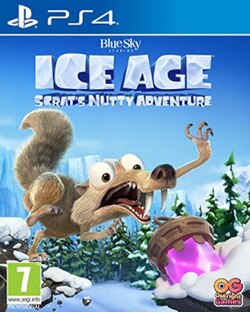
 Ice Age: Scrat's Nutty Adventure on PS4
 Ice Age: Scrat's Nutty Adventure on Switch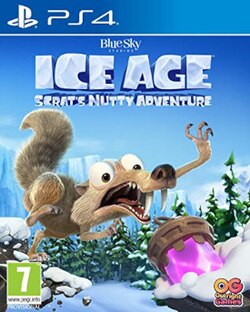










 Another SquareThought Site