

 Aug 2025


Troll and I is a small-studio action-adventure that pairs a scrawny human kid, Otto, with a hulking troll in a post-World War II Scandinavian setting. On paper it's an appealing hook: asymmetrical co-op (or local split-screen) where the heavyweight carries the emotional and mechanical heft while the human provides nimble precision. The game's path to market is a minor industry footnote - originally on Square Enix's Collective radar, it was ultimately published by Maximum Games - and that indie origin shows in both creative ambition and technical limitations. The Switch port arrived in mid-2017 amid low critical scores across platforms; Nintendo Life's review landed at 4/10 and aggregate scores ranged from painfully low to catastrophic on Metacritic. My read-through on Switch focused on how that ambition translated into code: whether the core two-character idea survived the hardware tradeoffs, and how observable systems - animation, physics, AI, engine-level rendering and multiplayer rendering tricks - held up when you asked the troll to lift a log and not the entire frame-rate budget.
Troll and I sets its mechanical contrast up clearly: the troll is a single-blow powerhouse while Otto is quick, fragile and utility-focused. That baseline design produces a recurring gameplay rhythm that's half puzzle-platformer, half brawler. From a systems perspective the game leans heavily on scripted setpieces and tightly-coupled animation states - you rarely feel emergent systems; instead you trigger canned interactions where the engine swaps animation clips and toggles physics constraints. This works in short bursts: an interlocked animation sequence where Otto climbs the troll's shoulder and the troll crushes a gate feels cinematic. When the scripting misfires, however, it reveals underlying fragility: characters can get stuck in transition states, root-motion blending snaps, and physics-driven objects sometimes phase through collision meshes. Those bugs are not just cosmetic - they break the rhythm of combat and especially puzzle solutions that rely on precise object placement. Combat on paper is a decent asymmetry lesson in design. The troll's attacks are meant to be weighty and authoritarian: large-area stomp, grab-and-throw, and environmental interactions that clear groups of lesser enemies. Otto fills in with light attacks, grappling, and platforming. The input-to-action pipeline, though, is laggier than it should be on Switch. Button presses occasionally feel like suggestions rather than commands, and dodges suffer from inconsistent animation cancel windows. That latency undermines the one-hit-kill fantasy for the troll and the nimble dance for Otto - timing windows are narrow, so even small input jitter exposes the lack of robust interpolation and input buffering. Enemy AI is rudimentary: foes move on simple state machines with basic aggro and attack telegraphs, and pathfinding is a conservative navmesh implementation prone to local minima. Expect enemies to camp on geometry edges or repeatedly stumble rather than path creatively. Where the game attempts to earn its keep is with co-op: local split-screen is supported, and the engine renders two viewpoints simultaneously with independent camera chains. That imposes a heavy performance tax on Switch hardware and explains many of the visual and frame stability tradeoffs (more on that below). The design also folds in crafting and a light progression layer (as noted in pre-release coverage), but the systems are shallow - gathering resources and crafting feel like time sinks inserted between moments that should be gameplay, not chores to mask pacing problems. Overall pacing suffers: long stretches of walking and fetch objectives punctuated by short spikes of well-realized interactivity. For players who enjoy patience and watching animation trees, some scenes are quietly lovely; for players expecting tight mechanical feedback the game often disappoints.
Visually the Switch port is an exercise in compromise. The art direction leans into moody Scandinavian wilderness palettes and large-scale set dressing - trees, rocks and a handful of nice particle effects - but the technical implementation is conservative. Base textures are low to medium resolution, and LOD (level-of-detail) transitions are very noticeable: you can see the engine swapping lower-detail meshes and mipmapped textures as you move, often with texture pop-in close enough to be distracting. Draw distance is aggressively clipped and occlusion culling is used heavily to keep the GPU within the Switch's budget, which sometimes causes objects to appear or vanish with visceral abruptness. Framerate instability is the glaring issue. When the scene complexity rises - multiple enemies, physics objects, or split-screen rendering - the framerate dips and stutters. The engine appears to favor a dynamic-resolution-like approach and shader quality scaling rather than maintaining a stable frame target, which results in frequent resolution jitter. On a platform where 30 fps is the pragmatic ceiling for many titles, consistent 30 fps is table stakes; Troll and I attempts to hit it but falls prey to CPU-side stalls (likely from scripting and physics) and GPU spikes during particle or shadow draw calls. Animations have a rough quality: blendshapes and bone blending are serviceable but not smooth, and ragdoll/physics transitions can produce pop or stretching when a scripted animation yields to physics. UI and HUD scaling are functional but unpolished - text sizes and icon clarity suffer in handheld mode where the Switch's smaller screen magnifies aliasing. Local split-screen introduces an additional rendering cost and a cramped screen composition; when each player runs at half the viewport, texture filtering and fine detail suffer further. On the plus side, the visual composition and environments occasionally produce genuinely cinematic frames, but they're infrequent enough that technical shortcomings dominate the memory of a play session.
Troll and I is a classic case of an interesting design constrained by technical execution. The central relationship between Otto and the troll is an attractive idea and leads to a handful of memorable setpieces, but scrappy engine work, shaky animation blending, janky collision/physics interactions and framerate instability on the Switch dilute the fun. Local split-screen co-op is conceptually smart but costly in performance terms; the Switch port shows the sharp edges of that tradeoff. Critics panned the game on release (Metacritic scores were poor across platforms, and Nintendo Life rated the Switch build 4/10), and my technical read supports those reactions: the codebase needs more polish, the AI and input pipelines need tightening, and the rendering approach needed optimization to meet the platform's constraints without losing visual fidelity. Recommendation: if you're curious about the concept or love slow-burn, companion-driven narratives, wait for a steep sale, buy it used, or catch a streamed playthrough - the game isn't toxic, just undercooked. For players who expect tight controls, consistent framerates, and polished technical systems, Troll and I on Switch is unlikely to scratch that itch. It's an earnest effort from a small studio that shows what ambition looks like when it collides with hardware limits and limited development resources - occasionally charming, frequently frustrating, and technically uneven enough to make you mourn what could have been with another few months in the oven.
 Gaelic Football '25 on Xbox Series X/S
 Together! The Battle Cats on Switch
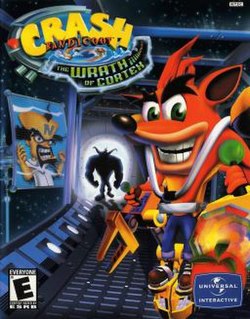
 Crash Bandicoot: The Wrath of Cortex on PS2
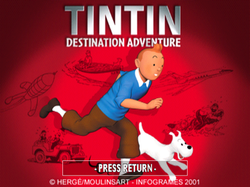
 Tintin: Destination Adventure on PlayStation
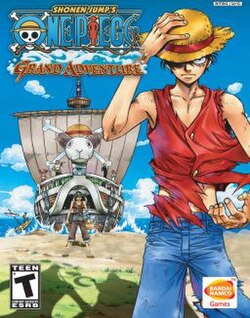
 One Piece Grand Adventure on PS2
 Taiko no Tatsujin: Dokodon! Mystery Adventure on Switch
 Onimusha: Dawn of Dreams on PS2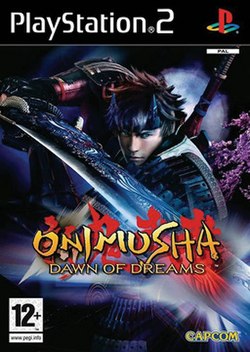










 Another SquareThought Site