

 Feb 2021
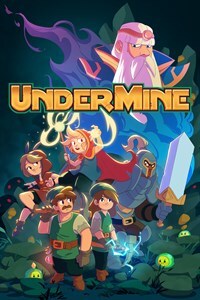

UnderMine is a compact, well-crafted roguelike dungeon crawler that wears its influences on its pickaxe. Built in Unity by two-person indie studio Thorium, the game combines isometric exploration, procedural level assembly, and action-RPG itemization into a tight, repeatable loop: descend, loot, die (sometimes), get smarter. The Switch port arrived in February 2021 and brings the same core systems reviewers praised on PC and consoles - a strong meta-progression, a hub of rescued NPCs offering permanent upgrades, and a relic-and-item economy that meaningfully shifts each run. This review leans into the technical bits: how the engine and design choices manifest on Switch hardware, how the procedural and combat systems interact, and where the port stretches or strains the experience.
At its mechanical heart UnderMine is about systems interacting in small rooms. The game uses procedurally generated levels composed from a library of room templates. Each template is a curated challenge-enemy composition, environmental hazard layout, and item placement-that combines with RNG to produce runs that feel fresh without entirely betraying the designer's intent. Procedural generation here acts more as a shuffled deck of handcrafted encounters than a fully emergent terrain generator; that design choice favors predictability in difficulty pacing and lets the balance team tune individual rooms rather than chasing wide-spectrum RNG. From a technical standpoint this hybrid approach reduces the risk of pathological level combinations that break flow, while still giving the player a reasonable sense of novelty each run. Combat is real-time and intentionally simple on the input side: a single primary swing (the trusty pickaxe), a ranged or special item slot, dodge/jump mechanics, and a set of passive/active item modifiers. The simplicity is deceptive - UnderMine's depth arrives through item synergies (relics, equipment, and temporary powerups) and enemy behaviors that encourage positioning and timing. There are enemies like Pilfers that steal gold, projectile-spitting Spate Flies, and mimic chests; these behaviors interact with map hazards such as spikes, oil, and moving blades. The result is a compact design space where the difference between a 'good' and 'bad' run often comes down to whether you discovered a particular relic combo or whether a room template spawned an unlucky clutter of hazards. The meta-progression is a standout technical feature. Unlike pure roguelikes, UnderMine retains half of your gold on death (safeguarded by a canary familiar) and allows rescued NPCs to provide permanent stat boosts or services at the hub. This creates a persistent state across runs that feels meaningful without turning the game into a grind-for-power simulator. The relic system (floating boots, sewing kit to preserve ore, Keyblade that scales with keys, etc.) introduces high-impact modifiers that can shift a run from hopeless to trivial; because relics are relatively rare, they become meaningful hooks that alter playstyle choices. On the Switch, input fidelity matters because many encounters are tight windows of reaction. Some published reviews flagged imprecise aiming and a "floaty" jump that can occasionally punish players who treat jump as a dodge. Those are not purely design complaints - they interact with low-level systems like input polling, analog stick deadzones, and the way Unity's physics are tuned. On Joy-Con or Pro Controller, the mapping of aim to stick and the responsiveness of button presses directly affect the player's sense of control. The Switch port generally preserves the control layout well, but the combination of isometric camera angle and isometric-to-screen pixel alignment can make spatial perception slightly fuzzier than in top-down alternatives, especially when fighting projectiles that originate off-screen or on angled tracks. Difficulty spikes are mostly a product of room composition and the randomness of item drops. Because rooms are curated templates, you can still encounter combinations that are unkind - a room with multiple pilfers and a moving-blade hazard can punish players in a way that feels mechanical rather than skill-driven. Boss encounters are deliberately tuned to require both build investment and player skill; they expose whether a run's progression system provided the expected tools. The loop works: wins feel earned, and losses feed the meta via retained gold and newly unlocked permanent upgrades.
UnderMine uses an isometric view that emphasizes readable silhouettes, clear hit flashes, and a palette that mixes murky earth tones with brighter relic and particle accents. The aesthetic is "darkly lighthearted," which helps cognitive load: enemies need to be legible at a glance, and the art direction usually succeeds. Running in Unity, the game benefits from cross-platform asset pipelines and a clean shader setup that keeps particle effects crisp without drowning the scene in overdraw. On Switch hardware the porting approach matters. Unity lets Thorium share a lot of core code and assets across platforms, but developers still need to make trade-offs for texture sizes, shadow resolution, and particle counts to hit stable frame rates on the Switch's mobile SoC. Reviewers praised the presentation but noted occasional visual glitches; in practice these are minor hiccups (z-fighting on layered geometry, rare sprite pop-in) rather than systemic problems. The isometric camera reduces the need for high-res textures because readable silhouettes are more important than photoreal detail, which plays well to the Switch's strengths. UI scaling deserves praise: the mini-map in the HUD corner and the inventory screens are legible on both docked and handheld modes, though cramped inventory micro-management can feel more fiddly with Joy-Cons than with mouse and keyboard on PC. Performance-wise, the Switch release is competent. The game's visual style, judicious use of particle effects, and compact level templates keep CPU/GPU load moderate. Unity's editor-time profiling and platform-specific optimization pipelines likely let Thorium squeeze consistent frame pacing out of the hardware. That said, a small studio shipping a Unity title on multiple platforms sometimes encounters sporadic edge-case bugs - the documented visual glitches and imprecise aiming notes reflect that reality more than a broad indictment of performance.
UnderMine on Switch is a technically thoughtful indie roguelike that understands where to spend its engineering budget: readable visuals, curated procedural design, and a meta-progression that rewards repeated play. The Unity foundation eases cross-platform parity and the isometric presentation prioritizes gameplay clarity over flash. You can expect occasional design rough edges - floaty jumps, aiming precision concerns, and rare visual glitches - but none of them undo the core loop. If you like short, systemic runs where item synergies and curated room templates drive emergent strategies, UnderMine offers a polished package on Switch. The port keeps the feel of the original while making sensible compromises for handheld hardware. It's a smart buy for players who enjoy methodical roguelikes and value technical polish in how systems communicate with the player rather than raw graphical horsepower.
 MLB The Show 22 on Switch
 Teenage Mutant Ninja Turtles: Mutants Unleashed on Switch
 Combat Elite: WWII Paratroopers on PS2
 Onimusha: Dawn of Dreams on PS2
 Disney's Chicken Little: Ace in Action on PS2
 Action Man: Operation Extreme on PlayStation










 Another SquareThought Site