

 Jan 2026


If you've ever wanted to smash a City block into tidy studs while also feeling the psychological weight of Batman's brooding silhouette, Lego Batman: Legacy of the Dark Knight promises to deliver the neatest compression of those two impulses yet. Announced at Gamescom 2025 and due in 2026, Traveller's Tales is pitching a Lego-ified, open-world Gotham with combat likened to the Arkham series, a curated roster of seven playable characters, and a Batcave you can deck out like a minimalist billionaire on a toy budget. This review examines the game from a technical, systems-first perspective on Xbox Series X|S: how it should run, how it's built, and what the announced features imply for performance, rendering, animation, audio, and multiplayer.
Gameplay, as revealed so far, sits at the intersection of action-adventure third-person traversal and puzzle-heavy Lego traditions. The decision to pare the roster down to seven playable heroes (Batman, Jim Gordon, Batgirl, Nightwing, Robin, Catwoman, and Talia al Ghul) is a fascinating technical trade-off. Fewer canonical characters reduces character-asset diversity, which frees up budget for higher-detail models, more animation states, and richer per-character gadget systems. Expect bespoke animation trees per character rather than a single Frankenstein controller for a hundred skins - which should improve responsiveness and lower the number of fallback poses the engine needs to reconcile during transitions. Combat being compared to the Arkham series sets high expectations for frame-accurate input buffering, precise hit windows, and deterministic stun/counter interactions. On Series hardware, a tight freeflow system benefits from a stable 60 fps target; any drop below that makes counter windows feel slippery. Traveller's Tales will need to prioritize fixed-step physics for combat-relevant collisions while using interpolation for cosmetic Lego-brick physics to keep the world playful without corrupting combat determinism. Enemy AI also becomes more CPU-bound with Arkham-style encounters: perception systems, priority selectors for target switching, and stagger/recovery curves will need to be optimized to avoid hitching when dozens of enemies populate a beatdown scenario. Open-world Gotham introduces a separate set of technical constraints. World streaming on the Series X|S is almost a solved problem thanks to NVMe SSDs; however, stitching an open-world Lego aesthetic into a performant streaming pipeline still demands careful LOD (level-of-detail) design for modular brick assets. Because Lego models are modular by nature, an asset-instancing approach that reuses mesh templates with material variations will minimize memory footprint. Another smart move would be texture atlasing and GPU-driven culling to reduce draw calls when the camera sweeps across a Lego skyline. The announced Batcave customization system implies persistent object placement and a save-state serialization layer; efficient delta-compression for player-saved layouts will keep file sizes reasonable and reduce load spikes when fetching user-specified assets. Local co-op (explicitly shown as local multiplayer) simplifies networking but complicates rendering choices. Split-screen and shared-screen co-op each have unique costs: split-screen doubles most rendering costs (two viewports, doubled shadow maps unless cleverly shared), while shared screened co-op requires more careful camera framing and seamless character instance management. Given the hardware in Series X, a dynamic mode that switches from single to split rendering pipelines depending on the number of players would be ideal - maintaining 60 fps for solo and dropping to a stable 30 fps in split-screen with higher per-frame visual fidelity. It's also worth noting that the absence of online co-op (confirmed by reporting) reduces netcode complexity, removes server-authoritative design constraints, and allows the team to focus CPU budget locally on AI and animation rather than lag compensation.
Visually, Legacy of the Dark Knight has the unique challenge of evoking cinematic Batman sources - from Tim Burton to Nolan to Reeves - while staying within the Lego aesthetic. Translating recognizable actor likenesses and multiple era-specific skins into Lego minifigure forms is a texture and material challenge. The simplest efficient route is normal-map-driven micro-detail and layered PBR materials for plastic sheen, augmented by a robust material LOD system so distant minifigures don't waste shader cycles. On Xbox Series X, you can reasonably expect a split between two modes: a performance-first 60 fps mode and a fidelity mode that leans into higher resolution and perhaps ray-traced reflections or soft shadows. Ray tracing on Lego plastic is a double-edged sword - it can sell the cinematic lighting but could also flatten the stylized charm if overused. A hybrid approach using screen-space reflections with selective ray-traced ambient occlusion and localized ray-traced reflections for hero set-pieces would give you the best of both worlds: shiny Batmobiles with convincing contact shadows while keeping the world's colorful toy-like feel. Animation quality will make or break the tactile joy of Lego combat and traversal. Expect state machines underpinning traversal (grapples, wall-runs, vaults) with additive layers for weapon handling and facial/helmet expressions - the latter likely baked as material swaps rather than full facial rigs for Lego heads. Blend trees will need to be deep enough to handle quick chaining (jump-to-counter-to-glide) without popping; this is where motion-matching tech, if used, would shine by reducing animation discontinuities. Another technical plus implied by the trailers is high-quality voice-over work (Shai Matheson as Batman, Matt Berry as Bane), which points to a professionally mixed audio pipeline. Spatialized audio, occlusion for indoor/outdoor scenes, and dynamic music adaptive to combat intensity will all enhance immersion, but they also place additional demands on CPU cores and audio memory. Implemented well, dialog streaming plus compressed voice assets should keep the memory budget sane while providing full-quality localization audio.
Lego Batman: Legacy of the Dark Knight looks like a technically ambitious step for the Lego series: an Arkham-flavored combat system grafted onto an open-world Lego Gotham, dressed with curated skins from decades of Batman media, and grounded by local multiplayer and Batcave customization. The tight cast of seven playable characters is a clever technical compromise that allows Traveller's Tales to concentrate asset fidelity, animation polish, and gadget complexity where it matters most. On Xbox Series X|S, the success criteria will hinge on a few engineering decisions: stable framerates (especially for combat), efficient world streaming and LOD strategies, and a rendering balance that preserves Lego's charm while delivering cinematic lighting. My score of 8.0 reflects the strong technical potential visible in the design and the smart constraints the developer has chosen to impose. There are risks - a heavier-than-necessary fidelity mode could undermine performance, split-screen handling could compromise visual quality, and a limited roster may disappoint completionists - but the announced systems read like thoughtful engineering trade-offs rather than half-measures. If Traveller's Tales nails deterministic combat timing, smooth animation blending, and a lean streaming pipeline on the Series hardware, Legacy of the Dark Knight will not only be a fun Lego romp but also a solid technical showcase of how to modernize a toy-based franchise without losing the plastic sheen.
 Dark Cloud 2 on PS2
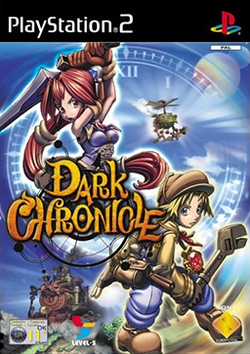 Dark Souls II on PS3
 Dark Cloud on PS2
 Tintin: Destination Adventure on PlayStation
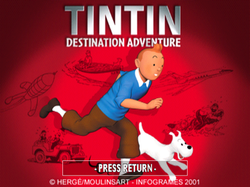 One Piece Grand Adventure on PS2
 Taiko no Tatsujin: Dokodon! Mystery Adventure on Switch
 Onimusha: Dawn of Dreams on PS2
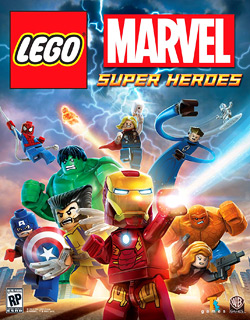 Lego Star Wars: The Complete Saga on PS3
 Lego Star Wars: The Video Game on PS2
 Lego Star Wars: The Skywalker Saga on PS5
 Lego Harry Potter: Years 1–4 on PS3
 Lego Harry Potter: Years 1–4 on DS










 Another SquareThought Site