

 Sep 2018


There are games that shout and there are games that hum with purpose. Velocity 2X belongs squarely to the latter camp: a tight, confident sequel from British studio FuturLab that takes the core teleportation-led speed of the original and grafts on a surprisingly witty set of side-scrolling puzzle-platform levels. Arriving on the Switch in 2018 courtesy of Curve Digital, this is not the sort of game that tries to blind you with spectacle; it instead dares you to get better, to shave fractions of seconds, and to prise satisfaction from efficiency. If you remember the arcade mags of the 1990s - the pages smelling faintly of coffee and optimism - you will recognise the pedigree here: an old-school focus on design, score, and player mastery, dressed up in modern polish.
Velocity 2X is a curious hybrid that will irritate and caress in equal measures. At its heart it remains a shoot 'em up: you pilot a small, extremely nimble craft through tight, obstacle-laden corridors, blasting foes and threading teleporters. Where it distinguishes itself is the teleportation mechanic and the way FuturLab stretches that single idea into two very different gameplay modes. The top-down sections are crisp, speed-focused affairs. You dash through levels with teleporters that let you leap instantly to distant platforms, avoid incoming fire, and snatch objectives that are otherwise out of reach. The game rewards you not for brute force but for timeliness: clocks, precise routes and an obsession with minimising wasted motion govern success. It is an arcade designer's lesson in 'economy of movement.' Then, as if the designers had grown bored of merely rearranging enemies on a 2D plane, Velocity 2X flips the cartridge and throws you into side-scrolling stages. Here you control Lt. Kai Tana herself, newly fused to her ship's self-repair systems and operating with a cyborg body. The platforming segments are not arbitrary; they expand the teleportation fantasy into spatial puzzles. You must leap, dash, and teleport through complex rooms, often switching between piloting the ship and moving on foot. The rhythm changes from the flat, relentless pulse of the shooter stages to a stop-start test of reflex and logic. These sections demand a different mindset - patience, exploration, and careful puzzle solving - and the contrast is what makes Velocity 2X feel fuller than a mere expansion. The plot is spare but serviceable, the kind of science-fiction scaffolding that exists to justify new rooms and nastier Vokh grunts. Following the first game, Kai wakes partially fused with her ship and imprisoned by the Vokh Empire, who crave her ship's teleportation technology. A cooperative alien scientist helps her escape, and the two set off to halt the Vokh advance and return Kai home. It's classic space opera shorthand, plenty adequate for keeping you moving from stage to stage without overindulging in exposition. Put bluntly: the story does its job and then slinks back to let the gameplay take the stage. Difficulty is handled smartly. Early levels teach you how the teleporters bend the geometry of a stage, and how time bonuses are awarded. As you progress, rooms become tighter and puzzles begin to interlock: you'll need to chain teleports, use temporary shields, and manipulate switches in ways that reward planning as much as raw skill. There is also a scoring undercurrent - speedruns and perfect clears are not only possible, they are the raison d'être for many stages. If you came to Velocity 2X expecting a casual canapé, you will be surprised by how quickly it demands focus. Controls translate well to the Switch. The docked or handheld modes do not appear to strip the game of its precision; aiming and teleport timing feel reliable. The transition between ship and on-foot segments is seamless, and FuturLab's level design keeps both halves honest: neither the shooter nor the platformer overstays its welcome, and both complement one another to provide a satisfying, varied single-player campaign.
Velocity 2X does not try to be a technological parade horse, and that is to its credit. The visual design is clean, with a clear foreground/background split that prioritises readability over visual noise - exactly what a game that prizes split-second decisions needs. Enemies are well-signposted, teleport nodes pop with readable contrast, and environmental hazards are easy to parse even when the on-screen action grows hectic. On Switch the presentation remains tidy; fonts and HUD elements are legible in handheld mode, and the modestly stylised aesthetic holds together whether you're zipping through a neon corridor or crawling through a dim side-scroller repair bay. If there is a stylistic influence, it is one of restrained futurism: plenty of bold lines, saturated colour accents and a general sense of functional design. The developers are not trying to drown you in particle effects or shader wizardry; instead the game opts for clarity and the occasional visual flourish to punctuate important moments. That approach works in Velocity 2X's favour, because when speed matters the last thing you want is a distracting cosmetic glut. In the rare moments when the game slows to let you admire its composition, you'll notice careful attention to level geometry and the way lighting and colour guide your eye toward the objectives.
Velocity 2X is the sort of sequel that remembers what made the original worthwhile and then adds a dimension that deepens the whole without bloating it. FuturLab has produced a game that rewards discipline: learn the levels, carve efficient routes, and the satisfaction of a perfect run is genuine and long-lasting. Critical consensus reflects this achievement - the Vita build registered highly on Metacritic, and outlets such as IGN, GameSpot and Polygon lavished praise on its expansion of the original's speed-based design into thoughtful side-scrolling puzzles. On Switch, the Curve Digital port delivers a compact, well-executed package that retains the series' strengths. Who should buy it? If you grew up with magazine reviews and arcade cabinets in the 1990s and still appreciate tight design and score-focused play, Velocity 2X will feel like a warm, efficient hug. If you are a modern speedrunner or someone who enjoys a thoughtful mash-up of shooter and platformer mechanics, this game will keep you busy. It is not a sprawling epic or a cinematic blockbuster, nor does it try to be; it is a precise arcade instrument, tuned for excellence. For players who value craftsmanship and the slow burn of mastery over momentary spectacle, Velocity 2X is an easy recommendation. It is deserving of the high praise it received on release - a modern classic that wears its arcade pedigree proudly and, crucially, knows how to have fun while doing so.
 OlliOlli World on Switch
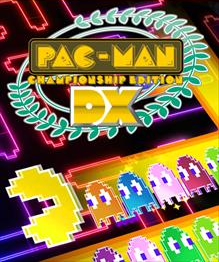
 Pac-Man Championship Edition DX+ on PS3
 Puzzle by Nikoli 4: on PS4
 Twinbee Taisen Puzzle Dama on PlayStation
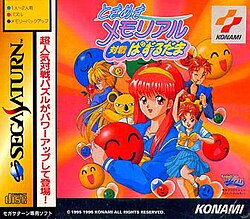
 Tokimeki Memorial: Taisen Puzzle-Dama on PlayStation
 Professor Layton and the Last Specter on DS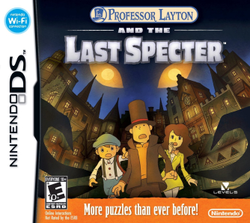











 Another SquareThought Site