

 Nov 2020
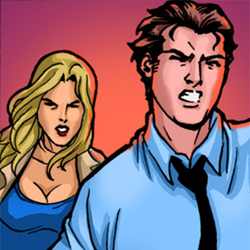

Vera Blanc: Full Moon arrives on Switch as an odd little time capsule: a 2010 Ren'Py visual novel that has been shepherded onto consoles by Ratalaika Games a decade later. At its core it's a text-first mystery about a mind-reading heroine who pokes around a German village where locals seem convinced a werewolf is behind a string of murders. For players who equate "gameplay" with reading choices and occasional minigames, Full Moon does what it promises - and for people who expect modern bells and whistles, the experience is a lesson in how small, engine-driven visual novels translate to handheld consoles. This review approaches Full Moon from a technical, detail-oriented perspective while keeping an eye on the player-facing ergonomics. I examine the engine and port implications, input and UI design on Switch, the integration of minigames into a primarily narrative framework, and how the comic-style presentation holds up when blown up on a TV or handheld screen.
Design fundamentals Full Moon is a traditional visual novel: you read dialogue and narration, then make branching choices that influence later beats and endings. The game is single-player only, and the flow relies on linear reading interspersed with decision nodes. Because Winter Wolves built the original in Ren'Py - an engine explicitly tailored for 2D visual novels - the core systems are classic Ren'Py constructs: scripted scenes, conditional branching via variables, and a save/load stack that maps directly to line numbers and state variables. That architecture translates predictably to Switch: the branching logic is deterministic, saves are file-based, and the state machine is lightweight, so load and save actions are near-instant. Minigames and interaction What distinguishes Vera Blanc from a purely passive reading experience are the minigames embedded in the story. The flagship mechanic is a mind-reading feature where Vera completes other characters' thoughts by guessing letters in a Hangman-esque interface. Technically, this is a small but important piece of gameplay code added on top of Ren'Py's text systems. Instead of just branching on choice indices, the game occasionally hands control to a simple mini input loop: display placeholder letters, accept input (letter guesses), validate success/failure, and then return to scripted narrative paths based on the result. Critically, Winter Wolves includes a toggle to disable minigames and read straight through. From a UX engineering perspective this is smart: minigame states are optional layers that touch only a subset of variables and don't break the branch graph. That means the codebase maintains two primary interaction modes (full and streamlined), and save states must record which mode the player is using. The toggle also reduces the need for complex error handling when porting controls between touch devices and controllers. Control scheme and Switch ergonomics Full Moon's original platforms included iOS and Android, so its interaction model is naturally touch-first. Porting to Switch introduces two input modalities: controller buttons/joystick and the Switch's capacitive touchscreen (in handheld/tabletop modes). Ren'Py's console ports typically map "advance text" to a button press and map choice selection to a D-pad or joystick, which is entirely adequate for visual novels. For minigames like letter-guessing, the Switch's touchscreen is a comfort win - if implemented - because tapping letters is closer to the original mobile intent. If the port relies solely on button navigation, expect slightly more menu cycling to select letters, but the minigames are simple enough that this is a mild friction rather than a dealbreaker. Branching complexity and replay value On the systems side, branching is implemented as a network of conditional jumps and boolean/flag variables. The wiki notes that player choices affect ending results; that implies multiple ending flags and likely some stateful puzzles where successes in minigames unlock different narrative tags. From a technical perspective, this is the classic Ren'Py approach: store flags, check them at choice nodes, and present different scenes. The save system and slot model are important because exploring multiple branches requires reliable quick-saves; fortunately, console ports of Ren'Py titles tend to preserve the engine's save stack, making replaying and branching experimentation straightforward. Pacing and script density Ren'Py is optimized for dense text presentation, and Full Moon uses that to its advantage. The pacing is largely determined by reading speed rather than rendering or simulation loops, so CPU load is minimal and battery life on handheld will be dominated by display and audio. For devs and modders, the game is a clean example of how to balance text blocks with periodic interactive beats - the minigames punctuate the narrative rather than replacing it.
Art style and assets Vera Blanc ships with comic-style 2D art: character sprites, expressive portraits, and painted backgrounds depicting a German Black Forest village (and, in the sequel, an Italian castle town). This approach perfectly suits Ren'Py's layered sprite system: separate images for base poses, expressions, and overlays are composited at runtime, which keeps asset sizes moderate and allows simple transitions. The wiki lists the game engine as Ren'Py, which explains the asset pipeline - PNGs with alpha channels, tiled backgrounds, and straightforward dissolve/cut transitions. Resolution, scaling and UI The transition to Switch highlights the strengths and weaknesses of visual novel asset pipelines. If the original assets were created for mobile/resolution 800x480 or desktop 1280-wide canvases, scaling them to Switch's 720p handheld or 1080p TV output hinges on image quality and UI vectorization. Ren'Py inherently performs bitmap scaling; if the port preserved the original sprites without re-rendering at higher resolution, some compression artifacts or slight softness may be visible on a TV. On the handheld's native resolution the comic art generally looks solid because the game's drawing style tolerates a bit of blurring. UI elements are simple: text box, nameplate, choice menu, and small icons. This minimalist UI is beneficial because it avoids clutter when scaled. The text box needs to be legible at different distances; font choices and anti-aliasing are therefore crucial. Console ports that keep font rasterization crisp and allow font-size tweaks give the best ergonomics - Ren'Py supports these tweaks, so a well-managed port will include display options. The wiki doesn't list explicit UI options for the Switch release, but the underlying engine supports them without heavy engineering. Audio and presentation The source document doesn't list voice acting or a soundtrack, so the game's audio presentation is likely modest. That aligns with many Ren'Py titles: short music loops, ambient tracks, and occasional sound cues that accent choices or minigame success. These are low-bandwidth and easy for the Switch to handle, meaning no tricky mixing or performance concerns crop up. If you're playing with headphones, the sparse audio fits the mystery mood; if you're blasting it on TV speakers, don't expect a bombastic score.
Vera Blanc: Full Moon on Switch is not a technical spectacle - it's a tight Ren'Py visual novel translated to a console environment with the usual strengths and trade-offs of that setup. The engine's lightweight, script-driven architecture guarantees reliable saves, instant load times, and deterministic branching, while the inclusion of optional minigames (Hangman-style mind-reading) injects interactive variety without complicating the codebase. The ability to disable those minigames is a practical affordance that keeps the narrative accessible to players who prefer a pure reading experience. If you care about pixel-perfect high-res visuals and controller-first minigame ergonomics, you might notice the limits of a decade-old mobile art pipeline when stretched to TV. If you care more about pacing, branching, and a compact mystery with a solid comic-art aesthetic, Full Moon delivers where it matters. Reception at launch was positive - Gamezebo and Technologytell gave the original high marks - and the Switch version preserves the core experience. For Switch owners who like mysteries and don't mind putting a bit of reading ahead of action, Full Moon is a polished, lightweight port: a comfy, button-press mystery that runs cleanly on modern hardware. Score: 7.5/10.
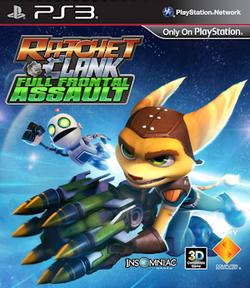
 Ratchet & Clank: Full Frontal Assault on PS3
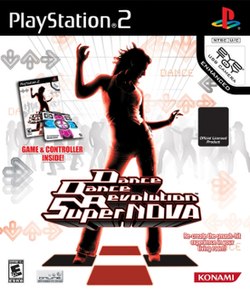
 Dance Dance Revolution SuperNova 2 on PS2
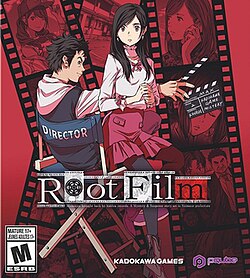
 Root Film on PS4
 Tokimeki Memorial Drama Series Vol. 3 Tabidachi no Uta on PlayStation
 Princess Princess on PS2
 Oshiete! Popotan on PS2











 Another SquareThought Site