

 Aug 2018
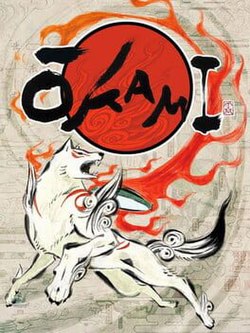

Ōkami on Switch is the videogame equivalent of discovering a dusty, handwritten myth in a coffee shop and realizing it would wreck your Monday plans for the next 40 hours. At its heart it's an action-adventure that borrows the trappings of Zelda-style exploration, but its real muscle comes from character work: Amaterasu and company are not simply quest-givers and boss targets - they're archetypes dressed in ink-strokes that grow, contradict themselves, and make you care. The game's sumi-e/cel-shaded aesthetics and the Celestial Brush mechanic get the headlines (and rightly so), but if you play closely you'll see the story is stitched from a series of personal arcs - redemption, identity, deception, and belief - that are as important as any puzzle or fight. This review digs into those arcs and how the gameplay reinforces them, with the Switch port's touch and motion options as our paintbrush.
Playing as Amaterasu, the sun goddess reincarnated as a white wolf, you do more than bash demons - you shepherd a fractured land back to life. The Celestial Brush, the game's signature mechanic, is not an accessory; it's narrative grammar. You don't simply learn brush powers as arbitrary upgrades: each new stroke is granted by releasing Celestial Gods from constellations, and that progression mirrors Amaterasu's reclamation of identity. When Amaterasu draws a circle to create wind or paints a line to cut a bridge, the act echoes her deeper role as a restorer of connections - between people, between nature and villages, and between gods and the mortal realm. Issun, the inch-tall wandering artist who calls Amaterasu "Ammy" (or "furball"), begins as comic relief and a guide, but his arc blossoms into one of responsibility and courage. Early on he shirks his role as a Celestial Envoy, running away from obligations and leaning on Amaterasu's strength. The game's quest structure - small local problems that build into widescale cosmic stakes - allows Issun to grow organically. Side quests that have you resurrect trees or heal animals aren't busywork; they're the micro-steps of Issun's maturation and the world's faith in the goddess. By the late game Issun's emotional pivot from cowardly tease to essential moral engine is the narrative hinge that enables the final battle's emotional payoff: people believing in Amaterasu. Susano offers one of the most satisfying classic redemption arcs. Introduced as a proud warrior who disbelieves in the old legends, Susano's hubris frees Orochi and sets the curse in motion. Over time, his arc pulls from classical myth - a modern Susano who must accept his lineage and the cost of his actions. The fight against Orochi is choreographed almost like reading Nagi's old myth in reverse: Susano's initial disbelief costs lives, but his eventual alliance with Amaterasu results in a mutual redemption. The game's sympathetic treatment of him makes that alliance feel earned rather than convenient. Waka occupies delicious moral grey. He flirts with prophecy and plays the inscrutable flautist role - sometimes ally, sometimes antagonist, never boring. His revelations about the Moon Tribe and the Ark of Yamato recast the game's cosmic stakes and make Waka both a mentor and a mirror to Amaterasu: ancient, still tied to the Celestial Plain, and carrying a long memory of loss. His ambiguous flirtation with Amaterasu and occasional interference deepen the game's mythic texture: Ōkami isn't interested in tidy moral binaries. The villains are more than obstacles: Orochi represents recurring, cyclical evil rooted in myth but given a persistent presence in the present world, demanding sacrifice and obedience; Ninetails (the Rao imposter) uses mimicry and seduction to reveal how deceit can wear the skin of beauty. Yami, the final antagonist, is a more modern horror - a cold, machine-like ruler of demons whose core design and incremental transformations during the fight allegorize the way darkness metastasizes. When Yami drains Amaterasu's powers and forces her into a near-death state, the final act's thematic center is clear: gods need believers. Issun's growth culminates in him galvanizing the people to send their prayers - a gameplay-supported emotional climax where story, mechanics, and player investment converge. The world-building and secondary characters (Sakuya, Rao, Himiko, the Oina tribe) function as episodic lessons in the central theme: restoration. Each locale pairs a small community problem with a character test, and by solving them you coax an arc forward - sometimes it's the town's faith that returns, sometimes it's a character's personal courage. Even the game's method of rendering NPC speech (scrambled voice samples to create emotional exclamations) contributes: the voices feel uncanny and mythic rather than radio-drama realistic, which suits the game's folkloric tone. On Switch, the Celestial Brush benefits from touchscreen precision and Joy-Con motion options. Drawing heals more than bridges; it fleshes out arcs. Combat still leans toward arena-style encounters, and some reviewers historically flagged uneven difficulty and the occasional finicky brush recognition. Those kinks are less painful on Switch when you use the touchscreen or a pro controller + stick/gesture combo, making narrative moments that hinge on regained powers feel more direct and satisfying.
Ōkami's art direction is its thesis statement: the sumi-e, ukiyo-e-inspired cel-shaded visuals turned a technical limitation into a virtue. Originally the team attempted photorealism, but the PS2 couldn't cope; the pivot to brushwork created the game's identity. The result is that entire scenes read like living woodblock prints: trees bloom in stylized sweeps, demons look like painted nightmares, and Amaterasu's ink-marked form becomes progressively more ornate as she regains divine power. The Switch port (as part of Ōkami HD) preserves and sharpens these details. While the Switch isn't a 4K powerhouse, the HD remastering makes the in-game linework crisper and the backgrounds more legible whether docked or handheld. The Celestial Brush animations retain their delightful weight: strokes feel deliberate and consequential. Two Switch-specific touches improve the experience: the touchscreen input for drawing gives you a direct tactile connection to the game's premise (you're literally painting miracles), and the Joy-Con motion controls provide an approachable alternative that evokes the original Wii port's intentions. The only visual complaint carried across ports is occasional draw-distance pop-in and some 'paper' filter artifacts from the original, but those are forgivable when the engine is busy rendering a world that looks like a moving painting. The soundtrack - informed by classical Japanese motifs and awarded by BAFTA - pairs perfectly with the visuals, elevating character moments. When Amaterasu regains her markings and the score swells, the art, music, and story align into something memorable.
Ōkami on Switch is a rare blend: a mechanical playground built around a thesis on belief and a gallery of character arcs that earn their emotional beats. Amaterasu's journey from a muted white wolf to a marked, powerful deity is not only told through cutscenes but enacted through the Celestial Brush and the way you restore the land. Issun's evolution from coward to envoy, Susano's redemption, Waka's inscrutable mentorship, and the villains' mythic agency make the story feel like a living folktale rather than a checklist of objectives. Yes, the game has occasional pacing lulls and the brush recognition can be picky, but on Switch those issues are mitigated by touchscreen input and the joy of playing a game that looks and sounds like an ancient myth drawn in high-resolution ink. While Ōkami famously underperformed commercially at launch, its critical reputation was well-deserved and this port only strengthens its case as an essential game. If you enjoy character-driven narratives where players help shape the moral arc of a world, or if you want to play something that genuinely feels like painting a story into being, Ōkami is absolutely worth your time. Consider this a formal summons from an ancient wolf: bring your patience, your sense of wonder, and maybe some extra ink.
 Monster Hunter Rise on Switch
 Tintin: Destination Adventure on PlayStation
 Disney's Chicken Little: Ace in Action on PS2
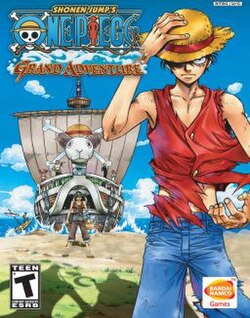
 One Piece Grand Adventure on PS2
 Taiko no Tatsujin: Dokodon! Mystery Adventure on Switch










 Another SquareThought Site