

 May 2026
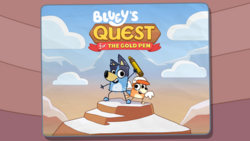

Bluey's Quest for the Gold Pen is Halfbrick Studios' take on a gentle, Zelda-adjacent adventure built from the world of the Australian kids' show. Penned by series creator Joe Brumm and scored by Joff Bush, the game drops the Heeler family into Bluey's drawings to recover the titular gold pen across nine handcrafted levels. It's a single-player experience made deliberately simple for younger audiences, and it shows: the design prioritizes clarity, charm and polish over mechanical complexity. Under the hood it uses the Unity engine, which influences a lot of the technical decisions you notice on the Xbox Series X/S build-asset streaming, shader choices, and cross-platform scalability being chief among them. If you approach this like a technical reviewer who also has a soft spot for pastel kangaroos, there's a lot to like in how Halfbrick balanced fidelity, accessibility and performance.
Gameplay is intentionally lightweight but thoughtfully implemented. Structurally the game follows an overworld-and-dungeons flow across nine levels: exploration hubs that funnel into puzzle-lite set pieces and short objective loops. Bluey controls with predictability-tight input-to-animation timing, a forgiving collision profile and simple contextual interactions (push, pull, speak, feed). Movement and camera are tuned for young players: deadzones are generous, movement acceleration is softened, and the camera uses a high-level collision-bias to avoid sudden occlusions. Those choices reduce player frustration but also reveal Halfbrick's focus on approachable systems design rather than emergent mechanical depth. The quest design borrows the classic 'collect, combine, use' loop of action-adventures but minimizes complexity. Key items unlock new zones and scripted sequences rather than open-ended puzzle chains-think collectible gating rather than physics-based contraptions. Enemy encounters are more spectacle than threat; Bandit-as-"King Goldie Horns" functions largely as a set-dress antagonist with a handful of telegraphed attacks and simple state-machine AI. The AI routines favor deterministic behaviors-patrol, investigate, retreat-so encounters are solvable through pattern recognition, which is intentional for the target demographic. There are a few mechanical hooks that give the game personality: Bingo-as-"Bingoose" (the goose) can be fed to produce a silver egg, introducing a tiny resource loop that rewards exploration and time investment. Feeding and inventory systems are deliberately minimal: limited slots, single-button context menus, and no cumbersome gear scaling. Progression saves on the clarity side-mission markers, contextual hints and a clean HUD keep players moving without getting stuck. The Xbox controller scheme translates well: inputs are mapped logically, triggers for interaction, bumpers for quick item switches, and a simple radial menu for emotes that fits the family-friendly tone. Where the game stumbles mechanically is in its lack of deeper systems for older players. There are no deep combat mechanics, no procedural encounters, and limited replay incentives beyond collecting show-based secrets. For those seeking tight skill ceilings or emergent gameplay, it will feel shallow. For parents and younger kids, the predictability is a feature: it reduces cognitive load and keeps the experience joyous and short. The pacing is tight-levels are bite-sized and designed for sessions under an hour-with a clear beginning/middle/end to each area that matches the episodic feel of the television series.
Visually, Bluey's Quest for the Gold Pen nails a faithful translation of the TV show's art direction into a three-dimensional space. The Unity engine was used to render a stylized world with flat-shaded character models, softened ambient lighting and a palette that keeps colors warm and saturated. Character rigs are relatively simple, favoring keyframe-driven cartoons instead of complex procedural animation. Blending and IK are used sparingly; most expressive cues come from facial blendshapes and hand-animated poses which preserve the show's charm while keeping CPU/GPU costs down. On Xbox Series X/S the build aims for a smooth, responsive experience rather than photorealism. The renderer leverages lightweight forward techniques: baked global illumination for static scenes, simple dynamic lights for characters and particle systems with modest overdraw. Unity's SRP (Scriptable Render Pipeline) appears to have been used to balance quality and performance across platforms-LOD transitions are conservative, texture streaming is prioritized so large texture sets don't spike memory, and shader complexity is intentionally low to reduce draw-call overhead. Performance is where the design choices show their payoff. The Series X/S port targets a high-framerate feel: animations are crisp, input latency is low, and frame pacing is stable for the majority of play. The game's modest particle and post-process budgets mean the GPU headroom is rarely saturated, so resolution scaling can favor native output without resorting to aggressive dynamic resolution. Load times feel short thanks to chunked streaming of level geometry and an emphasis on small, discrete levels rather than giant open worlds. Audio implementation benefits from Joff Bush's compositions-compressed audio assets are well-managed with streaming activated only for longer tracks, reducing RAM pressure. If you dig into the technical side, the game demonstrates efficient asset packing and cross-platform considerations that keep the Xbox build both smooth and visually faithful.
Bluey's Quest for the Gold Pen is a technically competent, lovingly crafted adaptation of a TV property that makes smart engineering choices to serve its design goals. Halfbrick's use of Unity is pragmatic: minimal shader complexity, efficient asset streaming, and conservative animation rigging produce a stable, responsive experience on Xbox Series X/S without bleeding performance for visual flair. The gameplay is deliberately shallow, which is precisely the point-this is a game built for kids and family co-play, with short levels, predictable AI and an accessibility-first control scheme. Critics rightly called it an improvement over earlier Bluey titles: it's tighter, better optimized and more faithful to the source material. If you are an 18-year-old looking for hard mechanical challenge or long-term replayability, you'll probably find it quaint but brief. If you're replaying with younger siblings, evaluating cross-platform builds, or just appreciating solid engineering choices in a kid-focused title, it's an impressive balancing act. The game's polish and technical stability earn it a solid score: 8 out of 10. It isn't trying to be a deep adventure, and it doesn't need to be-its strengths lie in accessibility, performance and a clear design vision that keeps kids smiling and systems running smoothly.
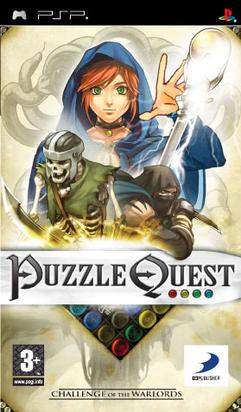 Dragon Quest X Offline on PS5
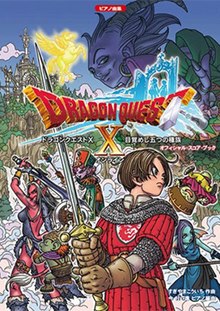 Quest of Dungeons on PS4
 Puzzle Quest 2 on DS
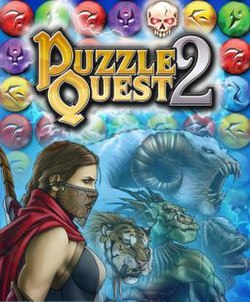 Tintin: Destination Adventure on PlayStation
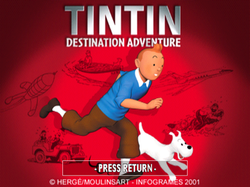 One Piece Grand Adventure on PS2
 Taiko no Tatsujin: Dokodon! Mystery Adventure on Switch
 Taiko no Tatsujin: Don to Katsu no Jikū Daibōken on Switch
 De Blob 2 on PS4
 Jetpack Joyride on PS3
 De Blob 2 on DS
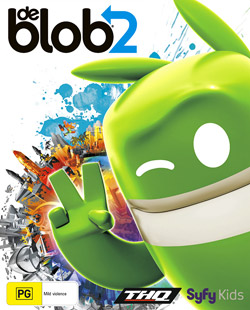 Ty the Tasmanian Tiger 2: Bush Rescue HD on PS4
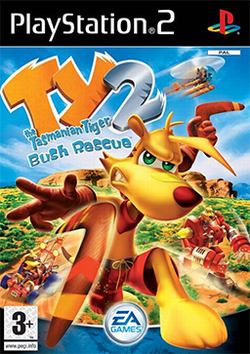 The Last Airbender on DS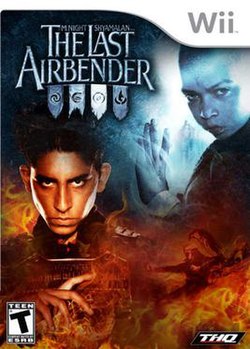










 Another SquareThought Site