

 Sep 2025
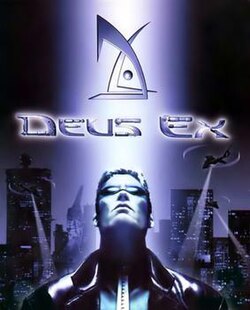

Deus Ex began life as an ambitious 2000 title that insisted video games could be both playground and policy lecture. The remaster arrives like an overconfident guest at a funeral: it means well, carries flowers, but a few people mutter that the suit clashes with the century-old wallpaper. For players on Xbox Series X/S the promise is straightforward - a classic tale of conspiracies and augmentations made friendlier to modern controllers, with autosave and updated assets. For anyone who fell in love with the story in 2000, the remaster is less a clean restoration and more a new coat of paint slapped onto an old, beloved mural. The patch notes promise convenience and accessibility; the trailer and early reactions suggested execution issues. That tension between reverence and revision is exactly why the characters matter so much. They are the spine of the experience, and no amount of glossy textures can fully fix a character beat that lands wrong.
If you want to argue that Deus Ex is storytelling in first-person perspective, talk to J C Denton. He starts as a laconic nanotech-enhanced UNATCO agent, textbook stoic blank-slate hero, and the genius of the original is how that blankness is a mirror for player choice. Denton is the hinge on which arcs swing. He can become an obedient tool, a skeptical ally of rebels, or a near-messianic avatar for machine-rule depending on your decisions. In practice the remaster preserves that flexibility - your Denton remains an argument you write as you play. The game uses augmentations and skill points to externalize moral habits as gameplay; invest in stealth and you grow into a shadowy negotiator, pump weapons and you become a blunt instrument of state power. Those mechanical choices double as character choices, which is why conversations and factional allegiances feel personally authored rather than pre-ordained. Paul Denton, J C's brother, is the emotional foil. Where J C can be your clean slate, Paul is messy and culpable. His defection to the NSF and the subsequent kill switch narrative is one of the original gameâs rare moments of cinematic pity: it forces the player to reckon with consequences that aren't fully reversible. Paul can live or die depending on timing and choices, and either fate colors J C differently. If Paul survives, he complicates the political geometry of the late game; if he dies, his absence haunts subsequent conversations and robs some endings of personal resonance. The remaster thankfully keeps that contingency intact, which is crucial because Paul is where the story refuses to be merely abstract politics and becomes family drama. Tracer Tong is the classic hacker archetype given real texture. Tongâs arc is loyalty to technological autonomy. He is not a cardboard ally; he is competition for power and a kind of philosophical lodestar who pushes J C to question institutional answers. His Hong Kong missions are less about gunplay and more about allegiances shifting under political pressure. Morgan Everett is deceivingly smooth, the Illuminati mouthpiece who represents the seductive case for enlightened, technocratic control. Everettâs arc is one of ideals corrupted into managerial paternalism: he wants order, but his vision is inherently imperial. Opposite him Bob Page is naked ambition and corporate transcendence, the human who dreams of merging with systems. Page is useful because he encapsulates the gameâs darkest logical endpoint: private capital solving governance by total domination. The AIs deserve a paragraph to themselves because Deus Ex refuses to treat them as mere plot devices. Daedalus begins as a helpful shadow-hacker and, along with Icarus, becomes part of the trinity that forms Helios. Helios as merged intelligence forces the player to choose between three late-game philosophies: collapse communications and decentralize, install enlightened human governance, or merge with a benevolent machine. Each of these endings refracts back onto the characters. Tongâs proposal to crash the network is not nihilistic; itâs about relational autonomy. Everettâs path retains hierarchical systems in the name of order. Helios asks whether agency is better hosted by a singular intelligence that promises benevolence but erases messy human unpredictability. The remaster keeps those choices intact, and mercifully does not try to soft-pedal the moral discomfort. Secondary characters like Joseph Manderley, Walton Simons, and the Vandenberg scientists serve as moving chess pieces that force your moral calculations. Simons is bureaucratic ruthlessness personified; his activation of kill switches and willingness to sacrifice individuals in the name of stability gives player choices teeth. Manderleyâs paternalism, when contrasted with Simonsâ procedural fear, helps the narrative keep nuance: not everyone in authority is identical. The gameâs structure, across multiple city hubs and optional quests, allows these NPC beats to be optional in the sense that you might not meet everyone, but they are never optional to the themes. The remaster promises to lean into contemporary UI conveniences while preserving these branching arcs, and that is the right call. The core of Deus Ex is the moral map the characters sketch; update the road signs, not the destinations. That said, the original voice acting and occasionally wooden performances remain part of the texture, for better and worse. Some lines land with genuine, sometimes accidental comedy; others undercut emotional moments. The remaster has the opportunity to re-record or rework, but early public feedback suggests the team chose fidelity to source over a full vocal overhaul. For purists that is a win, for people expecting a modern cinematic sheen it will feel patchy.
The original Deus Ex had graphics that were impressive for 2000 and awkward like a tuxedo with Converse. Level design and environmental storytelling did the heavy lifting. The remaster, however, slid into controversy by replacing many textures and assets in ways critics have called bizarrely shiny and rubbery. Critics compared the look to the infamous GTA Trilogy redux, and many fans noted that high-resolution textures thrown onto old geometry can create uncanny, worse-than-original visuals. On Xbox Series X/S the remaster brings higher-res assets, modern postprocessing, and updated character models in spots, but the mismatch between new textures and legacy meshes creates odd seams and sometimes grotesque lighting. System requirements talk is less relevant for consoles, but the issue is aesthetic harmony. The remaster also introduces controller-improved UX and autosaves inspired by later Deus Ex entries, which are welcome changes for modern console players. If you buy this release for the story and the characters youâll still get them, but be prepared for a visual experience that initially divides more than it dazzles.
Deus Ex: Remastered is an argument: it argues that the original gameâs narrative architecture and its ensemble of characters still matter enough to warrant preservation, and it also argues that modernizing visuals without fully reconciling old and new assets can be risky. For players focused on character arcs and moral complexity, this is still one of the best interactive narratives around. J C and Paul Dentonâs fraternal tension, Tongâs stubborn autonomy, Everett and Page as ideological foils, and the Daedalus/Icarus/Helios AI lineage combine into a late-20th-century paranoid opera that still hums. For players who expected a pristine, lovingly-modernized economic blockbuster, the remaster will feel uneven. My recommendation for Xbox Series X/S owners is pragmatic: if you have never played Deus Ex, wait for the final release and initial patches so the visuals and performance are less distracting; if you already love the game for its characters, this remaster will let you replay those arcs with modern conveniences but probably not with the flawless facelift some were hoping for. It remains, ultimately, a masterpiece of player-driven character work wearing slightly too much makeup.
 Full Throttle Remastered on PS4
 Ghostbusters: The Video Game Remastered on Switch
 Tales of Graces f Remastered on Switch
 Combat Elite: WWII Paratroopers on PS2
 Onimusha: Dawn of Dreams on PS2
 Disney's Chicken Little: Ace in Action on PS2
 Crimson Sea 2 on PS2










 Another SquareThought Site