

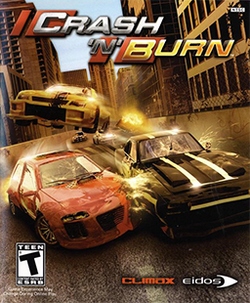

Crash 'n' Burn arrives like a car chase montage stitched together by someone who loves the smell of burning rubber and the sound of plastic bumpers hitting concrete. It's a single-player vehicular brawl set on fictionalized versions of Miami, Las Vegas and San Francisco, developed in a brisk 12 months by Climax Racing and published by Eidos Interactive. The game brags about 16 AI opponents, four car archetypes (Compact, Pickup, Muscle, Sports) and a buffet of chaotic modes - Race, Team Race, Kamikaze, Running Man, Last Man Standing, Bomb Tag and Assassination, to name a few. If you're the sort of person who thinks 'race' is shorthand for 'survive while using your car as a blunt instrument,' this one will keep your palms sweaty. The tagline should have been: learn to drive, learn to fight. Crash 'n' Burn is less about precision lap times and more about situational awareness, improvisation and exploiting the environment. Its mixed reviews (Metacritic hovering in the low-60s) are fair: there's fun to be had, but the learning curve and the game's focused design choices mean you either embrace the chaos and improve, or you blame physics and the AI and go back to something more polite. If you want a review that focuses on the challenge aspects and the skills this game actually tests, buckle up - and don't take the ramps personally.
Crash 'n' Burn wears its challenge on its sleeve. The game hands you four distinct car models to learn - Compact, Pickup, Muscle and Sports - and then politely refuses to make them feel the same. Each model has its own driving physics; that means the core skill the game tests is adaptability. You can't just memorize one corner, one braking point and call it a day. Switching from a compact that likes to dart and dodge to a muscle car with heavier momentum forces you to recalibrate timing, throttle control and how much trust you put in the brakes. A huge bite of challenge lies in the roster of game modes. Simple circuit races are a different beast from Kamikaze Races, where half the field is driving toward you like automotive kamikazes. In Kamikaze and Team Kamikaze, spatial awareness and reaction speed are paramount: you're not just racing the line, you're choosing which incoming enemy to avoid and which to smack into for a reward. Running Man and Bomb Tag tilt the balance toward evasion and tagging accuracy. Running Man demands that you track a highlighted target and either chase them aggressively or weave like a greased weasel to avoid becoming the target yourself. Bomb Tag is a frantic game of hot potato - the timer is a terror and tagging requires both contact accuracy and a sense for the safest moment to offload that ticking grenade. These modes test short-term tactical thinking far more than textbook racing lines. Combat-focused modes such as Last Man Standing and Assassination shift the skillset again. Last Man Standing is actually an endurance and resource-management puzzle: wreck opponents but avoid becoming wreckage yourself. The scoring system rewards wrecking opponents and surviving to the end; that means choosing when to commit to risky maneuvers and when to play patient. In Assassination, a brief window where a player is highlighted turns the track into a hunting ground - knowing how to close the gap while predicting enemy trajectories becomes a premium skill. Obstacles - both static and dynamic - are the game's way of throwing a new variable at your learning. Static features like slaloms, crossovers and ramps force precision at high speed: miss a slalom and you'll either spin out or get punted into a wall. X tracks (the 'high risk' variants) add extra bumps and ramps, tempting you with shortcuts that can extract a glorious lead or dump you into a pile of AI. Dynamic hazards like oil slicks, ignitable fuel and the detritus of wrecked cars mean the track changes as the race unfolds. That wreckage can close a line, open a trap, or create a ramp you didn't expect. The skill tested here is adaptability under pressure: read the track, anticipate how other racers will shift the racing line, and plan contingencies. AI behavior and the 16-opponent field are part of the challenge architecture. With that many drivers, the track rarely feels empty; traffic becomes tactical reality. Pack awareness - the ability to know who's where without staring at the radar - is a skill you develop. The AI can be aggressive, which rewards pre-emptive defensive driving: position your car so that an incoming opponent has to go wide, or use small nudges to destabilize them. Team modes introduce a tactical layer: positioning for collective team points means you sometimes sacrifice personal placement for a team win. Successful team play requires an understanding of scoring mechanics and an ability to herd AI behavior subtly. Customization and progression are subtle tests of resource allocation and planning. Every event gives you EXP and money; EXP levels unlock new shop items and the muscle and sports cars, while money buys them one at a time. The system forces players to decide what to prioritize: do you buy a cosmetic body part that lets you look like a real-world car, or do you save to unlock a higher-tier car that changes the way you approach races? Although the game emphasizes visual customization (spoilers, bumpers, side skirts), the broader skill challenge is economic: optimizing which events to farm for EXP, which bonuses to chase (wrecking opponents, fastest laps, leading laps) and how to balance unlock speed against actual on-track improvement. Mastering Crash 'n' Burn is less about perfection and more about pattern recognition. Track memorization matters - not just the layout, but where dynamic hazards spawn and where static obstacles force line changes. Moment-to-moment decisions matter: is that ramp worth taking when you're leading, or does it hand your position to an oncoming kamikaze? The game rewards players who can switch mental models - race like a racer when the mode calls for it, fight like a brawler when the scoreboard incentivizes wrecks, and evade like a ghost when Bomb Tag makes you a prime target. The single-player focus is a double-edged sword. It creates a consistent environment to learn AI quirks and to grind EXP, but it also means you're always training against pattern-based opponents rather than unpredictable humans. That amplifies the value of studying AI tendencies: learn which opponents are brawlers, which try to avoid collisions, and which tend to be suicide rammers in Kamikaze modes. Once you can predict them, you can manipulate the field. The game's mixed reception is understandable - the learning curve and emphasis on modes that reward aggressive, improvisational play can feel uneven - but if you are someone who enjoys learning a system, exploiting patterns, and turning chaos into controlled pandemonium, Crash 'n' Burn offers a rather pure test of those skills.
Graphically, Crash 'n' Burn wears its PS2/Xbox-era pedigree with pride but no delusions of grandeur. The tracks are recognizable grabs from Miami, Las Vegas and San Francisco, albeit fictionalized; they're functional playgrounds rather than postcard-perfect recreations. For the kind of skills the game tests, the visuals do their job: obstacles are readable, ramps and slaloms are clear, and dynamic effects like oil slicks or ignited fuel are visually communicated well enough to give you time to react - which is crucial, because reaction and decision-making are the core skills here. The art direction leans toward grit and spectacle rather than subtle realism, which suits the chaotic, combat-forward gameplay. Some reviewers at the time pointed out rough edges and repetition in texture work and AI animations, and those criticisms show up if you stare too long. In the thick of a 16-car brawl, though, the game's visuals mostly become a functional backdrop for the real contest: can you survive that next explosion and tag the right car before the bomb timer ends?
Crash 'n' Burn is a lesson in controlled chaos. It's not the sort of game that politely asks you to lap an ideal line and clap. It challenges you to think on multiple timescales: moments of precise handling through slaloms and ramps, medium-term planning around EXP and unlocks, and split-second tactical choices in modes that reward wrecks, tags and evasion. The varied game modes mean the title tests a broad skillset - adaptability between vehicle physics, situational awareness in crowded fields, tactical tagging and evasion, and economic planning for customization. The single-player focus and relatively short development cycle (12 months) left some polish on the cutting room floor, and critics reflected that in mixed scores. If you care about tight simulation and pristine visuals, this isn't your dream machine. If you enjoy learning systems, exploiting patterns in AI, and gradually becoming a better brawler-driver who can flip between racing line and wrecking ball as the scoreboard demands, Crash 'n' Burn is a compact but rewarding sandbox. The game's real victory is how it turns a handful of mechanics and a stack of hazards into a school of skills: read the track, know your car, pick the right time to ram, and pray the bomb isn't on you when the timer hits zero. For players who like their racing with a side of mayhem and a curriculum in improvisational driving, give it a go - just don't expect it to hold your hand for long.
 Crash of the Titans on PS2
 Crash: Mind over Mutant on PS2
 Crash Team Rumble on Xbox Series X/S
 Project Awakening on PS4
 Combat Elite: WWII Paratroopers on PS2
 Monster Hunter Stories 2: Wings of Ruin on Switch
 Tomb Raider: Underworld on PS3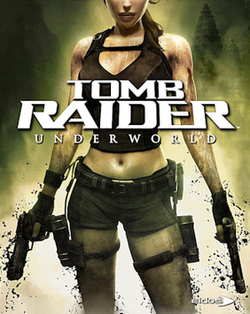












 Another SquareThought Site