


 Aug 2025
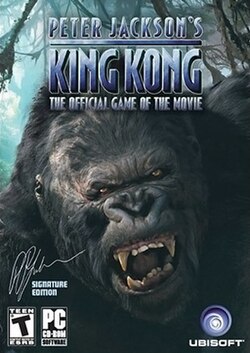

In an era when licensed games were routinely dismissed as hastily produced cash-ins, Peter Jackson's King Kong arrived like a polite guillotine for that cynical expectation. Marketed as the official tie-in to Jackson's 2005 film and shepherded by Michel Ancel's design hand, this PlayStation 2 release presents a curious blend of blockbuster ambition and old-school gamecraft. It attempts the unusual: to translate a director's cinematic intent into interactive terms while asking the player to step into two radically different sets of boots-one suede, one fur. Viewed through the lens of a serious 1990s critic -the kind who kept a taped-up GamePro at the ready and believed lighting was half the battle-King Kong on PS2 is an audacious, occasionally awkward experiment that mostly succeeds. It borrows the film's beats and expands them into tense, often memorable sequences. The result is neither perfect nor uniformly polished, but it is frequently closer to a small motion picture than to the forgettable budget tie-ins of yesteryear. For those who remember reading previews in magazines with grainy screenshots and borderline hyperbole, the game feels like a welcome throwback to an industry trying to be cinematic without sacrificing interactivity.
King Kong divides its chapters like a two-act play: Jack Driscoll's human struggle is handled in first person, while Kong's hulking fury is delivered in third person. The human sections lean heavily into survival-adventure mechanics. There is an intentional de-emphasis of HUD elements: health bars and ammo counters are disabled by default so that the screen becomes the player's only confidant. When danger nips at Jack, the screen edges blur and vision distorts-an elegant, if occasionally frustrating, device that forces you to pay attention to visual and audio cues rather than relying on on-screen readouts. Combat with firearms and spears feels serviceable; encounters with the island's fauna demand movement, cover and improvisation rather than trigger-sticky bravado. Switching to Kong is where the game becomes unashamedly theatrical. The giant ape is an instrument of spectacle: he punches, grabs, bites, hurls objects and even goes into a "fury" mode after a chest-beating animation that tints the sky and turns Kong into a walking wrecking ball. These sequences are the game's blockbuster hooks-giant monster fights, environmental destruction, and the weirdly satisfying physics of lobbing theropods like discarded props. Many Kong sequences function as boss fights, since Jack's pistolry is laughably inadequate against the island's hulking predators. The contrast between Jack's fragility and Kong's brute force is well-conceived and frequently compelling. Design-wise, Ancel and team build scripted set-pieces around player agency: you're guided into cinematic beats but given a surprising amount of freedom inside them. The pacing is brisk; the narrative follows the film closely enough to feel familiar, but the game expands exploration and combat in ways the movie never could. There is an unlockable alternate ending-approved by Peter Jackson-if the player earns enough points or uses cheat codes, and that kind of playful reward system is a neat, old-school touch that rewards thorough play. Where the gameplay falters is in a handful of mechanical and camera quibbles. Kong's arena-like battles sometimes descend into button-mash territory, and platforming for the big ape can feel imprecise, especially when the camera prefers a director's eye over the player's clarity. A few enemy encounters and level layouts can be repetitive, and on PS2 the AI occasionally exhibits the kind of opportunistic confusion that was common in the previous generation. Still, these are blemishes on a generally inventive surface; many sequences remain vivid long after the disc stops spinning.
On PlayStation 2 hardware, King Kong manages to be a surprisingly handsome title. The game's lighting and environmental design are its true showpieces: jungles look humid and brooding, cave systems swallow your sight with a satisfying, filmic weight, and the island's verticality is rendered as a playable set of backdrops rather than flat stages. For a licensed product in 2005, the textures and model work are commendable-the characters are recognizably based on their film counterparts and the monster designs carry an aggressive, pulpy charm. The engine leans into cinematic presentation; camera angles, depth of field and weather effects are used to nudge the player through emotional beats. This sometimes leads to the camera making bold editorial choices that a 1990s critic would have admired for their ambition but also cursed when they interfered with platforming or close-quarters combat. Kong himself is well-animated for the hardware-his weight and momentum are believable-and the fury mode's golden tint is an effective dramatic flourish. The PS2 isn't the sharpest lens for this spectacle-Xbox 360 and later PC "Gamer's Edition" builds offered enhanced visuals and audio-but within its constraints the PlayStation 2 version delivers a cinematic veneer that outpaces many contemporaries. Occasional pop-in, texture softness at a distance and HUD-less ambiguity can hamper readability in high-tension moments, yet those trade-offs are often forgivable given the game's ability to conjure atmosphere.
Peter Jackson's King Kong for PlayStation 2 is the kind of licensed game that used to warrant disbelief: ambitious, surprisingly artful and, yes, a little rough around the edges. It marries first-person survival tension with third-person giant-monster set pieces in a way that honors the film's scale while offering genuine interactive value. When the design sings-those early jungle chases, the kerfuffle with giant reptiles, Kong's saves and rages-it feels like a miniature blockbuster you can control. When it stumbles-camera choices, occasional repetitive arenas, and Kong's sometimes blunt combat-it still rarely drags the experience into failure. If you bought your PS2 for headline-grabbing spectacles and appreciated games that wore their cinematic ambitions on their sleeve, this is the tie-in that earns its keep. It's not flawless, but it is memorable, inventive and, crucially, more than a branded afterthought. For a 1990s-minded critic with an eye for atmosphere and a soft spot for director-driven projects, King Kong is the kind of licensed title that restores a little faith in what movie games can be. Recommended for players who want a lyrical, occasionally brutal adventure with both fragile human terror and unapologetic ape violence. Final score: 8.2/10.
 Press Your Luck on PS3
 Game Dev Story on PS4
 Constantine on PS2
 Tintin: Destination Adventure on PlayStation
 One Piece Grand Adventure on PS2
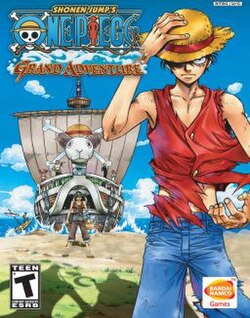 Taiko no Tatsujin: Dokodon! Mystery Adventure on Switch
 Onimusha: Dawn of Dreams on PS2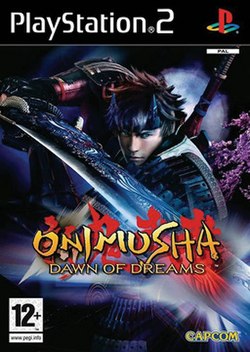
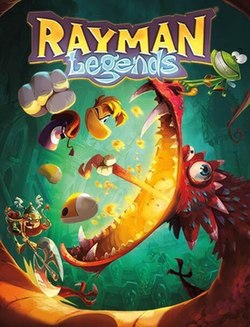 Rayman Legends on Switch
 Prince of Persia: The Lost Crown on PS4
 Just Dance 2014 on PS4
 Just Dance 2014 on PS3
 Rayman Raving Rabbids on DS










 Another SquareThought Site