



Pop'n Taisen Puzzle-Dama Online wears an identity crisis very stylishly: it's billed as a PS2 puzzle game, but it clearly grew up with Pop'n Music's flamboyant personality and refuses to leave the house without its mascot outfits. If you've ever wondered what would happen if nine-button rhythm archetypes decided to play match-three with a fever gauge and level up their emotional baggage, this is that thing. The game borrows liberally from Pop'n Music's design philosophy-big, colorful buttons; anthropomorphized "Pop-kun" notes; and a parade of characters whose very presence narrates the player's progress. Where a pure puzzle game might hand you tiles and a cold algorithm, Pop'n Taisen hands you a rabbit named Mimi, a cat named Nyami, and a cast of supporting song-characters who undergo surprisingly coherent little arcs across matches. This review digs into what most reviewers skip: character and story arcs. That's not an accident. Konami's Pop'n lineage treats characters like micro-narrative engines: their animations respond to your groove, their banners tell you their stage, and even the way the gauge spikes speaks to a tiny emotional beat. Pop'n Taisen builds a puzzle shell around that heartbeat, and the result is both oddball and oddly affecting.
At its core, Pop'n Taisen is familiar puzzle fare-match tiles, manage Ojama (the game's equivalent of garbage blocks), and climb rounds. The twist is that everything is keyed to Pop'n Music's nine-button aesthetic and performance feedback. The game translates rhythmic accuracy into puzzle momentum: the better you chain matches, the more your chosen character performs, the more chances you get to trigger "action" states that alter the board or send Ojama to your opponent. It feels like playing Tetris while your avatar gives you a personal pep talk. Mimi and Nyami, the default rabbit-and-cat duo, are your emotional barometers. They don't just cheer when you combo; they grow in confidence. Early rounds show Mimi timidly twitching her ears as you fumble through easy matches; by mid-session, a streak of successful clears has her practically breakdancing on the corner of the screen. This is the game's core loop: your mechanical success manifests as small character growth, which in turn invites you to invest emotionally in doing well. Unlike games that treat characters as chrome, Pop'n Taisen makes them the reward. The modes are clearly inherited from Pop'n Music and repurposed into puzzle contexts. Battle Mode condenses into a head-to-head where only three primary buttons are actively involved, but the fourth "action" button becomes the fight-or-flight mechanic: hitting it at the right time triggers a minigame along the board edge. Those minigames are deliberately theatrical-think a quick rhythm test that, if won, staggers your opponent with Ojama. You can almost see the characters smirking when they shove a mountain of garbage squares across the screen. Expert Mode (aka Expert Courses) is where the story arcs take a dark, gloriously dramatic turn. In these run-style sets the character you picked is put through trial by Stamina gauge-failures sting, and there is a new accuracy tier, "Cool", that reads like the game judging your soul. "Cool" appears when you manage technically demanding clears, and your character's animations change from celebratory to zen. If you're the kind of player who enjoys slowly turning a timid mascot into a battle-hardened star, Expert Mode is training montage fuel. Challenge and Cho-Challenge blend difficulty and narrative hooks: songs (or in this case, stages) have point values, and activating "Norma" and "Ojama" options stacks dramatic conditions. These are the chapters of the game: each stage you pick is a scene where the character either overcomes a silly obstacle (a cascade of Ojama) or fails spectacularly (watch the Groove Gauge collapse and your character slump-it's almost Shakespearean in a 64-color palette). The presence of potential EXtra stages as reward gives each arc a payoff: clear the Norma, and your protagonist gets an extra scene-their triumph animation is more elaborate and, if you're into this, curiously satisfying. Technically, Pop-kun are the game's smallest actors and largest emotional delivery system. Modeled as face-bearing notes that fall in nine columns, they act like a Greek chorus: when you succeed, they bubble; when you fail, they sulk and create Ojama. Options like Hi-Speed, Pop-kun skins, and Random allow players to control the sensory expression of the chorus, which indirectly alters the perceived personality arc of your character. Want Mimi to seem fearless? Turn the Hi-Speed up, make Pop-kun bold, and watch her swagger. Online and Net Taisen inspirations mean the game occasionally brings in CPU stand-ins and network-style competition. On PS2 that translates into CPU emulation of Net modes-bot opponents with clearly defined personalities. Some are showboats who taunt when they land combos; others are steady, stoic types who only emote on their EXtra stage. The result is a gallery of short, repeated story beats: every loss or win nudges your chosen avatar forward in a mini-retrospective of growth, regression, or comedic meltdown. It's addictive because each match feels like writing a tiny episode of a sitcom where you also control the punchline.
Graphically, Pop'n Taisen borrows Pop'n Music's bright, blocky aesthetic. Characters are cartoonishly expressive, designed to convey large emotional changes with limited frames-perfect for the PS2's hardware constraints. The nine-button layout and the oversized Pop-kun notes read clearly even when the screen is busy. Animations are intentionally simple but heavy on personality: Mimi's ears flop, Nyami's tail flicks, and opponents perform melodramatic reaction shots when you pull off a clutch clear. The game doesn't pretend to be a polygonal epic; it embraces 2D charm and uses color, timing, and a few well-timed sprite flourishes to sell emotional moments. The designers also used HUD elements as emotive devices. The Groove Gauge isn't just a life meter; it is a heartbeat. Hitting Fever (or Cool in Expert) changes a character's win animation and gives visual applause that reads like the audience standing up for your protagonist. Small touches-banners showing a stage's BPM and character portrait before each round, the different skins for Pop-kun notes, and animated reaction frames-add layers to the narrative impression without slowing the puzzle action. If you like your visuals to double as a soap opera, this game's presentation understands you.
Pop'n Taisen Puzzle-Dama Online is a delightful oddity: a puzzle game that treats its characters as the main attraction and then makes those characters' little arcs the reward for good play. It's not the deepest puzzle system ever designed, and it borrows heavily from Pop'n Music's notes-and-groove framework, but the emotional payoff is surprisingly rich. Match streaks don't just fill a score; they narrate a rise from timid performer to festival headliner. The PS2 era presentation keeps things readable and charming, and modes like Battle, Expert, and Challenge provide the structural acts for those character beats. If you're in the market for a puzzle game that doubles as a micro-narrative machine-where your victories feel like character development-this is the one to play. It rewards mechanical skill and emotional investment in equal measure. Score: 8.0/10. It's not just a game about tiles and Ojama; it's a weird, colorful soap opera where Mimi and Nyami happen to be your co-writers. And yes, they'll judge you for every dropped combo with unparalleled feline-rabbit disdain.
 Twinbee Taisen Puzzle Dama on PlayStation
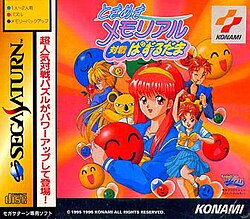
 Tokimeki Memorial: Taisen Puzzle-Dama on PlayStation
 Raiders of the Broken Planet on PS4
 Touhou Spell Bubble on Switch
 Project Awakening on PS4
 Pop'n Music 12 Iroha on PS2
 Pop'n Music 7 on PS2
 Pop'n Music 11 on PS2
 Pop'n Music 10 on PS2
 Pop'n Music 14 Fever! on PS2












 Another SquareThought Site