



PrideGP Grand Prix 2003 wears its origins on its sleeve like a fighter with a brand-new gi: it is explicitly, unabashedly based on Pride Fighting Championships. Made by DreamFactory and released by Capcom for the PS2 in Japan in November 2003, the game arrives with the pomp of an arena lights package but - if you read the little pamphlet that is the official documentation - not necessarily the novella-length backstories you'd expect from modern sports titles. Composer Yasuharu Takanashi handles the audio underscoring, giving the proceedings a suitably cinematic punch, but the main narrative thrust of PrideGP is not a script-heavy tale. Instead, the characters here are largely defined by what they do in the ring. That's not a flaw so much as a choice: PrideGP is a gladiatorial roster delivered as a mechanical drama, and the drama lives in match result screens and tournament brackets rather than cutscenes and diary entries.
If you approach PrideGP looking for soap-opera arcs and tearful monologues you'll be asking the wrong corner of the gym for tissues. The game's roster - drawn from the Pride FC world - behaves like a cast of archetypes rather than a troupe of soap characters. There's the hulking grappler who smells faintly of chalk and inevitability, the precise striker who treats the ring like a chessboard of fists, and the submission specialist who patiently waits for the ankle to confess its sins. Each of these archetypes functions as a character class, and the narrative of each fighter is composed of how you, the player, interpret their rise or fall through the tournament structure. Mechanically, PrideGP frames its characters with systems that imply a story: stamina and damage states are not just stats, they're emotional beats. A bruised striker limping toward the center spot reads like a proud veteran refusing to fold; a submission ace playing guard with the serenity of someone who already knows the ending reads like a patient antagonist biding their time. Where many modern games hand you cinematic epilogues, PrideGP hands you bracket advancement. That bracket becomes the five-act structure: introduction (first match), complication (upset or injury), development (strategic adjustment), climax (the title bout), and resolution (championship, KO, or controversial decision). The game trusts the player to stitch these matches together into an arc. There are, to be clear, no deep bespoke narratives for each fighter in the source document. This absence forces the game's real storytelling to be emergent. A CPU-controlled favourite can become an underdog when you learn its exact counters; a combination of player skill and timing can rewrite the arc of a character from "inevitable bruiser" to "noble fallen star." This kind of emergent drama is especially rewarding in multiplayer, where human psychology fills in the missing paragraphs. Your local friend who plays the wrestler becomes, by sheer stubbornness, "The Indomitable"; the way they pipe up after a comeback KO supplies backstory in a way the manual would not. PrideFC's identity - a hybrid of spectacle, martial artistry and national pride - bleeds into the characterization as well. DreamFactory and Capcom clearly prioritize atmosphere over serialized storytelling. The fights are staged like episodes of a show: the ring announcer's cut is the narrator, the crowd is the chorus, and Takanashi's score provides the emotional punctuation. If you insist on assigning classical arcs to the characters, you'll find templates: the Rookie (player-protagonist who learns tight links between offense and defense), the Veteran (a boss who punishes impatience), and the Wildcard (an unpredictable playstyle that reshapes the tournament's meaning). PrideGP doesn't give each fighter a diary entry; it gives them a role to play in your personal narrative. Play long enough and you will have authored more compelling arcs than any locked-in cinematic could. Still, that approach has trade-offs. Players who crave explicit character development may come away feeling hollowed out; the game's storytelling engine sometimes lacks connective tissue. The absence of deep single-player narrative scaffolding means that the "emotional" beats depend entirely on gameplay variety and the player's imagination. On the other hand, if you enjoy role-playing a fighter through tactic and trial, PrideGP hands you a surprisingly effective sandbox for forging character arcs out of hits and submissions. The game's design thereby positions the player as co-writer: you create the legend by executing the comeback, not by watching it.
Graphically, PrideGP sits in the PS2 era where faces are a polygonal approximation of humanity and stadiums glow like slightly embarrassed neon. The fighters are modeled with a reasonable level of fidelity for the platform and the time, but the visual storytelling is not about hyperrealistic skin pores. It's about silhouettes in the ring: a bulkier silhouette announces a grappler's presence, a wiry frame promises agility. The camera and animation work do a fair job of communicating these attributes - impact looks punchy, and transitions into clinches or submissions are clear enough that they contribute meaningfully to the dramatic rhythm. Lighting and crowd textures lean toward functional rather than sumptuous, which fits the game's focus on mechanical clarity. Where the graphics serve the characters best is in readable feedback. Damage states, stances and the look of fatigue are legible even if the facial animations are sometimes as subtle as a punch to the jaw. Composer Yasuharu Takanashi's music helps sell the drama where the polygons don't: the score supplies crescendos for comebacks and somber notes for near-misses. In short, the visuals combine with audio cues to make each fighter's arc legible in the language the game speaks fluently - combat, not cutscenes.
PrideGP Grand Prix 2003 is less a character-driven RPG and more an arena in which characters emerge from combat mechanics and player choices. DreamFactory and Capcom have created a fighting game that, by design or necessity, hands the authorial baton to you. If you want tidy character biographies with flashbacks and relationship trees, this isn't the game for you. If you want to write your own fighter epics - the bitter veteran who finally retires as champion, the underestimated striker who learns to weather the clinch - then PrideGP provides a compact, satisfying stage. It's a game with personality by omission: its storytelling is the story you make by stringing together matches and moments. That gives PrideGP a particular charm and a certain old-school confidence. It's not the most polished or narratively encyclopedic fighting game, but it is rewarding in a way that values sweat over scripted sentiment. For that reason I give it a 6.5 out of 10: an earnest, mechanically sound piece of Pride FC nostalgia that asks you to bring the drama, and will reward you if you do.
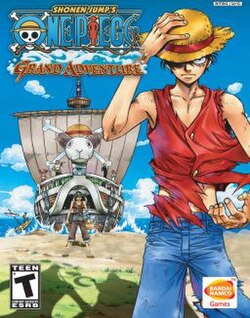 One Piece Grand Battle! on PS2
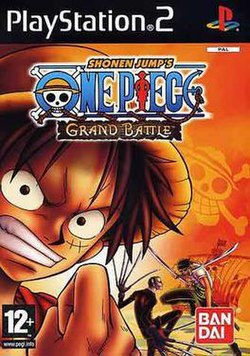 One Piece Grand Battle! 3 on PS2
 Ultraman Fighting Evolution on PlayStation
 ACA Neo Geo: Art of Fighting 2 on Xbox One
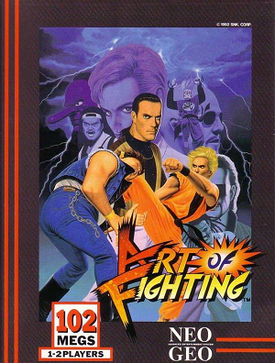 ACA Neo Geo: The King of Fighters '98 on Xbox One
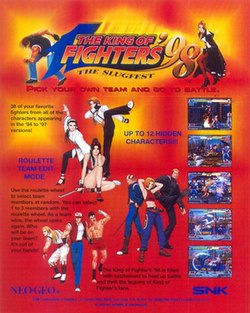 Touhou Hyoibana: Antinomy of Common Flowers on Switch
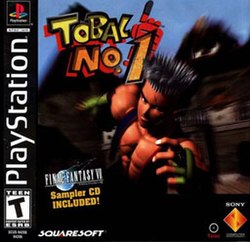
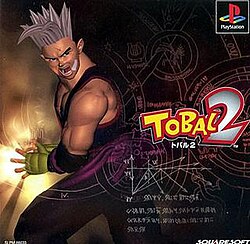 Tobal No. 1 on PlayStation
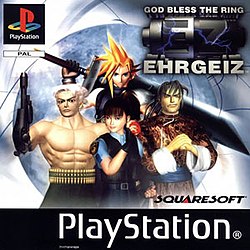
 Ehrgeiz: God Bless the Ring on PlayStation
 Crimson Tears on PS2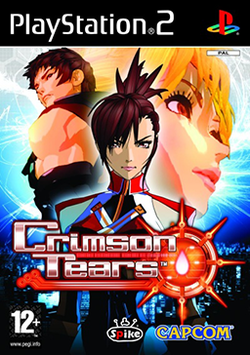












 Another SquareThought Site