

 Aug 2007


Uncharted Waters Online, known in Japan as Daikoukai Jidai Online, is the sort of MMORPG that smells faintly of brine, old maps and very earnest historians. Cruz del Sur, the second expansion, arrives as a salty wind that promises circumnavigation, Inca mysteries and a chance to sign up with the Ottomans by contract if you like your career choices historically inconvenient. On PS3 this world of trading, duels and sea-feuding is packaged into a console experience that aims to translate sandbox freedom and dozens of character-driven national storylines into a living, multiplayer tapestry. This review looks at Cruz del Sur through its strongest lens: its characters and their arcs. If you play for ships alone you will be entertained, but if you play for people-ambitious traders, disgraced nobles and teenage prodigies who somehow run entire plotlines-you will find the expansion quietly satisfying.
Uncharted Waters Online divides its world not only by sea, land and port, but by nationality, and each national arc is delivered as an event storyline anchored to a protagonist. Cruz del Sur adds sea routes, Pacific ports and new narrative pockets, which means more coastline for these characters to argue over. The gameplay itself is a mixture of trading, exploration, combat and faction events like the Epic Sea Feud, but the expansion's real charm comes when those mechanical systems become the stage for character development. Portugal's thread is youthful and merchant-minded. Alvero Sarmiento, a 17-year-old trader, is the archetypal merchant coming-of-age: enthusiastic, charming and surrounded by older, protective figures like Diego Sarmiento, the head of the family company. The arc suggested in the game materials is a passage from boyish market hustler to someone who can shoulder corporate legacy. The presence of Vasco da Gama in the Portuguese roster anchors Alvero's arc in historical pride: exploration and national heroism are the mirror in which the young trader sees his possible future. Cruz del Sur's circumnavigation content amplifies this arc. When Alvero sails into Pacific regions added by the expansion, his storyline feels less like a private growth tale and more like a national micro-epic about Portugal expanding its horizons-literally. Spain gives us blunt instruments in human form: Baltasar Oliveira and his protégé Eduardo de Mascareñas. Baltasar is revenge and duty wrapped in a captain's coat; Eduardo is the plucky aspirant whose social origins make his hunger for advancement cut a little deeper. Their arc is classic military mentorship turned moral mirror. As Spain's political reach tugs at territories like the Netherlands and the Mediterranean, Cruz del Sur does something useful: it layers in external theatres. Eduardo's hunger for recognition gains new tests when mercenary fleets must navigate not just Habsburg politics but oceanic logistics, and the addition of Ottoman-related content in later Cruz del Sur chapters gives Baltasar's anti-pirate crusade fresh moral complications-who is a pirate, who is an ally, and what does contract loyalty mean when the map suddenly includes new ports and allegiances? England's storyline revolves around Liza Middleton, a naval officer from a former piracy family. Liza's arc is a balancing act of reputation, family legacy and duty. The game's economic framing of England-wool markets destabilized by Spain's meddling-makes Liza's personal stakes political. When Cruz del Sur expands navigable waters and throws in Pacific trade routes, Liza's conflicts shift from local naval skirmishes to broader strategic decisions: protect trade routes, settle debts of the family name, or take a swashbuckling detour into discovery. The PS3 edition's streamlined controls help these decisions feel kinetic rather than menu-driven: a boarding action or convoy escort becomes a moment that moves her character forward. The Netherlands storyline is the one that smells most of rebellion. Fredrik Van Metteren and the revolutionary-leaning Hoorn embody a courier nation inching toward independence. Their arcs are less personal melodrama and more socio-political narrative: independence movements, taxation, and the cost of commerce. Cruz del Sur's new expeditions give them a chance to expand influence globally. When Fredrik transports 'dangerous' goods across a widened map, it reads like a character being forced to grow-either succeed and become indispensable, or collapse under geopolitical pressure. France and Venice are the courtly and the maritime-social fabrics of the game. Julien Clarence, a quiet treasure-hunter, has the contemplative arc of someone who values art and history over cannon. The expansion's new discoveries in the Pacific and Inca chapters feed directly into Julien's personality: treasure hunting across a broader world lets him evolve from a regional antiquarian into an international man of refined curiosity. Venetian players navigating Vittoria Orseoro and Alvise Orseoro find their arcs entwined with trade decline and the shifting spice routes-Cruz del Sur's Spice-related chapters and Inca content are narrative salves that provide Venice with opportunities to reassert itself. Across the board, Cruz del Sur's mechanical additions-circumnavigation, pets, special ornaments, and Pacific ports-act as narrative catalysts. Pets and ornaments might seem cosmetic, but they function like stage props that tell you more about who a character is. A merchant decking his flat with special ornaments signals social aspiration, while an adventurer with a faithful pet hints at softer emotional stakes. The Menace of Ottoman content is the expansion's most interesting narrative device: by allowing players to contract with the Ottoman presence, the game forces many characters into uncomfortable alliances. For instance, a Spanish captain hunting Barbary pirates suddenly has a different set of choices when Ottoman contracts and new Pacific routes intersect. Those choices deepen arcs by creating moral friction and testing loyalties. Mechanically, the game doesn't reinvent the wheel: sea combat, trade loops and skill-based progression remain familiar. What Cruz del Sur does is give those loops more narrative weight. Sailing to a new port isn't just a gameplay unlock; it can be a turning point in a character's storyline. The PS3's presentation smooths the control experience and makes mid-battle decisions feel immediate, which helps push character beats into player memory. If you enjoy character-driven RPGs but want your drama distributed across fleets and harbors instead of single-player cutscenes, Cruz del Sur scratches that itch with a salty, sea-spray flourish.
On PS3 the game's visuals age like a seafarer with tales: not fresh enough to impress someone chasing photorealism, but charming in a way that suits its historical, map-heavy tone. Towns, ships and character portraits are readable and evocative; the character models are functional rather than cinematic. Cruz del Sur's new ports and Pacific fields add variety to the visual palette-jungle fringes near Inca sites, sunlit harbors for circumnavigation and Ottoman-influenced architecture on contracted ports all help keep the scenery lively. Animated sea battles are serviceable and occasionally dramatic, especially when the console's controller makes tactical shifts feel immediate. The UI is utilitarian and a little dated, but it does the job of shepherding a hundred-plus ships, dozens of skills and many national questlines without collapsing in on itself.
Cruz del Sur is less about flashy new mechanics and more about expanding the canvas on which its many characters can play out their arcs. The expansion's additions-circumnavigation, Pacific ports, Inca content and the Ottoman contract system-are narrative multipliers that force characters to make harder choices and to grow in response to a widening world. On PS3 the experience is comfortably accessible, with controls that make sea-borne decisions feel immediate and scenery that rewards exploration even if it won't win any graphics awards. If you prize character and world over pure mechanical novelty, Daikoukai Jidai Online: Cruz del Sur is a worthwhile voyage. It turns traders into statesmen, captains into moral puzzles and treasure hunters into worldly collectors, all while keeping the core loop of trade, combat and discovery intact. The game is not perfect-the UI feels dated and the pacing of online story events can be uneven-but its strengths lie in how expansion content feeds character arcs. Bring a map, bring ambition and maybe bring a pet: Cruz del Sur will give them something to do. Final score 7.5/10: a narrative-rich expansion that rewards players who came for the people as much as the ships.
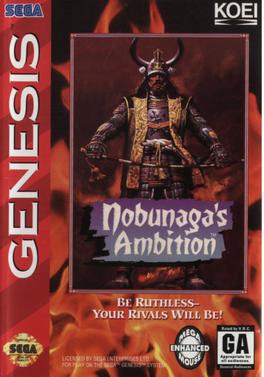 Nobunaga no Yabou Online on PS2
 Online Pro Wrestling on PS2
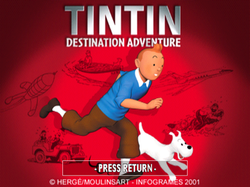
 Tintin: Destination Adventure on PlayStation
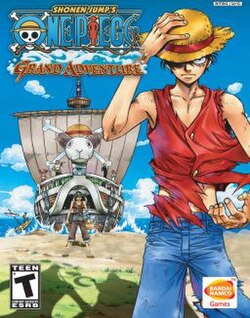
 One Piece Grand Adventure on PS2
 Taiko no Tatsujin: Dokodon! Mystery Adventure on Switch
 Taiko no Tatsujin: Don to Katsu no Jikū Daibōken on Switch











 Another SquareThought Site