

 Oct 2012


Okami began life as a PlayStation 2 project that decided realism was too demanding for the hardware and fell in love with ink. The result was a deliberately stylized, sumi-e inspired action-adventure where you play a wolf-goddess who mends the world with brushstrokes. The PS3 remaster, Okami HD, is a resolution and quality pass on that idea, handled by Capcom and HexaDrive. It wraps the same core systems in a 1080p coat, adds PlayStation Move and Trophy support, restores (most of) the original credits sequence, and leaves intact the original engine quirks. If you care about how a game looks and behaves under the hood, this is the version that lets the artwork breathe more, even if some of the original technical compromises are still visible.
Under the skin Okami is unabashedly Zelda-esque: exploration, dungeons, boss encounters, and an inventory of tools and weapons. What sets it apart technically is the Celestial Brush, which pauses the action and swaps the world for a canvas where player input becomes gameplay. On the PS2 the brush was designed around analog input; the game interprets stick motions as gestures (draw a loop for wind, a line to slash). For the PS3 remaster you get dual options: the classic left analog stick or PlayStation Move for motion input. The Move implementation reduces the friction of stroke recognition and speeds up player intent-to-action latency; using the Move produces a closer approximation to natural drawing gestures compared to the stick's discrete input vectors, which sometimes require more corrective motion and clearer intent to be recognized. Combat sits in a hybrid model that alternates between overworld encounters and arena-like skirmishes. The engine stages fights with scripted spawn points and a scoring system that rewards quick clears and damage avoidance; the reward economy returns yen and rare Demon Fangs. From a systems perspective this funnels combat into deterministic sections that are easy to balance and instrument for player feedback, but it also reveals the game's age: enemy AI and encounter density are tuned for conspicuous patterns rather than emergent behavior. Weapons and upgrades are handled through a Praise currency system. Praise acts as an XP sink to increase max HP, ink pool size, and other stats; it is a soft-progression mechanic that avoids complex stat trees and keeps player upgrades tightly coupled to exploration and quest completion. The Celestial Brush mechanics are capped by an ink well system, which enforces resource management and prevents the brush from becoming an overpowered free win button. Ink recovers over time and by resting, which encourages measured use. Brush powers themselves evolve: base techniques learn new gestures or variations, for example Inferno evolving into Fireburst. From an implementation standpoint this is a clean way to extend input vocabulary without bloating the gesture recognizer. The brush also solves puzzle variety by being a single, extensible mechanic used across combat, traversal, and environmental restoration. Camera and navigation reflect PS2-era design choices. The camera is functional but occasionally struggles during tight platforming and in areas with compressed geometry. The world is largely open, but the main story routes are linear, with side quests and constellations acting as optional content. The game balances pacing with many voiced (synthetically mangled) lines and a lot of dialogue triggers; the localization team translated over 1500 pages of script, resulting in dense narrative nodes that can interrupt mechanical flow if you lean purely into optimization or speedruns.
The most interesting technical decision in Okami's history is the pivot from photorealism to cel-shaded sumi-e. That pivot was born from PS2 performance constraints; rather than fight polygons to mimic ink, the team embraced ink as rendering language. The PS3 remaster ups the resolution to 1080p and sharpens textures, line art, and brushstroke effects, which rewards larger screens and modern HDMI setups. Higher resolution reveals the original assets' strengths: brush textures, watercolor fills, and edge ink bleed look markedly more intentional at 1080p. The remaster did not, however, rebuild the rendering pipeline from the ground up. Level geometry, LOD heuristics, and far-field asset streaming remain tied to the PS2-era asset structure. The result is gorgeous foreground fidelity but persistent pop-in and limited draw distance behavior that players familiar with modern engines will notice. The original used a subtle parchment filter and paper-like UI; on the Wii port that filter was reduced and in Okami HD the presentation leans on the resolution improvement rather than heavy screen-space filtering. That choice keeps the crispness of the brushwork intact and reduces visual noise. Lighting is simple and art-directed rather than physically based; there are no PBR materials or global illumination tricks here, so what you see is primarily texture and hand-authored shading. The remaster restored the ending credits sequence from the PS2 release but replaced the ending vocal track on non-Japanese releases with an instrumental remix, and the Clover Studio logo was removed for legal reasons. Audio fidelity benefits from the remaster as well: the orchestral and traditional Japanese instrumentation that won BAFTA recognition sounds clearer, and the PS3 can stream higher-quality samples compared to the original PS2 masters. Input-side, PlayStation Move support materially improves the Celestial Brush experience over stick input. For players without Move, the analog stick remains serviceable but less forgiving for gesture granularity. Performance on the PS3 remaster is stable for the most part, with occasional frame dips tied to the original streaming and draw calls; HexaDrive and Capcom optimized where they could, but a full engine rewrite would have been necessary to remove all legacy limitations. Trophy integration is a modern convenience added in the remaster, and the PSN distribution model made the patching and distribution simpler than the original physical-only PS2 era.
Okami HD on PS3 is the definitive way to experience Amaterasu's sumi-e world on last-gen hardware without stepping up to the 2017 4K re-release. Technically it is a thoughtful remaster: 1080p rendering, cleaner textures, Move support, and Trophy integration present the original's hand-painted artistry in a more truthful resolution. The trade-offs are the legacy engine's limits: pop-in, LOD and draw distance artifacts, and PS2-era camera compromises remain visible. Mechanically the Celestial Brush still shines as a design that unifies input, puzzle solving, and combat; Move input nudges it closer to its original design intent. If you want a title that is as much about how a game communicates its systems as it is about narrative or exploration, Okami HD is an outstanding technical specimen and a rare case where limitations were turned into aesthetic strength. Buy it for the brushwork, keep a Move controller handy if you can, and forgive the occasional vintage-engine creak. Score: 9 out of 10.
 Ōkami on Switch
 Monster Hunter Rise on Switch
 Tintin: Destination Adventure on PlayStation
 Disney's Chicken Little: Ace in Action on PS2
 One Piece Grand Adventure on PS2
 Onimusha: Dawn of Dreams on PS2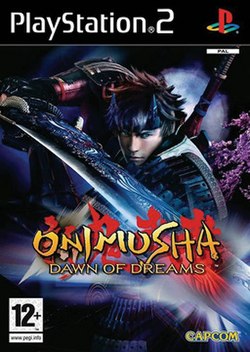










 Another SquareThought Site