

 Aug 2025
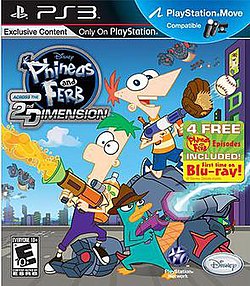

If you're an adult who still hums cartoon theme songs in the shower, Phineas and Ferb: Across the 2nd Dimension for PS3 is the sort of thing that nods at your childhood while tapping you lightly on the shoulder and saying, "We made this friendly and forgiving, okay?" Based on the movie of the same name, the game throws you into a bright, weird, 25-level romp across a handful of zany worlds - a 1928-style cartoon land, a lawn gnome land, a balloon world, and a gelatin world - with a roster that includes Phineas, Ferb, Perry, Agent T, and alternate-dimension versions of the boys. High Impact Games (the Ratchet & Clank alumni spin-off) clearly borrowed a few platforming and weapon-gadget ideas from their more famous pedigree, but they tuned everything down to a pitch that's comfortably accessible for kids and not terribly threatening to adults looking for a breezy co-op session.
Across the 2nd Dimension wears its kid-friendly heart on its sleeve, but if you read past the cartoons and confetti there are some actual challenge mechanics and player skills to think about. The PS3 build gives you 25 levels that mix platforming sections, light combat, gadget use and mini-game interludes. On paper that's a simple recipe, but the way the game parcels out gadgets and abilities creates small skill-focused pockets where you can either breeze through or actually test yourself. Movement and platforming are the game's baseline skill. Levels are designed around sawtooth pacing: short bursts of jumping challenges, followed by open areas where gadgets and ranged attacks play a bigger role. Precision jumping isn't brutal - you won't be weeping into a controller - but some stages require timing and momentum, especially in the gelatin and balloon worlds where verticality and bouncy surfaces alter your expectations. The Ninja Gloves upgrade that lets characters stick to walls adds a platforming twist: it turns formerly awkward ledges into optional traversal shortcuts and forces you to think about wall-to-wall movement. If you're the kind of player who enjoys finding the safest path through a level, Ninja Gloves let you convert tight jumps into methodical climbs; if you like speed-runs, they add a little mechanical complexity that rewards creativity. Combat is light and hybridized. The Carbonator - an upgrade that fires carbonated orange soda to melt enemies - is a delightfully silly primary tool and demonstrates the game's Ratchet & Clank influence in miniature. Rather than demanding twitch-accuracy or complex combos, combat expects you to manage space, pick the right gadget, and sometimes switch targets under minor pressure. Many enemies serve more as movement impediments than true threats: block-and-move types that you either melt, dodge, or use the environment against. For experienced action-game players this won't be a gauntlet, but it's a good introduction to situational gadget use. Gadget management becomes the interesting mid-level challenge. You unlock and upgrade a handful of toys that change how you approach platforming and fights. The game encourages experimentation: some gadgets make certain sections trivial but are limited or require timing to use well. Learning when to switch from the Carbonator's short-range effect to a long-range gadget, or when to deploy Ninja Gloves for a tricky ascent, is a small cognitive loop that keeps levels from turning into auto-runs. Mini-games and collectibles inject variety and, crucially, an alternate route to difficulty. Tickets dropped from mini-games unlock additional playable characters like Isabella and Baljeet. Many mini-games emphasize reflexes and pattern recognition - quick bursts of simple, repeatable challenge that can be surprisingly sticky. If you want something sharper than the main campaign's mellow difficulty, hunting down all tickets and beating the mini-games on higher scores becomes the real place to show off skill. Co-op is where the PS3 version earns some extra replay value. Two-player cooperative play requires coordination, and while the game remains forgiving, working with another person introduces emergent difficulty: split responsibilities, helping each other across gaps, and synchronized gadget use. If you're playing with a younger sibling or a friend who loves chaos, co-op raises the stakes just enough to make the game's easy difficulty feel less like a lullaby and more like a playful challenge. PlayStation Move support is a noteworthy wrinkle. The PS3 is the first Phineas and Ferb title to include Move compatibility, bringing motion-based interactions into some sections. If you have the Move wand, certain mini-games and action bits move from button-presses to gestures - not a revolution in control, but a different skill set. Motion control demands physical rhythm and timing instead of pure thumb dexterity; it's less precise than stick aiming but more tactile, and for younger players it can be more engaging. For older players who crave precise inputs, stick-and-button controls remain the reliable choice. The bad news for challenge seekers: reviewers and aggregates repeatedly called the PS3 campaign "very short" and "extremely easy." If you're here hunting for a brutal platformer or an intricate Metroidvania-style skill curve, you'll want to look elsewhere. Where this game does provide a challenge, it's in the optional content - collectibles, mini-games, and co-op tactical use of gadgets. Those willing to squeeze everything out of the game by pursuing trophies/collectibles and mastering mini-games will find a modest thread of challenge to follow, but the main adventure is intentionally soft on punishment. Skills the game actually tests: platforming timing and spatial awareness; gadget selection and situational thinking; cooperative coordination in two-player sessions; reflex-driven mini-game proficiency; and, with Move enabled, motion rhythm and gross-motor timing. If you treat the title as a playground for those skills rather than a traditional difficulty mountain, it rewards experimentation and replay.
The visual design is one of the game's stronger cards. Critics praised how faithfully the environments capture the cartoon's whimsical look, and the PS3 version capitalizes on that with colorful, textured stages that feel like stepping into an episode with slightly more polygonal patience. Worlds like the 1928 cartoon land and gelatin world are charming and distinct, and the character models translate the show's stylized features into 3D without looking uncanny. Environments are often gorgeous in a child-friendly way - bold silhouettes, saturated palettes, and clear visual cues that double as gameplay signposts. From a challenge perspective, the graphical clarity helps. Platforms, hazards, and gadget-interaction points are visually readable, which reduces frustration when you're trying to execute a tricky jump or line up a gadget shot. The game's aesthetic choices lower the difficulty ceiling in a good way: you understand what you're facing quickly, so the game's tests are about your actions rather than guessing what a sprite means. If anything, the attractive visuals make the game's lack of teeth more forgivable, because every level looks like it was designed for a candy-colored magazine spread.
Across the 2nd Dimension on PS3 is a well-polished, friendly action-platformer that understands its audience: younger fans of the show or grown-up nostalgia-seekers who want a relaxed co-op experience. If your primary metric for fun is brutal difficulty, length, or deep mechanical systems, this isn't the title to elbow into your backlog. If you measure a game's worth by how it teaches and toys with platforming fundamentals, encourages gadget experimentation, and offers light-but-pleasant co-op chaos, it lands the trick. The main campaign is short and forgiving, but the mini-games, ticket-based unlockables, and Move-compatible bits provide the slices of actual challenge the base game mostly avoids. Recommendation in plain terms: pick this up if you're buying for a younger player, a Phineas and Ferb fan, or as a co-op palate cleanser. Give it a 6.5/10 if you're grading on how fun and friendly it is for its intended crowd, while acknowledging it's not built for the hardcore. For players who want to practice platforming skills without rage-quitting, or who enjoy goofy gadgets and cooperative silliness, there's enough here to justify a rental or a bargain-bin purchase.
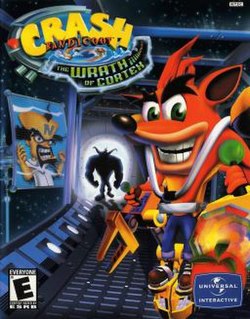
 Crash Bandicoot: The Wrath of Cortex on PS2
 MLB The Show 22 on Switch
 Ōkami on PS2
 Tintin: Destination Adventure on PlayStation
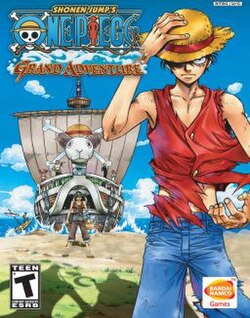
 One Piece Grand Adventure on PS2
 Taiko no Tatsujin: Dokodon! Mystery Adventure on Switch
 Onimusha: Dawn of Dreams on PS2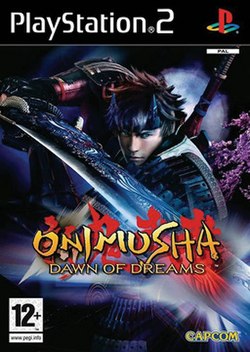











 Another SquareThought Site