

 Aug 2025
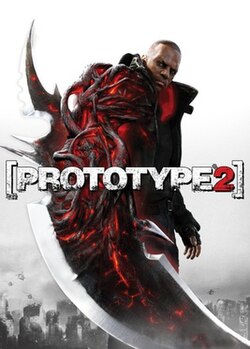

Prototype 2 arrives on the PS3 as a sequel that doubles down on the first game's ballistic, devour-everything approach while trying to polish the rough edges that turned some players off in 2009. On paper it's a pure arcade-power fantasy: you are James Heller, a virus-augmented engine of destruction with sprinting agility, near-flight leaps and an appetite for human biomass. Underneath that gleeful premise sits a lot of engineering decisions that are interesting to pick apart: the team rebuilt assets for more detailed city geometry, upgraded their in-house Titanium engine to 2.0, and tuned AI and traversal systems to make the player's power feel smoother and more responsive on the PS3's constrained hardware. Critics mostly liked the PS3 build (Metacritic ~79/100), but the story and mission variety continued to divide opinions. This review looks at Prototype 2 through a technical lens - animations, physics, AI, audio/streaming tradeoffs and how well Radical squeezed spectacle out of the PS3.
Prototype 2's gameplay loop is deceptively simple, and that's deliberate engineering: give the player a compact toolkit, then stack environmental and systemic interactions on top so emergent moments do the heavy lifting. Mechanically Heller is a collection of stats and state machines: infinite stamina, a near-invulnerability flag, and a set of mutable abilities implemented as unlockable mutation branches. The fun lies in how those systems interact with world objects that also have simulation layers. For example, vehicle objects have deformation properties; cars can act as rigid bodies until a tendril or car-throw impulse applies torque and linear velocity, at which point the physics layer resolves collisions with destructible geometry and other dynamic actors. The 'Black Hole' and tendril attacks are basically directed impulse generators that push mass around and intentionally create chaotic secondary collisions. That design choice lets a single player input cascade into complex scenes - a car becomes a projectile, hits a tank, the tank's mounted gun model enters a destruction animation, and nearby enemies enter ragdoll or dismemberment pipelines. From a technical standpoint, chaining these systems without blowing the CPU budget on a PS3 is an impressive balancing act. The team reworked the AI compared to the original game to make it "more realistic" and to pair with a new dodging system. Technically, that's a shift from simplistic aggro-and-charge behavior to multiple-layered threat evaluation: NPCs maintain perception cones, threat tables, and prioritized behavior trees that allow for dodge-roll interrupts and coordinated suppression fire. The result is less of a marching-pack of lemmings and more of a nervous squad that will take cover, re-evaluate, and try to flank. That said, the rudimentary nature of open-world enemy coordination still surfaces in medium-to-large fight sizes where animation blending and pathfinding occasionally fail and you see awkward unit spacing or brief target-loss. The developers tried to counterbalance overwhelming encounters by giving Heller near-limitless traversal: wall-sprint, roof-to-roof leaps, and a glide transition on the right trigger. From an input/animation system angle, the smoothness comes from responsive animation blending and transition priorities - when you hit a roof edge the engine immediately blends from run-cycle to leap and then into a glide state, preventing the jarring stops that hamstring other open-world titles. Consumption and shapeshifting are implemented as both gameplay and narrative mechanics. Consuming an NPC isn't just a one-button animation; it triggers memory-scan events, character-identity swaps and, for certain enemy classes, special-case consumption handling (Supersoldiers and Brawlers are flagged to be consumed instantly upon grab). The Brawler-control mechanic (a limited pack-command ability) is interesting because it spawns a small AI squad with autonomous attack scripts and pathing heuristics. The Blacknet side-mission system replaces the random roaming 'Events' with selectable objectives at terminals, which is a clever UX decision: rather than scattering tasks randomly and forcing the engine to manage frequent world-spawn events, the game pushes mission instantiation to player-driven hack-in points which stream mission assets and AI into the local area on demand. That reduces memory churn and helps keep PS3 streaming predictable. Where Prototype 2 stumbles is repetition: the mission archetypes reuse encounter templates (sabotage, search-and-destroy, rescue), and the open-world rewards loop leans heavily on the same destructible set pieces. Technically this is an engineering tradeoff - reusing templates keeps memory and QA costs down and stabilizes performance, but it also makes the experience feel mechanically samey over time. Another compromise shows up in the destructible object density: in any scene with many dynamic objects, the engine scales back secondary simulation and switches non-critical actors to pre-canned animations or low-cost ragdoll fallbacks to maintain frame-rate. That's sensible but visible to a detail-oriented player: at the peak of spectacle you can see the simulation budget being reallocated mid-scene.
Prototype 2's visual work is a clear iterative step up from its predecessor. Radical reworked building facades and character models, and implemented more pronounced vehicle deformation and enemy dismemberment visuals. The engine's art pipeline uses higher-detail textures for close-up encounters while relying on LOD (level-of-detail) transitions for distant city geometry. On the PS3, which has limited VRAM, those LOD thresholds had to be tuned conservatively. The practical result is that the city looks sharply textured at street and rooftop distances you commonly inhabit as Heller, but you might notice pop-in when gliding across Manhattan and a nearby district swaps high-res assets into view. The Titanium 2.0 engine upgrade enabled better particle systems and surface decals, which pay off spectacularly: blood sprays, scorch marks and debris decals layer onto geometry dynamically, and the engine keeps a sliding window of active decals to avoid fill-rate bombs. Vehicle deformation is visually satisfying because it isn't just a single baked mesh swap; it's a set of blend shapes and bone-based deforms that can be compounded by successive impacts. This gives the impression of continuous damage rather than discrete cosmetic changes. The dismemberment system ties into this: limb detachment triggers bone-and-geometry updates and spawns gore particle emitters. That's a CPU and GPU cost, so the engine instantiates these effects selectively based on a performance heuristic (distance to camera, camera mode, and whether the target is in cutscene or player-focus). The tradeoff is smart - you get gruesome close-up spectacle where it matters, and the engine avoids frying the GPU when dozens of enemies are on screen. Animation-wise, Prototype 2 benefits from improved blending and state machines compared to the first game. Tendril attacks and ripping animations have multiple interrupt points so the player doesn't get stuck in long, non-interruptible sequences. The sonar pulse ability (which highlights environment features and targets) is a nice UI/visual design element: it's rendered as a post-process overlay that temporarily biases enemy and objective shaders to rim lighting, which helps player perception without cluttering the HUD. On the downside, some texture streaming and shadow LOD decisions can lead to brief shadow pop-in or blurry distant textures when you rapidly change the camera focus while gliding. Given the PS3's aging GPU and memory constraints in 2012, these are expected compromises rather than bugs.
Prototype 2 on PS3 is a study in controlled chaos: an engine tuned to funnel spectacle through smart systemic interactions, not raw asset count. Radical Entertainment did a lot of engineering work to make traversal seamless, make attacks feel weighty, and keep destruction satisfying without collapsing performance on a console with limited resources. The upgraded AI and dodge mechanics make fights less mindless, the Blacknet mission streaming reduces random world churn, and the Titanium 2.0 visual improvements deliver memorable close-up carnage. The counterpoint is repetition and mission template reuse that reveal themselves over extended play sessions, plus the inevitable texture and LOD compromises that come with pushing an open-world, physics-heavy game on the PS3. For players who want to feel ludicrously powerful and enjoy the technical playground of physics-driven mayhem, Prototype 2 is a well-crafted, if imperfect, piece of engineering. If you're after a tightly woven narrative or endlessly varied mission design, the game's systems-focused strengths won't fully compensate. Overall, the PS3 version earns a solid recommendation for spectacle-hungry players and anyone curious how far you can push an older console with smart engine work: score 7.9/10.
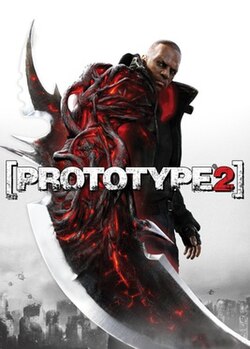 Prototype on PS3
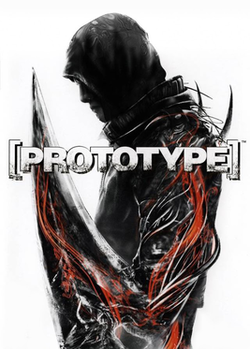 Prototype on PS4
 Tintin: Destination Adventure on PlayStation
 One Piece Grand Adventure on PS2
 Taiko no Tatsujin: Dokodon! Mystery Adventure on Switch
 Onimusha: Dawn of Dreams on PS2
 Crash Tag Team Racing on PS2
 Crash of the Titans on PS2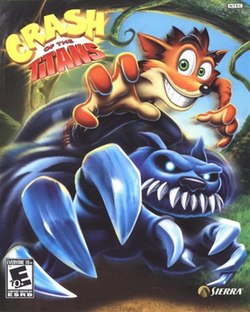










 Another SquareThought Site