

 May 2014


Watch Dogs on PS3 hands you a smartphone and essentially tells you: "You are now the city's remote control. Don't break it... too often." It's an open-world action-adventure that leans hard on a single conceit - ctOS, a city-wide control system that links traffic lights, surveillance cameras, trains and the secrets of a suspiciously oversharable populace. What matters for the player who cares about challenge is that Watch Dogs isn't just a third-person shooter hiding behind neon tricks: it's a hybrid test of puzzle-solving, timing, stealth, driving skill and multitasking under pressure. On PS3 you'll get the full single-player campaign, but some of the online toys available on newer consoles are absent, which ironically makes the solo challenge feel more pure.
If you treat the game like a shoot-everything-in-sight fest you'll have some fun, but you'll miss most of what makes Watch Dogs a satisfying challenge. The game revolves around four overlapping skill sets, each demanding different player skills and muscle memory. 1) Hacking and pattern recognition The hacking system is the star pupil. It ranges from the simple (tap a button to hijack a camera) to the mildly meditative (pipe-connection puzzles) to the strategic (timing traffic light changes mid-chase). System hacking is presented as puzzles - some reviewers loudly called a few of those "PipeMania"-style throwbacks - but the challenge here is mental rather than twitchy. You need to read the environment, predict NPC movement, and sequence hacks so they cascade in your favor: make a truck block an alley, then open the drainage gate, then trigger a train. That kind of layered thinking feels like orchestrating a tiny Rube Goldberg device under a time limit. The player skill required is planning, patience, and spatial memory. You'll win more by thinking three steps ahead than by spraying bullets. 2) Stealth and situational awareness Aiden Pearce's toolbox supports both ghost and gorilla playstyles, but the game rewards the player who can meld stealth with hacking. Hiding behind cover and using electronic lures or hacked streetlamps to pull guards away are core techniques. Challenges here demand line-of-sight awareness, timing and the discipline to wait for openings. The AI and dynamic behavior - NPCs reacting differently based on time of day and weather - force you to adapt: a patrol route that worked at noon might not at night. Multi-layered stealth encounters are puzzles of movement and patience more than speed. 3) Combat and cover-based shooting When stealth fails, Watch Dogs leans on a solid cover system and competent gunplay. There's slow-motion for dramatic shootouts, and a variety of weapons from handguns to grenade launchers. Combat tests fine-motor skills: good aim, cover discipline and timing grenades and IEDs. If you try to combine hacking mid-firefight (for example, causing a power outage while pinned down), you'll be juggling inputs, camera angles and split-second decisions - a test of multitasking and stress management. The game also supports non-lethal routes, so moral choices are sometimes presented as skill-based alternatives rather than story-only decisions. 4) Driving and vehicle control Chicago's fictionalised map is full of vehicles - from motorcycles to speedboats - and driving is more than transport: it's a recurring skill gate. The handling is generally "slick and intuitive", and many missions become mini rally stages where you're expected to navigate traffic, use hacked junctions against pursuers, and bail out to finish on foot. Driving challenges reward reflexes, route planning (knowing which alley gives you a shortcut) and creative use of the environment (hack a bridge, detonate a trap, etc.). What really blends these skills is the game's central mechanic: using the smartphone mid-action to alter the world. That means you are often doing three things at once - aiming or driving, watching the mini-map, and toggling hacks to shape the battlefield. The skill the game trains most effectively is cognitive multitasking: learning to prioritize actions when everything is happening at once. Progression and rewards The skill tree upgrades with points earned from hacking, combat, driving and crafted items. This design feeds the player's sense of improvement across those four disciplines, encouraging you to diversify your playstyle. Money buys better guns, outfits and vehicles, but often the most meaningful upgrades are utility-based: better hacking tools, faster cooldowns, or stealth improvements. The collectibles - QR codes and audio logs - add marginal challenge but help you learn the map and its verticality: scaling forklifts and aerial platforms becomes a puzzle in itself. Multiplayer and PS3 limitations On PS3 the multiplayer suite is trimmed: the free-roam with multiple players and decryption mode are excluded. That means many of the asymmetrical invasion challenges (where other players can hack you mid-game) are either limited or absent. For single-player-focused reviewers and players, this isn't a loss of challenge so much as a redirection: Watch Dogs on PS3 becomes a single-player testbed for mastering the core systems. If you enjoyed the adrenaline of being invaded, you lose some of that unpredictability - but the single-player challenges remain rich. Learning curve and difficulty scaling The difficulty is organic rather than binary. Early missions teach you to hack a camera or trigger a gate; later missions demand chaining hacks under pressure with vehicle chases and multi-room stealth. The real challenge comes from combining systems: hacking to create cover during a gunfight, driving to a vantage point for a critical hack, or using environmental traps to thin a crowd. The game's AI can be forgiving at times and frustrating at others, but it's rarely cheap. Persistence, situational assessment and creative problem solving win more often than brute force. In short, Watch Dogs is a skills stew: puzzle-solving, disciplined stealth, competent shooting and confident driving all get significant time to shine. If you like games that make you synthesize a handful of mechanical disciplines into a single clever solution, Watch Dogs will keep your brain and thumbs busy.
Graphically Watch Dogs landed in the middle of a debate: early trailers promised jaw-dropping detail, and the final product was frequently called "downgraded" compared to its marketing. On PS3 the city still looks alive - the Disrupt engine simulates weather, day/night and NPC behaviour in ways that affect gameplay - but you shouldn't buy the PS3 version for photoreal eye candy. Textures, character models and draw distances are competent, not revolutionary. That said, the visual clarity is enough to support the game's challenges: you can read traffic patterns, spot cameras and visual cues for hacks. Where visuals really help is in readability: distinct districts, ctOS tower markers and interactive objects are legible without needing a microscope. Performance-wise, the PS3 build lacks some of the extra frills of next-gen editions, and a couple of technical hiccups were widely discussed at release. None of that kills the challenge structure, though: the game plays as designed and the world's simulation - wind, water, dynamic NPCs - is convincing enough to make environmental manipulation feel weighty. The soundtrack by Brian Reitzell adds a taut, krautrock-tinged pulse that helps keep you focused during tense multi-system encounters.
If you play Watch Dogs as "just another open-world shooter" you'll get a competent game with some memorable mission set pieces. If you lean into its signature mechanic - fighting with a smartphone like a very pointed Swiss Army knife - the experience becomes a clever, satisfying test of skills. The game rewards players who think three moves ahead, who can switch between planning and reaction, and who enjoy juggling hacking puzzles while under physical threat. On PS3 you won't get every online bell and whistle, but you'll get a dense single-player challenge that asks you to be a tactician, a driver, a ghost and occasionally a very angry marksman. Practical final verdict: Watch Dogs is a smart hybrid that trains your situational awareness and multitasking. Expect to puzzle, to sneak, to shoot, and to crash a few times while learning how to orchestrate chaos. If that sounds like your kind of fun, PS3's version still offers an aggressively enjoyable playground. Score: 8/10 - because when a city is a giant puzzle, and you're the only one with the instruction manual, things get interesting fast.
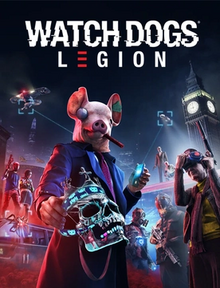 Watch Dogs: Legion on Xbox Series X/S
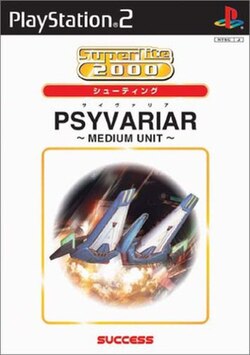
 Psyvariar Delta on PS4
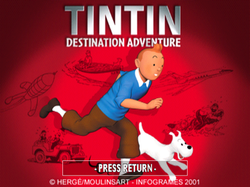
 Tintin: Destination Adventure on PlayStation
 One Piece Grand Adventure on PS2
 Taiko no Tatsujin: Dokodon! Mystery Adventure on Switch
 Onimusha: Dawn of Dreams on PS2
 Assassin's Creed: Brotherhood on PS3
 Assassin's Creed II on PS3
 Far Cry 3 Classic on PS4
 Assassin's Creed: Origins on PS4
 Tom Clancy's Rainbow Six Siege on Xbox Series X/S










 Another SquareThought Site