

 Oct 2020
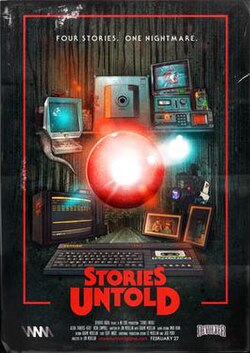

Stories Untold is the kind of horror-adventure that doesn't throw jump-scares at you so much as make you feel like an idiot for missing one tiny clue for 20 minutes. Developed by No Code and released on PlayStation 4 in October 2020, it's an episodic blend of text-adventure, first-person exploration and puzzle solving wrapped in glorious 1980s beige: CRTs, cassette decks and computers that would literally insult your typing. If you picked this up expecting twitch reflex combat, you bought the wrong kind of panic. If you like puzzles that make you feel clever, then slightly unsettled, then guilty, this is your jam. The game's four episodes - including a remastered version of The House Abandon - are short individually but build into a single, surprisingly tidy narrative about memory, responsibility and alien spheres. The real challenge here isn't reflexes; it's brains, patience and a steady hand on the keyboard (or controller) while you untangle logic, inference and a stubborn amount of 80s techno-mystery.
The structure is deceptively simple: four episodes with distinct mechanical focuses, each asking different skills of you. The House Abandon opens as a pure text-adventure inside the game: you sit at a fictional Futuro 128k +2 and type commands to explore a house. The challenge here is classic parser logic - think old-school interactive fiction. You have to parse textual clues, think like the game's (unreliable) narrator, and remember details as the environment outside the text responds to your typed choices. Attention to phrasing matters; the game leans on the joy of discovering which verb-object pair will actually work. Patience and imagination are rewarded, because the horror is more a slow squeeze than a slap, and failing to notice a changed line in the note or a scratched photo can leave you floundering. Episode two, The Lab Conduct, shifts the challenge to procedural thinking and multi-tasking. You play Mr. Aition, a lab tech performing experiments on "artifact 23" while being remotely directed by Dr. Alexander. Here the skill set expands beyond reading - you need to follow instructions, operate panels, and correlate what you see on a secondary computer with the physical lab instruments. There are minigames that demand pattern recognition and careful sequencing, and the episode uses mirrored systems: actions in the text adventure map to real-world effects in the lab. The difficulty comes from juggling two mental maps at once: the narrative sequence Alexander expects you to follow, and the unpredictable consequences when the artifact starts doing its own thing. It's a test of procedural literacy and composure under gradually escalating uncertainty. The Station Process is the episode that turns you into a cross between a cryptographer and an overqualified radio operator. Set at an arctic monitoring station, the gameplay largely consists of puzzle loops involving a microfilm reader and a two-way radio. You must read microfiche, extract codes, and dial radio frequencies while the other stations-and an increasingly alarming external narrative-tell you not to leave your desk. This episode rewards methodical note-taking and logical elimination. It's less about intuition and more about disciplined information processing: record the snippets you get, cross-reference them, and use the radio to test hypotheses. It's also where the game leans heavily on audio cues and timing: listening for tones, aligning transmitters and occasionally getting dragged outside by the cosmos (or whatever the "they" are) when you're least prepared. If you're the kind of player who enjoys filling a physical notebook during investigations, you will be in your element. The Last Session ties everything together and pushes the challenge into emotional and interpretive territory while reusing mechanics from previous episodes. Now the task is retroactive: identify how the experiments, the texts and your choices combine into a single traumatised life. Puzzles become symbolic, and success often hinges on reading between lines rather than executing perfect mechanical sequences. The final episode also forces you to reconcile the games-within-games setup - playing a text adventure that is showing on a TV, undergoing a recorded therapy session and performing actions that mirror medical procedures. The cognitive load here is narrative synthesis: holding multiple story threads and mapping them onto earlier puzzle solutions. That may sound intellectual; in practice it feels like doing detective work while someone slowly turns up the lights on your worst mistakes. Across all episodes the core player skills are: literal reading comprehension, pattern recognition, procedural sequencing, multi-tasking between different interfaces, and a willingness to slow down. Typing matters more in the first episode, while controller navigation and menu literacy matter on PS4 ports - the developers translate the parser feel into controller-friendly inputs, but the essence remains the same: think before you act. The game also punishes sloppy attention: small details - a changed line of text, a blurred photo, a tone on the radio - are frequently the only bridge to the next step. If you're the kind of person who loves "Aha!" moments, Stories Untold is a buffet. If you hate re-reading or cross-checking, it will feel like being in a horror mazes where the walls require paperwork to move.
Call them 'functional atmosphere' rather than cutting-edge visuals. Stories Untold is obsessed with 1980s tech and leans into low-resolution CRT glow, cassette decks and grainy photographs to build tension. The visuals rarely compete with modern AAA fidelity - but they don't need to. The art sells tangibility: the cluttered desk, the microfilm reader, the lab consoles and the static-filled TV all look and feel like things you could shove your hands into. This restraint is a feature: limited graphical detail forces you to read and listen more closely, turning interface elements into puzzle components instead of background noise. On PS4 the experience is smooth and faithful to the original, with a pleasant fidelity that keeps the retro aesthetic crisp without overdoing the nostalgia filter. The horror is driven by metaphor and pacing more than high-res gore, which suits the game's puzzle-first design.
If you want fast action or twitch tests of aim, you will be disappointed. If you want a compact, smart, eerie experience that tests your mental focus, then Stories Untold is a neat, tidy little series of examinations: of logic, of memory and of culpability. Each episode asks for a slightly different skill set - precise parsing and imagination, procedural control and multi-tasking, forensic patience with microfilm and radio codes, and finally narrative synthesis - and No Code stages those tests cleverly. The PS4 release brings those mechanics to the living-room controller without losing the text-adventure soul. For players who enjoy puzzles that demand note-taking, re-reading and connecting tiny, often-overlooked dots, the game is a satisfying challenge. It's short, so it won't break your attention span, but it will make you work for every revelation - and that, for the right kind of player, is exactly the point.
 Monster Hunter Stories 2: Wings of Ruin on Switch
 Raiders of the Broken Planet on PS4
 Tintin: Destination Adventure on PlayStation
 One Piece Grand Adventure on PS2
 Puzzle by Nikoli 4: on PS4
 Twinbee Taisen Puzzle Dama on PlayStation










 Another SquareThought Site