

 Mar 2021
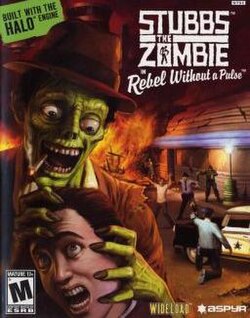

Stubbs the Zombie is the rare game whose premise you can explain in a single line and then spend three hours laughing while it proves you wrong. It's 1959 in a retro-futuristic Pennsylvania city called Punchbowl: hovercars, lasers, a monstrous corporate utopia built by playboy industrialist Andrew Monday - and the open grave from which Edward 'Stubbs' Stubblefield rises to chew up the town's social contract, one brain at a time. On PS4 the remaster dresses up the original's cheeky mechanics in modern controls and trophy support, but the thing that makes Stubbs sing - or moan, depending on the mission - is its cast. This review is a character forensic report: who Stubbs is, who he ruins, and how the game's narrative arc turns a goofy premise into an unexpectedly affectionate, darkly comic dissection of nostalgia, misogyny, and daddy issues.
The gimmick is also the protagonist: you play as Stubbs, a walking, philosophical disasterpiece of a zombie whose progression is tracked not through experience points but through crowds and carnage. Eating brains heals you and recruits NPCs into your undead choir, which is the most narratively consistent use of an upgrade system since somebody decided zombies should be an army instead of a punchline. Mechanically it feels like an island of scrappy logic: Stubbs cannot use conventional weapons, so the game forces character into system. He slaps, rips, and improvises - his own severed hand can be used to manipulate scientists, cars become battering rams, and even the humble whistle turns an on-screen gaggle of corpses into a tactical tool. The whistling mechanic, where you herd followers and shove groups in a direction, translates character motivation into play: Stubbs doesn't boss people around because he's evil, he marshals the living (and un-living) because he has a plan - even if that plan mostly consists of 'brains, more brains, and chaos.' Enemies and encounters are designed to underscore the script. Civilians are, narratively, the disposable chorus - they scream, they run, they provide the brains and social commentary. Militias and soldiers exist not only as difficulty spikes but as ideological foils. Otis and his Quaker State Irregulars are the perfect caricature of 1950s paranoia: redneck militia whose leader believes the undead outbreak is a Communist plot. The gameplay around Otis is a comedy of errors that turns into character revelation - when Otis recognizes Stubbs as a man from his past, the mechanical tension resolves into a narrative beat where Stubbs gets the upper hand through humiliation, not only force. Punchbowl itself functions like a character you can traverse. Its retro-futurist set pieces - the monorail, secret labs, hovercar-choked streets - are arenas that make your relationship with the town personal. Driving tanks and tractors is more than a toy; it fits Stubbs' arc of escalation. Early missions are sneaky and intimate: eat a brain here, recruit a follower there. Later missions push you into grand gestures: contaminating the water supply at a dam, using zombies as living conductors to blow the dam, and transforming a flood into both literal contamination and narrative momentum. Those mechanical mutations of violence into plot are a rare design pleasure. Character arcs arrive in combat and cutscenes equally. Herman Wye, the Nazi scientist turned corporate geneticist, is introduced as a labcoat with a résumé and an ego; fighting him is a culmination of the game's science-gone-wrong theme. The conflict with Andrew Monday is the filmic climax straight out of a 50s melodrama: Stubbs wants revenge and closure, but what the game reveals is messier. Maggie, Andrew's mother, has the gentlest and strangest arc: she recognizes Stubbs as a man she once loved, reveals a secret pregnancy, and in true tragicomic fashion becomes both the answer to Stubbs' longing and the object of his monstrous appetite. The revelation that Stubbs is, in fact, Andrew's biological father turns the game's jokes into a family soap opera. Mechanically there's no stat-sheet for paternal awkwardness, so the scene plays out through absurdist spectacle - a force-fielded confrontation, a dance-off, and then the sudden, comic-tragic gut-punch of Stubbs eating Maggie's brain. Stubbs' development is not about redemption or moral growth; it's about a zombie learning the contours of his own story. Rather than becoming noble, he becomes more himself: ruthless, oddly romantic, and devastatingly literal in his solutions. The gameplay reinforces this: your zombie horde never moralizes - it simply grows. The narrative arc ends with a nuclear attempt to contain Punchbowl and Stubbs rowing off into a battered sunset with his zombified lover. It's a resignation to the absurd, not a lesson in humanity. That is the point. Stubbs' arc is comedic, grotesque, and oddly tender - a Frankensteinian love story in which the monster eats the poem at the end. For players who want more than quirky mechanics, the game delivers consistently. It's short and occasionally linear, but never boring. The pacing is brisk because the story and the combat are braided together: every new character reveal tends to unlock a new setpiece or a new way to use your followers. The PS4 remaster smooths controls and preserves that linking of narrative and mechanics neatly, making Stubbs' little personality-led campaigns feel tighter than they did on the original Xbox controller.
The aesthetic is a loving parody of 1950s futurism: chrome, optimism, and a corporate sheen varnished over moral rot. Punchbowl is nicely varied and appropriately cool-looking, with environments that read as theme-park dioramas of a future that never happened. The remaster updates textures and camera handling just enough to make hovercars and monorails feel playable without losing the original's cartoonish charm. Voice acting deserves a paragraph of its own: the performances are so committed to the gag that they elevate almost every scene. The civilian screams, the commanders' bluster, and Stubbs' own guttural vocals are as much a part of the game's identity as the brain-munching mechanic. The soundtrack - covers of 50s and 60s songs by contemporary alt acts - turns the soundtrack into a character, too. It normalizes the oddness and gives the whole affair a singable mood, which helps sell the game's tonal dissonance: you can hum along while watching a fountain of brains. IGN and others noted that the audio often outshines the visuals, and that's still true here; the remaster just makes the visuals competent enough not to clash with the excellent sound design.
Stubbs the Zombie is not trying to be a grim, philosophical zombie story and it isn't trying to be a technical showcase. Its triumph is the way it commits to character comedy and then lets gameplay follow. Stubbs himself is a delightful anti-hero: body-obsessed, oddly sentimental, and permanently divorced from the conventions that make other protagonists sympathetic. The supporting cast - Otis the paranoid militia head, Herman Wye the mad corporate scientist, Andrew Monday the entitled villain, and Maggie the tragic romantic - provide a chain of barbed comic beats that land because the writers respect their archetypes. The remaster on PS4 mostly does what it promises: modernized controls, trophies, and a polish that keeps the game's personality intact. If you want a tightly woven experience with poetic character arcs, Stubbs isn't a Shakespearean tragedy. If you want a game that ties its mechanics to character, treats its beatifully strange story seriously, and backs it up with excellent audio and absurdist humor, then welcome to Punchbowl. Bring a sense of humor, a tolerance for grotesque romance, and a hunger for brains - the game's kind, not the cannibalism alarmists' kind.
 Ghostrunner 2 on Xbox Series X/S
 Pinball Hall of Fame: The Williams Collection on PS3
 Tintin: Destination Adventure on PlayStation
 Disney's Chicken Little: Ace in Action on PS2
 One Piece Grand Adventure on PS2
 Taiko no Tatsujin: Dokodon! Mystery Adventure on Switch










 Another SquareThought Site