

 Aug 2024


Thank Goodness You're Here! is a tiny yellow salesman-sized invitation to chaos-equal parts surreal British sitcom and hand-drawn fever dream-set in the North-England-flavoured town of Barnsworth. On PS4 you control an itty-bitty salesman who can walk, jump and perform the game's lone interaction: the slap. If you bought this expecting Dark Souls-level mastery of inputs, you will be disappointed in the best possible way. This is a game that trades mechanical complexity for observational challenge, comic timing and an invitation to poke absolutely everything until it reacts. It's short (roughly a three-hour loop through the town) but densely packed with gags, visual trickery and little brain teasers that reward the patient and the curious.
Mechanically, the game is almost insultingly simple: movement, jump, slap. That simplicity is intentional. Coal Supper famously pared their original, puzzle-heavy concept down to a single interact button so the comedy could breathe. But "simple" does not mean "easy to read". The challenge in Thank Goodness You're Here! is primarily cognitive and perceptual. You are rewarded for careful observation of character animations, environmental details and throwaway dialogue. The slap is an all-purpose Swiss Army knife - it moves objects, breaks them, triggers conversations and occasionally sets off a chain of events. Learning what to slap and in what order is the main gameplay loop, and it turns out that figuring out the correct sequence can feel satisfyingly puzzle-like without ever devolving into fiddly inventory nonsense. The game's vignettes range from mundane tasks (mow a lawn) to madcap surrealism (help a bedridden man's absurdly long arm go shopping). Each mini-problem is a micro-puzzle that tests a handful of player skills. Pattern recognition is key: characters often telegraph their needs through repeated behaviours, and the environment contains visual cues that hint at the solution. Lateral thinking is rewarded; slap something weirdly placed or perform an action that seems comedic rather than logical and you'll often unlock the joke or the solution. Trial-and-error plays a big role - the game expects you to experiment so the slap works as a low-stakes hypothesis test. That gives the discovery moments a genuine zing because they feel earned rather than spoon-fed. Timing and spatial awareness also show up, albeit sparingly. Certain gags require you to be in the right place when a character or object animates, while light platforming (the salesman can jump) sometimes places you where interactions are possible. Precision isn't the baked-in difficulty of the title; it's a by-product when you try to orchestrate several moving bits at once. Where some reviewers complained about repetitiveness, the design actually leans into repetition as scaffolding: the town is a loop and problems reappear in a new context, which means you get better at pattern-spotting the second or third time round. The game intentionally avoids heavy mechanical commitment: there's no steep learning curve, no long chains of complex inputs, and no convoluted inventory to memorise. Instead, success comes from soft skills: patience, curiosity, comedic intuition and the willingness to accept weird logic. If you play like someone who rushes through menus, you'll miss the jokes and the clever little solutions. If you play like someone who inspects every animated eyebrow twitch and ambient poster, the game becomes a playground of escalating absurdity. The main critiques - brevity and a lack of deep mechanical variety - are real. Players seeking sustained, intricate puzzle systems may leave wanting, but those after short, impeccably timed comedic rewards will find the game's challenges precisely tuned to that appetite.
Coal Supper's art is the game's secret weapon. The hand-drawn 2D visuals are lush and busy, swapping between side-on and bird's-eye perspectives to frame each gag. Animations are a study in comedic timing: characters do small, repeatable actions that light up like neon hints when you watch them enough. Visual gags are everywhere - a cornucopia of tiny details that not only sell the humour but act as bona fide gameplay clues. On PS4 the textures and frame rates are stable and the presentation feels intentionally 'on paper' rather than slickly photoreal, which suits the surreal voice perfectly. The soundtrack and effects are nicely matched to the tone: whimsical, slightly off-kilter, and supportive of the timing that so many interactions rely on. Voice acting - much of it recorded by the developers and supplemented by recognisable talent - adds thick regional flavour and personality, which is another gameplay element: listening closely often tells you what to try next. In short, the visuals and audio don't just look and sound great; they are woven into the game's problem-solving fabric.
If you value ingenuity over input complexity, Thank Goodness You're Here! is a delightful crack at an adventure game that swaps heavy puzzles for observational and interpretive challenges. On PS4 it's a polished, well-animated little world that rewards players who slow down, listen and slap everything suspiciously close at hand. The game's strengths lie in writing, timing and visual density; its weaknesses are intentional - the short runtime and restrained mechanical toolkit will frustrate players searching for long-form puzzle difficulty. For players who get a kick from noticing a tiny background joke and then manipulating it into paydirt, this title is a masterclass in how to make simple controls feel satisfying. It's no endurance test for your thumbs, but it's a pop quiz for your eyes, ears and sense of humour. The BAFTA attention and high review scores are deserved: this is a confident debut from a two-person studio that understands the power of doing less, brilliantly. Recommended for explorers, joke hunters and anyone who likes their challenges served with a side of absurdity. Score: 8.5/10.
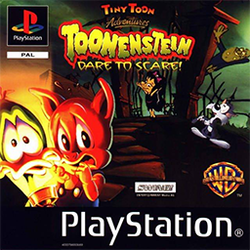 Professional Baseball Spirits 4 on PS3
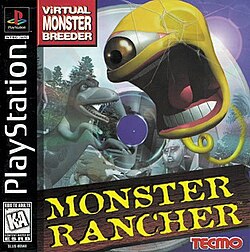
 Monster Rancher on Switch
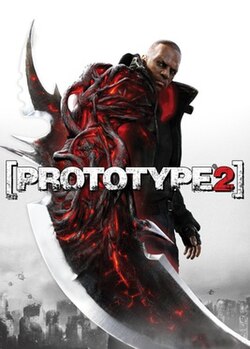
 Prototype 2 on PS4
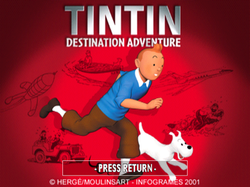
 Tintin: Destination Adventure on PlayStation
 One Piece Grand Adventure on PS2
 Taiko no Tatsujin: Dokodon! Mystery Adventure on Switch
 Taiko no Tatsujin: Don to Katsu no Jikū Daibōken on Switch











 Another SquareThought Site