

 Jan 2016
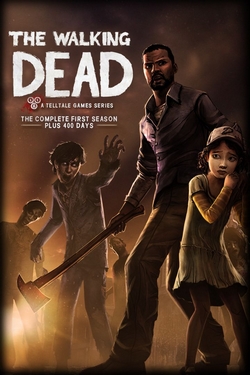

Telltale's The Walking Dead: Michonne is a three-episode mini‑series that arrived as a sharp little sidestep from the studio that revived the adventure genre with Lee and Clementine. On PS4 it sits comfortably in the same family as Season One - same cinematic pacing, same emphasis on moral choices, same clattering of QTEs and timed dialogue - but centered on a very different kind of person. Michonne, originally a comic-book force of nature, comes to the Telltale table bruised, inscrutable and lethal. This review is less interested in whether you can decapitate enough walkers to feel accomplished (spoiler: you can) and more interested in how the series treats its protagonist as someone with an arc, not just an action figure with a neat hairstyle. Expect talk of scars, the weight of grief, and how Telltale's writing tools - those lovely timed choices and the faux-RPG moral ambiguity - shape a condensed, character-first narrative on PS4.
Telltale's DNA is obvious in Michonne: the game is driven by conversation trees, scene exploration, environmental puzzles and quick‑time events rather than twitch‑based combat. The engine hands you a reticle, points out interactive bits, and nudges you toward the next emotional tightrope. Where Michonne differs from Lee's story in Season One is tone and tempo - it feels more contained, a three‑act novella rather than an epic. The series leans hard on the decision system the studio refined earlier: timed dialogue that simulates conversational pressure, branching reactions from NPCs and those little moments of doubt where the game asks you what kind of person you want Michonne to be in the moment. Choices tend to be ambiguous - nobody prints you a halo or a pitchfork - and the consequences are more about relationships than plot rewrites. Telltale have said choices don't radically alter the core storyline, and Michonne follows that philosophy: your decisions color scenes and shift attitudes, but the arc is still recognizably Michonne's. If you like moral stress tests, this is your jam. The series funnels you into cramped moral dilemmas: protect the group and risk your secret, or keep your distance and live with the fallout? Trust an ex‑soldier with a shaky moral compass or cut ties to keep your hands clean? The timed inputs make hesitation costly; silence is a choice and Michonne's stoicism plays into that design beautifully. Combat sequences are handled through QTEs and cinematic beats. They're not deep; they exist to punctuate the narrative and remind you that three seconds of button‑mashing can still be framed as meaningfully brutal if the camera, sound and stakes line up. That said, if you bought this expecting a pure sword‑fighting sim, you'll be disappointed. The mini‑series is an interactive drama: the katana is symbolic as much as practical. Telltale also give you the usual quality‑of‑life options: 'Minimal' mode if you want fewer hints, a rewind feature for replaying decisions, and multiple save slots. These let you push the narrative envelope and test alternate reactions without committing to an entire new playthrough. On PS4 the input and camera are tuned to consoles better than older gen ports; the control scheme feels familiar to anyone who played Season One on console, and the episodic breaks let the writers focus each chapter on a specific emotional problem for Michonne to wrestle with. Underneath the surface, the game is less about 'can I survive' and more about 'what kind of survivor will Michonne let herself become?'
Telltale's aesthetic continues to favor a comic‑inspired visual language: thick outlines, stylized shading and tableaux that often look like a panel pulled from the source material. The PS4 hardware gives this style room to breathe - cleaner textures, fewer pop‑ins and a more consistent frame rate than last‑generation releases. That stylization helps sell character emotion: faces register small shifts, silhouettes communicate intent, and the game uses closeups for the kind of micro‑expression work Telltale does well. On the flip side, the trusty Telltale Tool still shows its limits. There are occasional animation stumbles, awkward lip sync and the technical hiccups the series has never fully shaken off. Season One earned praise for its visual resemblance to the comics, and Michonne follows suit, but the polish is less about rendering horsepower and more about cinematic composition. PS4 users will appreciate that ports and save‑format quirks that plagued earlier releases are largely behind them by this point, but don't be surprised if a stiff animation or a clumsy camera cut tempers an otherwise powerful moment.
Michonne's mini‑series is less an action movie and more a tightly wound character study: a chance to sit in the skull of a woman who has learned to make silence work like armor. Where Season One earned its place in gaming history by forging an unforgettable guardian relationship between Lee and Clementine, Michonne asks a different question - how does a person who's been hollowed by loss decide whether to keep others at arm's length? Telltale's strength is still their voice actors and script, and Michonne benefits from punchy dialogue, poker‑faced moments that actually bite, and moral choices that leave residue. The tradeoff is structural: the three‑episode format forces a lot of heavy lifting into tight space, so character beats sometimes feel compressed compared to the sprawling feel of a five‑episode season. Technically the game shows the old Telltale wobble - engine quirks and the occasional clumsy animation - but on PS4 the experience is smooth enough for the story to do its work. If you go in wanting a dense, emotional look at a fan‑favorite character and you don't demand intricate combat, Michonne delivers. It won't replace the Lee-Clementine experience for many players, but it adds nuance to the franchise's portrait of survival: sometimes the hardest fight is staying human. For those reasons I give The Walking Dead: Michonne on PS4 a solid 7.5 out of 10 - a compact, thoughtful, occasionally bumpy trip into the mind of a survivor who'd rather let her blade do the talking, until it comes time to speak for herself.
 The Walking Dead: Destinies on Xbox Series X/S
 The Walking Dead: Survival Instinct on PS3
 Tintin: Destination Adventure on PlayStation
 One Piece Grand Adventure on PS2
 Taiko no Tatsujin: Dokodon! Mystery Adventure on Switch
 Taiko no Tatsujin: Don to Katsu no Jikū Daibōken on Switch
 The Wolf Among Us 2 on PS5
 The Wolf Among Us 2 on Xbox Series X/S
 Sam & Max Save the World Remastered on PS4
 The Walking Dead: Season Two on PS4










 Another SquareThought Site