

 Oct 2015
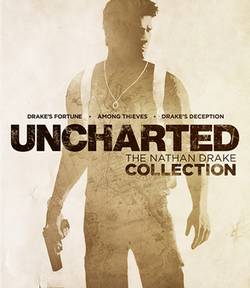

When the original PlayStation era graduates to the latest hardware, the result can be either a tasteful restoration or a forgettable facelift. Uncharted: The Nathan Drake Collection, arriving for PlayStation 4 in October 2015, squarely aims for the former. This compilation brings the first three mainline Naughty Dog adventures - Drake's Fortune (2007), Among Thieves (2009) and Drake's Deception (2011) - to Sony's then-current console, bundled into a single, polished package and shepherded by Bluepoint Games. The studio, known for meticulous remasters, was entrusted with the task of making these single-player campaigns look and feel current without rewriting their DNA. The outcome is a carefully assembled primer for newcomers and a nostalgic re-run for veterans, with a handful of omissions and compromises that keep it from being wholesale perfection.
Bluepoint's stated mission was to harmonise and modernise rather than to reinvent, and that approach defines the gameplay experience across the three titles. Each game is presented from the familiar third-person perspective: platforming, puzzle solving, and third-person firefights remain the structural spine. Where The Nathan Drake Collection departs from strict archival fidelity is in its unification of controls and aim mechanics. Bluepoint reworked aim assist and grenade behaviour from Drake's Fortune to match the feel of Among Thieves, remapped buttons so the three entries share a consistent control scheme and adjusted camera movement, particularly for Uncharted 3, to remove jarring transitions that had aged awkwardly. The ambition here is sensible: the average modern player should not have to relearn three different mechanical dialects when they sit down for a trilogy binge. The remasters run at a crisp 1080p and a smooth 60 frames per second, which is not merely a technical boast but one that materially affects play. Combat feels tighter; the improved aiming makes firefights less of a tug-of-war with inertia and more of a cinematic exchange, closer in spirit to the series' best moments. Platforming benefits as well - leaps and grabs respond with a predictability that the original PlayStation 3 build sometimes lacked. Bluepoint also added new difficulty settings, trophies, online leaderboards for certain sections, and a photo mode for those inclined to freeze-frame Drake's photogenic misadventures. The inclusion of these modern conveniences is welcome, though their implementation is largely unobtrusive: there are no intrusive overlays and the trophies are sensible additions for completionists. It must be noted that the compilation is strictly single-player. Both Uncharted 2's and Uncharted 3's multiplayer suites were left on the cutting-room floor. Naughty Dog justified this omission by pointing out community fragmentation concerns on PS3; the practical result is that The Nathan Drake Collection is incomplete for anyone hoping for a full historical recreation of the original releases. For purists who remember heated multiplayer matches, the absence is a tangible loss. For the majority seeking the narrative arc of Nathan Drake and the thrill of set-piece action, the collection delivers in spades. The pacing of Among Thieves remains the series' high-water mark, while Drake's Fortune shows its age in design despite the treatment. Uncharted 3 continues to be the spectacle-driven closer, with set pieces and cinematic flourishes intact and amplified by the remaster work.
Graphically, Bluepoint's work is the collection's headline act. The studio began work in mid-2014 and assembled its largest team for the task; the operation took roughly 15 months and peaked at 48 people. The upgrade is not just a matter of upscaling: cutscenes were re-rendered, models refined, textures sharpened, and lighting overhauled to take advantage of modern rendering techniques. Ambient occlusion and motion blur - absent from the PS3 originals - were introduced, and the audio mix was refreshed to support surround sound setups. The result is an aesthetic that sits comfortably between respectful remaster and tasteful modernization: environments feel richer, characters catch the light more naturally, and many sequences read like native PS4 productions rather than patched PS3 imports. Uncharted 2 benefits most from these interventions; where it stood out on PS3 for pacing and detail, it shines on PS4 with polished cinematography and improved frame stability. Uncharted 1, being the earliest title in the trilogy, required the most extensive surgery. Bluepoint admits that almost every system in Drake's Fortune was touched. The improvements make the first game's jungle and shipboard locales more convincing, but they cannot entirely paper over the limitations of an earlier era's design philosophy. Players will notice archaic checkpointing, certain level designs that feel like scaffolding for later innovations, and puzzle logic that occasionally betrays its age. These are not failures of the remaster so much as artifacts of history; Bluepoint makes the old bones look and move better, but the skeleton remains of its time. Performance is consistently commendable. Running the trilogy at 60 fps stabilises the experience and gives set pieces - the train sequences, collapsing buildings, storm-swept deserts - a kinetic impact they lacked on the original hardware. Motion blur and other modern effects are used judiciously so as not to obscure gameplay, though players with a keen eye for pixels might prefer the purely clinical sharpness of a native remaster without post-processing. Extras such as the photo mode and leaderboards are functional additions that complement the visual work without feeling like distractions.
Uncharted: The Nathan Drake Collection occupies a sensible place in the modern catalogue: it is an accessible, well-made remaster that makes the trilogy presentable and pleasurable on PlayStation 4. Bluepoint's craftsmanship is evident in the control unification, frame-rate stability, audio enhancements and reworked cutscenes. The package is not flawless. The omission of multiplayer and the lack of deeper behind-the-scenes material or substantive new content are missed opportunities that keep the collection from being an authoritative edition. Uncharted 1's design occasionally betrays its vintage, reminding the player that not all games age equally well. Even so, the compilation succeeds in its primary aim: to be a polished entry point for newcomers and a respectful revival for those already fond of Nathan Drake's globe-trotting exploits. Critical reception reflected this balance, with the collection achieving generally favourable reviews (Metacritic 86/100) and commercial success - it was a top-seller on release and, by 2019, had shifted millions of copies. For anyone looking to catch up before Uncharted 4 or to revisit the trilogy without wrestling with legacy hardware, this collection is a strongly recommended stop on the way.
 Street Fighter 30th Anniversary Collection on PS4
 Teenage Mutant Ninja Turtles: The Cowabunga Collection on Switch
 Tintin: Destination Adventure on PlayStation
 Disney's Chicken Little: Ace in Action on PS2
 Pirates: The Legend of Black Kat on PS2
 One Piece Grand Adventure on PS2
 Gravity Rush Remastered on PS4










 Another SquareThought Site