

 Jan 2000


Vasara Collection on PS4 is the kind of video-game archeological exhibit that quietly reminds you how many pixels and bosses you once survived without blinking. The collection bundles Visco Corporation's turn-of-the-millennium arcade shooters - Vasara (2000) and Vasara 2 (2001) - and ships them into the modern living room like a pair of slightly dusty, very violent postcards from the golden age of coin-operated therapy. Visco, according to the patchy corporate history you will find if you enjoy reading footnotes and Japanese company timelines, has been making arcade machines and console ports since the 1980s, and Vasara is one of their later flirtations with frantic, pattern-heavy shooting. If your first question is "Does it play like other top-down/vertical shooters?" the short answer is yes. The longer answer is: it plays like a sibling who stayed out late, learned a few dangerous spells, and returned home with a collection of decorative explosions. Vasara Collection is not trying to be subtle. It is loud, ornate, and motivated entirely by the desire to fill the screen with enemies until your hands start doing their own choreography.
The gameplay in Vasara Collection is an exercise in controlled chaos wrapped in Japanese feudal aesthetics. Both games lean hard into the shoot-'em-up formula: you have a ship (or similarly themed avatar), a primary weapon, bombs, power-ups, and a life bar that looks alarmingly fragile when a dragon decides to hug you. Vasara differentiates itself by dressing its enemies and stages in a samurai/feudal Japan motif: wooden temples, ghostly banners, and bosses that look like they were designed by a committee that loved kabuki and hated players. Vasara's systems are satisfyingly tactile. You dodge, weave, and worry about bullets while also managing a weapon upgrade system that rewards risk - go for a risky path and you might be rewarded with a stronger beam or a spread shot that feels like a small, polite meteor shower. The scoring leans on chaining and consistent aggression: sit back, and you will score like someone who prefers polite applause; push on, and the game rewards that decision with numbers that look impressive on a high-score table. Vasara 2 refines and complicates things. It is not revolution; it is revision. Expect new patterns, nastier mid-level bosses, and the kind of screen-filling attacks that will teach you to treat your controller like a hot potato. There are moments of genuine brilliance where the game seems to orchestrate its chaos - enemy waves collide, elemental patterns interplay, and the boss telegraphs an attack with all the subtlety of a marching band. When the music, visuals and play sync up, Vasara's arcade pedigree shows: there's nothing subtle here, but there's a lot of craftsmanship. The collection format on PS4 is straightforward: you get both arcade originals, likely preserved in something approximating their authentic state. If you are the sort of player who wants modern conveniences, look for difficulty options, screen filters, and save states. If those options are present, they are the digital equivalent of a helpful friend whispering "maybe use a continue" while your pride rants in the corner. If the port is faithful and minimalist, then prepare to appreciate old-school challenge in the context of modern tolerances. Multiplayer and extras are typically the places a collection either shines or mournfully limps. The document doesn't detail bonus content, so assume the focus is on delivering the two arcade experiences intact. That is a respectable choice: sometimes a classic shooter does not want a museum wing of developer interviews and remixes; it wants to be fired up and survived. Whether that is delightful or slightly cruel depends on whether you enjoy a steady diet of "one more attempt" or prefer your nostalgia with a side of context and developer commentary.
Visually, Vasara wears its age like ceremonial armor: ornate, a little chunky, and oddly charming. The original arcade machines were designed for CRT screens, which means sprites were bold, color palettes decisive, and backgrounds busy enough to make you feel like you were playing inside a lacquer painting that had been possessed by a fireworks factory. The bosses are memorable because they are large and unapologetic; they take up space the way a dictator takes up a ballroom. On PS4, the pixel work translates reasonably well. If the collection includes options for scanlines or aspect ratio tweaks, they are appreciated; otherwise the game still reads clearly on a modern display. The palette sings when it needs to and gets particularly theatrical during boss encounters, with explosions that pop in a way that feels satisfying rather than merely noisy. Frame-rate holds up where it matters-on-screen chaos remains playable instead of turning into an unintentional slideshow. It's not photorealism; it does not try to be. The aesthetic is decisive, and the presentation succeeds if you allow it to be an arcade product that got slightly older and spruced up for the living room.
Vasara Collection on PS4 is a compact lesson in what made arcade shooters addictive: precise controls, escalating patterns, and bosses that demand your full attention. It's not trying to reinvent the genre; it's trying to preserve two moments in Visco Corporation's arcade catalog where developers focused on pure gameplay loop and visual personality. If you are a newcomer, expect charm wrapped in difficulty and a visual style that prefers lanterns to photorealism. If you are a veteran, expect a reliable bite of nostalgia and the habitual need to beat your previous high score. This collection is not flawless. It trades depth of extras for authenticity, so if you wanted a museum-style release with developer interviews and a timeline of Visco's corporate metamorphoses, you might be slightly disappointed. On the other hand, if you wanted to play two tight arcade shooters with personality and polish, you will likely find Vasara Collection to be an efficient, satisfying purchase. Score: 7.5/10. It's an honest arcade port: a little rough around the edges, entirely confident in its explosions, and stubbornly good at making you try "one more run."
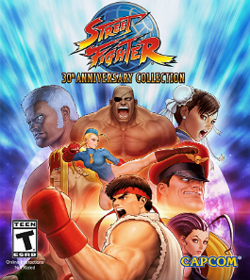
 Street Fighter 30th Anniversary Collection on PS4
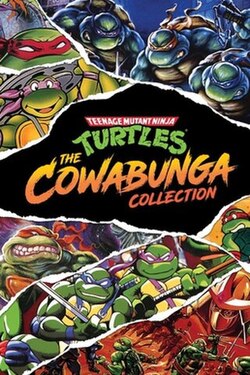
 Teenage Mutant Ninja Turtles: The Cowabunga Collection on Switch
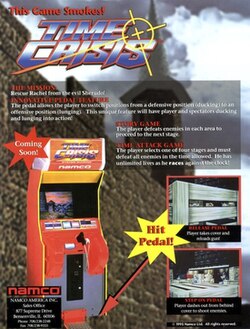
 Time Crisis on PlayStation
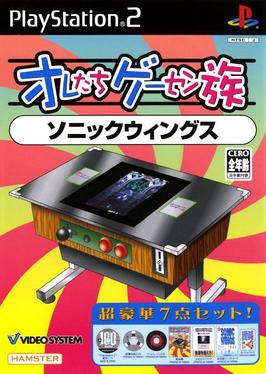
 Oretachi Game Center Zoku: Rabio Lepus on PS2
 Street Fighter V: Arcade Edition on PS4
 Oretachi Game Center Zoku: Nekketsu Koukou Dodge Ball Bu on PS2










 Another SquareThought Site