

 Oct 2026
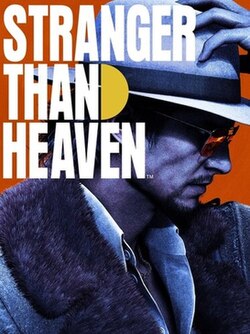

Stranger Than Heaven arrives from RGG Studio as a curious hybrid: part period drama, part street-level brawler, part experimental music sandbox. On paper it reads like an ambitious side project from the makers of Like a Dragon - five districts, five eras, a single protagonist whose life spans half a century - but the details revealed so far point to a game that's just as interested in systems and pipelines as it is in melodrama. For PS5 players this matters: RGG is shipping Stranger Than Heaven on the Dragon Engine, the same gutsy toolset it built for cinematic, highly interactive worlds. What we have access to at this stage is a dossier of mechanics and design choices rather than a polished final build, which makes it a fascinating subject if you like to unpack how games are constructed under the hood.
The first technical eyebrow-raiser is the control scheme. Stranger Than Heaven uses a third-person perspective and claims to let you control Makoto's left and right sides independently, mapped to the buttons on each side of the controller. That phrasing screams asymmetric input - think separate action queues for each arm or staggered attack states - which opens a few engineering questions: how does the input buffer reconcile conflicting animations, how are inverse kinematics (IK) constraints resolved when both hands try to interact with a single prop, and does the engine prioritize networkless local prediction or simple deterministic animation blending? On PS5, where low-latency haptics and adaptive triggers exist, such a scheme could feel tactile and immediate if the input-to-animation pipeline is tight. If not, it risks feeling like a gimmick that punishes split attention. Combat is advertised as a combination of hand-to-hand and weapon-based systems with upgrade trees. RGG's Dragon Engine historically emphasizes blend-trees and contextual transitions - knockdowns, grapples, crowd interactions - so expect a layered animation state machine rather than a single fast-hit numerator. From a technical perspective the interesting bits will be collision resolution and hit-stop tuning. RGG titles tend to use per-frame contact checks combined with animation root motion; the PS5's CPU headroom should allow more precise capsule queries and dynamic ragdoll-to-animation handoffs. Weapon upgrades further complicate animation sets: each weapon can require new stances, hitboxes, and VFX spawn points. The challenge is loading those assets without hitching memory streams mid-combat. This is where PS5's NVMe throughput and streaming decompression can shine, but only if RGG optimizes their asset bundling and streaming heuristics. The music system promises to be the game's mechanical signature. Makoto can pick up environmental sounds, 'save' them as recordings, and later arrange them with in-game composers to create pieces. Implementation-wise this is a non-trivial audio architecture: you need a lightweight sampler, a non-destructive audio graph editor, possibly tempo quantization, and a memory-efficient method of storing user compositions. On PS5, hardware-accelerated audio and the console's dedicated audio cores could allow low-latency, high-channel-count mixing, but the UI matters as much as the DSP. Recording environmental samples implies continuous ambient capture and an efficient codec for short samples. The integration of these recordings into later composition sessions means RGG will need a runtime mixer with clip-level envelopes, loop points, and tempo-synced effects. If they pull it off, the system could create emergent gameplay loops where combat, exploration, and audio design intersect - recruiting street musicians for shows then curating the soundtrack of your own rise to power feels like a satisfying meta-loop, provided the composer UI isn't clunky. Management and 'showman' activities introduce another layer of simulation: NPC AI for recruited musicians, schedule systems for shows, and economy balancing for performance outcomes. These systems are typically cheaper on CPU but expensive in terms of content scripting and debugging. Expect behavior trees or utility AI for NPC performers, with state machines governing practice, fatigue, and audience reaction. On PS5 this should run easily, but tuning is the hard part. Cross-cutting all gameplay systems is level design across five eras - each district is a variant tied to a historical timestamp, which suggests a modular world-building approach where base geometry is re-skinned and populated differently depending on the era, or where entirely separate scenes are used for each timeframe. The former is cheaper and elegant if executed with clever LOD and texture-shader toggles; the latter gives more fidelity at the cost of storage and streaming complexity. One last practical note: the game uses a single mixed audio track with both Japanese and English in-line, chosen contextually. That design decision is bold from a systems perspective because it replaces the common 'switch audio track' paradigm with a context-aware localization layer. Implementation will need robust subtitle timing and fallback logic, and the asset pipeline must keep both language files tightly synchronized to avoid lip-sync drift.
Dragon Engine has already proven its strengths in dense urban scenes and photoreal character art; Stranger Than Heaven leans into that with period-specific districts from 1915 Kokura to 1965 Shinjuku. The core technical challenge here is temporal authenticity across multiple time slices. Developers can approach this with one of two strategies: maintain a single, historically neutral geometry set and swap materials, props, and lighting to imply era changes; or maintain discrete scenes per era with entirely different asset lists. The former is storage-efficient and leverages PS5 texture streaming and shader permutations (wear maps, dirt masks, grime layers). The latter offers bespoke atmospheres at the cost of increased download sizes and more aggressive streaming. Lighting and post-processing will be focal points for era identity. Period lighting - gas lamps, tungsten, crude neon - can be simulated via localized emissive sources and LUT-driven color grades. The PS5's ray-tracing can add believable reflections on wet streets or chrome signage, but ray-trace fanatics should be cautious: ray tracing is costly across global illumination and reflections, so smart hybrid approaches (screen-space reflections + ray-traced probes on critical assets) often give the best bang for buck. Texture fidelity and character LODs will need thoughtful attention because the game features a mixed Japanese/American cast with licensed likenesses; fidelity on faces, accessible via high-res albedo and normal detail maps, is necessary to preserve performer identity without blowing memory budgets. Animation fidelity is another expected highlight. The game's reliance on dual-side control and rich combat scenarios implies a complex animation blending system, layered on top of IK solvers for interactive props and musical performances. Facial animation will be tested by the bilingual single-audio-track design: the engine must handle subtle visemes for two languages or fall back to performance-driven facial rigs that match emotional beats rather than phoneme-perfect lip sync. PS5's CPU and GPU headroom are sufficient for high-quality blend-shapes and GPU-skinned meshes, but the implementation choices will determine whether the game feels cinematic or stuttery during heavy scenes.
Stranger Than Heaven is shaping up to be one of those titles where the engineering choices are the story: asymmetric controls, a sample-based music system, era-spanning world design, and a single contextual audio track combine into a package that's more systems-first than strictly narrative-first. On PS5 the hardware is capable of supporting the technical ambitions - fast streaming, high-fidelity characters, rich audio graphs - but the final quality will hinge on RGG Studio's pipeline discipline. Expect to judge the title on how seamlessly it blends all these layers: if combat remains responsive when you're juggling compositions, if the composer UI is intuitive enough for quick loop creation, and if era transitions don't trigger streaming hiccups, Stranger Than Heaven could be a fascinating evolution of the Dragon Engine. There's risk and there's innovation; at present the balance looks favorable, which is why I'm landing on an 8/10. It's an exciting technical experiment with the potential to be both mechanically deep and narratively resonant - provided the systems harmonize as well as the game hopes its soundtrack will.
 Punch Club on PS4
 Aero the Acro-Bat 2 on PS5
 Tom Clancy's Rainbow Six: Vegas 2 on PS3
 Tintin: Destination Adventure on PlayStation
 Disney's Chicken Little: Ace in Action on PS2
 One Piece Grand Adventure on PS2
 Taiko no Tatsujin: Dokodon! Mystery Adventure on Switch










 Another SquareThought Site