



Twisted Metal: Small Brawl is what happens when a long-running, blood-spattered vehicular combat franchise decides to take its toys seriously - and then immediately ages them down to remote-control size. Released late in the PlayStation's lifespan, it is a spin-off from the main Twisted Metal series and the last of the line to appear on the original PlayStation. The hook is simple: rather than full-size death machines, you pilot one of a dozen little remote control cars through oversized environments like kitchens and treehouses, while still using guns, explosives and the kind of chaos that made the series famous. If you were hoping for Twisted Metal: Black-level brooding and vehicular nihilism, you will be mildly disappointed. If you wanted miniature mayhem and the faint whiff of a marketing team that asked 'can we make this cuter?' then you have come to the right place.
The gameplay keeps the franchise's core idea intact - pick a vehicle, pick weapons, ram things until they explode - then dresses it up in plastic. You control one of twelve unique remote-control vehicles with the usual PlayStation inputs: accelerate, brake, reverse, turn tightly, turbo and a d-pad/analog/button combo to switch and fire weapons. The surprisingly tangible physics are carried over from Twisted Metal 2's engine, so the RC cars don't behave like flat cartoon props; they have weight, momentum and a tendency to flip if you get overconfident. That is the game's quiet virtue: even when everything else feels toy-sized and toyish, the vehicles themselves respond in a way that occasionally rewards skill. Single-player mode asks you to grind through arenas and campaigns that lean into the 'oversized world' conceit - kitchen sinks, backyards and tree-top skirmishes - while multiplayer, the mode most likely to encourage friendship-ending barbs, gives you the predictable joys of vehicular combat with friends over a single couch. The controls are serviceable and the turbo boosts and tight turns matter, but the overall design decisions feel cautious. Levels are built around set-piece chaos rather than emergent destruction, and many changes from the mainline Twisted Metal series were simplified in the name of accessibility. That would be fine if the simplification added charm or depth; instead it often comes off as 'dumbed down' rather than 'streamlined.' Weapons still exist in abundance and are generally satisfying to use for the first few minutes. The novelty wears off when you realise many arenas lack the verticality or interactive scenery that would make repeated runs feel fresh. Enemy AI is competent enough to ram and retaliate, but rarely plays with the same sly viciousness you expect from earlier entries. The game also flirts with center-stage cartoonishness - one reviewer famously praised 'the plumber's ass that sticks out from underneath the sink' as a highlight - which demonstrates both the developers' willingness to lean into bizarre set dressing and the overall reduction in menace. If you enjoy compact, arcade-style vehicular bouts and can accept a lighter narrative and smaller stakes, Small Brawl will give you a handful of happy rounds. If you wanted a polished evolution of the Twisted Metal formula, you will come away feeling like the series took a detour through a daycare.
Graphically, Small Brawl is the part of the package that most critics found difficult to forgive. Released at the tail end of the PlayStation's lifecycle, it arrived when expectations were higher and the hardware's weaknesses more obvious. Reviewers called the visuals 'very unfinished' and 'appalling'; menus were labelled 'horrendous.' The environments are imaginative in concept - a kitchen level is more interesting in idea than in execution - but textures are flat, draw distance is forgetful and pop-in is a constant companion. The charm of battling inside giant toy-box dioramas is undermined by a presentational sloppiness that makes levels feel half-built. That isn't to say everything is offensive to the eye. The art direction has moments of wit: oversized household objects make for playful obstacles, and the caricatured vehicle designs have enough personality to be visually distinct. The physics-driven animation of small cars tumbling and skidding can be oddly satisfying, reminding you that the underlying engine has competence. But once you notice the low-resolution textures, the sparse enemy variety, and the rough menus, you can't unsee them. Critics like IGN and GameZone were blunt: sound, level design and menus were weaker than in earlier Twisted Metal titles, and none of those elements were doing the game any favours at a point when players expected refinement rather than excuses.
Twisted Metal: Small Brawl is an experiment that sits somewhere between 'clever spinoff' and 'misjudged detour.' It offers a few enjoyable multiplayer scraps, some charmingly weird level ideas and a physics backbone that lets the little cars feel surprisingly convincing. It also delivers sloppy visuals, weak level construction and a general sense that someone took a well-loved, blood-soaked property and asked it to play nicely for juice boxes and Easter baskets. Reception was mixed-to-negative across the board: Metacritic averages around the low 50s, GameSpot offered a guarded recommendation for players still clinging to their PS1s, while several outlets pronounced it a step backward. If you own a PlayStation and hanker for a short burst of nostalgic, scaled-down mayhem - preferably with a friend and a willingness to forgive technical shortcomings - Small Brawl is a harmless diversion. If you're expecting the grit, menace and progression of the mainline Twisted Metal games, this will feel like a sanitizer. The score reflects that middle ground: a respectable idea hampered by execution, memorable in concept more than in practice. It doesn't ruin the series; it just politely asks the series to take off its boots and play with blocks for an afternoon.
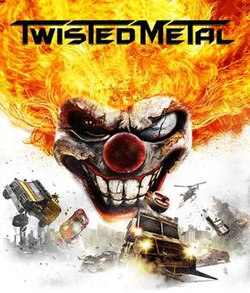 Twisted Metal 4 on PlayStation
 Twisted Metal on PlayStation
 Project Awakening on PS4
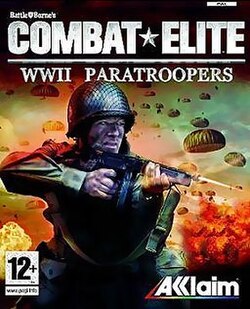
 Combat Elite: WWII Paratroopers on PS2
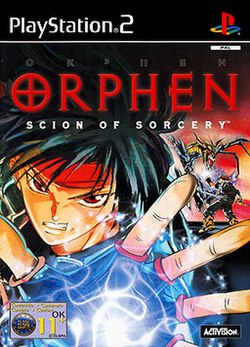
 Orphen: Scion of Sorcery on PS2
 Monster Hunter Stories 2: Wings of Ruin on Switch












 Another SquareThought Site