

 Aug 2025
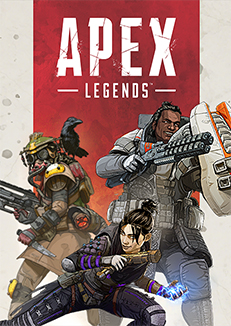

Apex Legends arrived in 2019 like a headshot to the free-to-play space: sudden, surprisingly polished, and packed with quality-of-life engineering that made squad-based shooters feel fresh again. By 2025 it's an ecosystem - 25 seasons worth of iterative tuning, a patented (then shared) ping system, and a live-service backbone that has bent balance, netcode and art pipelines to support constant updates. The Nintendo Switch 2 release solves one question the original Switch port exposed: how do you translate a game that pushes a heavily modified Source engine's draw-distance and streaming systems onto a low-power handheld? This review focuses less on whether Legend X is OP and more on the spaghetti-and-solder of systems under the hood - networking, rendering, input mapping, and the trade-offs made to cram giant maps and 60-player chaos into a portable device.
Apex's gameplay is deceptively simple on paper: squads (Trios primarily, with Duos and Solos as variants) pick a Legend, drop onto a large map, gather gear, and survive as the play area closes. The technical magic is in the systems that make that loop tolerable and competitive. The non-verbal ping system is one of those brilliant, low-latency UX decisions. Technically it's an input-state multiplex: one button maps to contextual actions (enemy ping, loot ping, move ping), minimizing voice chatter and reducing network churn for chat systems. EA patented aspects of this system but later made it available to other devs - testament to its utility and tight integration into the client-side prediction of player intent. Movement inherits carefully pruned elements from Titanfall: slide, short-climb, and zip-lines remain, but wall-running was deliberately omitted to reduce threat-localization complexity. This is a design choice with a technical rationale: fewer degrees-of-freedom reduces the burden on server reconciliation and hit detection logic. Knockdown and revival mechanics are another system-level balancing act. Knockdowns spawn a localized 'banner' object with a lifetime timer; when the banner is collected and delivered to a beacon, the server re-instantiates the player state. This requires precise authoritative state management to avoid resurrection exploits - and Respawn's repeated patches over seasons show they've had to tighten timings and edge-case rules (for example, banner persistence during server handoffs) to stop race conditions and lost revives. Arena mode and its later removal/return cycles illustrate the pressure of mode engineering on a live service. Arena's buy-phase and round-based flow introduces deterministic economy systems reminiscent of CS:GO and Valorant; that mode demanded changes to replication frequency (less streaming loot, more transactional state) and introduced shop/server arbitration code that's separate from the battle royale's streaming world. The Season system - which ships new Legends, weapons and map edits - is effectively continuous deployment. Each season is a micro-release that touches UI, data-driven balance tables, client-side animation rigs, and server-authoritative rule sets, and that complexity is why Respawn kept a dedicated Vancouver studio: to maintain the CI/CD pipeline for live patches and emergency server-side hotfixes. Monetization and progression are also technical systems. The game uses a mix of microtransaction storefronts, battle passes, and cosmetic packs. Loot boxes were an early pain point and required UI/UX and store-system rewrites after community backlash. The weapon progression and Evo/Shield Core changes introduced in later seasons are essentially client-side state machines that persist across matches, and that requires robust serialization and anti-cheat validation on servers to prevent tampering. The history of banning and anti-cheat patches shows the ongoing arms race between Respawn's server validation and the cheat community; networking telemetry and replay audits have become critical pillars of the live service.
Apex Legends runs on a heavily modified Source engine that was pushed in 2019 to support larger maps and longer draw distances. The engine modifications are visible everywhere: terrain streaming, occlusion culling, and a dynamic resolution system that kicks in when the GPU backlog grows. On previous console ports this manifested as frequent resolution swings and frame drops; the original Nintendo Switch port (handled by Panic Button) suffered in this respect, and its Metacritic score reflects that. The Switch 2's released build benefits from more CPU/GPU headroom, which allows higher base resolutions and steadier frame pacing, but the underlying technical constraints remain. Rendering trade-offs are the story here. Apex favors particle and decal fidelity in combat zones, which are expensive to render. To keep framerate stable the renderer uses aggressive LOD (level-of-detail) transitions, texture streaming priorities that favour player models and weapons, and a conservative shadow/lighting budget on distant objects. Dynamic resolution scaling is still present and behaves predictably: when the scene is cluttered with particle effects (explosions, smoke, ability VFX), the scaler reduces internal render resolution rather than drop post-processing. This preserves target framerate but softens image detail - a perfectly defensible choice for a competitive FPS where temporal smoothness matters more than a static 4K snapshot. Hitbox tuning and animation interpolation deserve a note. Respawn adjusted hitboxes early and often, and those changes are baked into animation retargeting and server-side collision volumes. On the Switch 2 build, input-to-shot latency benefits from controller polling and USB/Bluetooth improvements in the new platform, and Respawn's network code continues to favor client-side prediction with server reconciliation. Crossplay is enabled, with server-side ranking and anti-cheat systems treating platforms differently for matchmaking fairness. Steam/console parity improvements in later patches reduced perception of advantage from platform-specific features, but differences in hardware still mean players on more powerful machines get denser draw-distance and faster asset streaming.
On Nintendo Switch 2, Apex Legends is less a port and more a pragmatically tuned transplant. Respawn's core design - tight gunplay, class-based Legend abilities, and an industry-defining ping system - remains intact. Technically, the team has done the sensible things: shift texture streaming priorities, enable dynamic resolution, and adjust LODs to favor competitive clarity. The underlying modified Source engine still demands trade-offs, so don't expect PC ultra fidelity, but what you get is a remarkably competent version of a modern live service shooter that respects framerate and input latency above visual bells and whistles. If you care about the nitty-gritty: the network and input stacks are well-implemented, the rendering pipeline makes acceptable compromises, and the live-service architecture proves robust after six years of iterative fixes. If you care about cosmetics and new Legends, expect the same seasonal treadmill of content and monetization that has powered Apex since day one - including the history of loot-box controversy and the subsequent changes to direct-purchase models. For anyone wanting a technical, competitive battle-royale experience on a portable console, Switch 2 delivers a strong, sensible iteration. Score: 8.5/10. It loses half a point for the inevitable compromises born from an engine designed for long draw distances and frequent world streaming, and another half for the live-service friction (monetization and occasional balance missteps). But the core systems that make Apex sing - the ping network, movement feel, and server reconciliation - remain among the most tightly engineered in the genre.
 Power Rangers: Super Legends on DS
 Sword Coast Legends on PS4
 Legends of Wrestling II on PS2
 My Hero Ultra Rumble on Switch
 Marvel Rivals on PS4
 Warhammer 40,000: Boltgun 2 on Xbox Series X/S
 One Piece Grand Battle! 3 on PS2
 Star Wars Jedi: Survivor on PS5
 Apex Legends on Xbox Series X/S
 Apex Legends on PS5Star Wars Jedi: Fallen Order on PS5
 Star Wars Jedi: Survivor on Xbox Series X/S










 Another SquareThought Site