

 Sep 2019


Ni no Kuni: Wrath of the White Witch is the kind of game that arrives wearing a Studio Ghibli cape and a Joe Hisaishi score, and then politely asks whether you would like to be emotionally ruined. Originally a PlayStation 3 showcase, it was remastered and ported to the Nintendo Switch in 2019. You play as Oliver, a 13-year-old whose mother dies, which is the start of a long walk-and-talk quest across a second, weirder world. The game is simultaneously sweet, earnest, and loud about wanting you to care, which is an effective strategy when your cutscenes look like a hand-painted postcard and your companion is a talking, grumpy fairy with a Welsh accent. It feels like being inside a bedtime story that also hands you a pokey little combat system to keep your thumbs occupied.
Ni no Kuni is fundamentally a third-person action RPG wrapped in a paper theater. The overworld is presented as a diorama of villages, dungeons, and slightly too-big castles; you travel on foot, by boat, and eventually on the back of a dragon, because the team thought you'd enjoy at least one mode of travel that involves holding on to someone's tail. You can also hop between the other world and Motorville (the surprisingly Midwestern name for Oliver's hometown), which is where the game reminds you that it's trying to be both a child's fantasy and a nostalgia trip for adults. Encounters transition to an open battlefield where the combat hybrid lives. It's not turn-based in a strict sense, but neither is it the frantic button-mashing real-time combat of Western action games. Every combatant has a timer-think Active Time Battle with training wheels-so positioning, timing, and a little bit of planning matter. Human characters (Oliver, Esther, Swaine and the occasional guest) can be directly controlled, or you can send out familiars: collectible creatures that act as your battle pets and, occasionally, the stars of the show. Familiars level up, evolve, learn abilities, and wear items. They are adorable, collectible, and often better behaved than your AI teammates. The familiar system gives Ni no Kuni its most charming loop: you capture a creature, feed it treats, teach it skills, and then feel morally justified in throwing it at a golem. The Wizard's Companion functions as an in-game journal: spells, bestiary entries, maps and alchemy recipes live inside it, which helps when you misplace the one actual manual you were supposed to read. Side content-town errands, bounty hunts from the Taskmaster, and merit stamp cards-asks you to do things for NPCs. Some of these errands are heartwarming, others are silly fetch quests. The variety is broad enough that you'll forgive the occasional repetitive escort or item hunt because the world is enjoyable company. The battle AI can be uneven. Reviewers have been kind and cruel in equal measure: some praise the hybrid for feeling fresh, while others point at the party's autopilot decisions and roll their eyes. Expect the occasional moment where the AI decides it would rather stand and admire the scenery than heal. The game also likes to remind you it's an RPG from the era of consistent random encounters, so you'll meet enemies often. If the idea of fighting all the time sounds thrilling, you will be thrilled. If it sounds like a minor inconvenience, you'll reach for consumables more than once. Overall gameplay pacing leans toward generous exploration and a measured main story. The tasks and side quests provide depth and charm, and the battle system keeps enough teeth to be engaging without demanding fervent twitch reflexes. It's an RPG that prefers to be cuddly with occasional sharp edges.
The game's visual pitch is straightforward: 'make the PlayStation/console look like a Studio Ghibli film and then never stop polishing.' Level-5 collaborated with Studio Ghibli to produce cutscenes and storyboards; the hand-drawn sequences and the in-engine cel-shaded moments were color-graded to sit next to each other without causing a visual identity crisis. The result is a world that looks like a watercolor painting that learned how to walk. Cities and landscapes are richly detailed, designed to feel like miniature dioramas rather than photorealism. Motorville (Hotroit, in its Japanese incarnation) is modeled after mid-20th-century American auto towns, which helps Oliver look like a kid who'd rather tinker under a hood than attend a council meeting. The familiars are delightful: some designs were pared back from 'creepy' or 'too-cute' into an aesthetic that feels intimately Ghibli. The cape animation was apparently a tantrum for the developers and was solved with an amusing blend of math and hand animation, which explains why nothing in the game flaps unconvincingly. On Switch, the remaster handles the aesthetic well. It isn't a technical flex like some modern remasters-don't expect 4K fidelity-but the art direction carries the weight: the textures, the colors, and the cutscenes do most of the atmospheric heavy lifting. The soundtrack by Joe Hisaishi deserves its own paragraph (and sometimes its own cry); orchestral swells and gentle motifs make exploration and story beats land. If you are the kind of person who cries at strings, this game will be efficient at its job. Performance on Switch is competent; the remaster by QLOC smooths edges without rewriting the art. If you want to nitpick, the Switch version can show its limitations in lower resolution textures in handheld mode, but you will usually be too distracted by a talking fairy to care.
Ni no Kuni: Wrath of the White Witch on Switch is a lovingly assembled fairy tale with an RPG heart. It pairs Level-5's game design chops with Studio Ghibli's emotional precision and Joe Hisaishi's score to make something that feels handcrafted. The battle system blends turn-based thinking with real-time movement, the familiar-collecting loop is satisfyingly tactile, and the world is consistently, stubbornly beautiful. The game is not flawless. The pacing can be slow for players who prefer a taut, modern narrative tempo; the AI occasionally behaves like it was on a coffee break; and the Switch port isn't a technical revolution. But none of those caveats cancel out the experience of wandering through a landscape that seems designed to be paused and admired. If you like RPGs that let you breathe between battles, if you appreciate art direction that refuses to be boring, or if you have ever wanted to pet an imaginary creature and teach it to use a fireball politely, this is a game that deserves your time. It's not just nostalgia dressed up in a remaster: it's a warm, occasionally melancholic world that still knows how to surprise you. Score: 8.5/10.
 Ni no Kuni II: Revenant Kingdom – Prince's Edition on Switch
 Fushigi no Kuni no Angelique on PlayStation
 Combat Elite: WWII Paratroopers on PS2
 Onimusha: Dawn of Dreams on PS2
 Disney's Chicken Little: Ace in Action on PS2
 Action Man: Operation Extreme on PlayStation
 Dark Cloud 2 on PS2
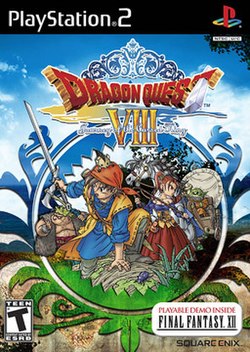
 Dragon Quest VIII: Journey of the Cursed King on PS2
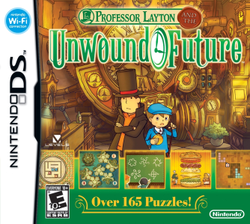
 Professor Layton and the Unwound Future on DS
 Dragon Quest IX: Sentinels of the Starry Skies on DS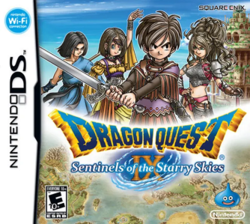










 Another SquareThought Site