

 Oct 2018
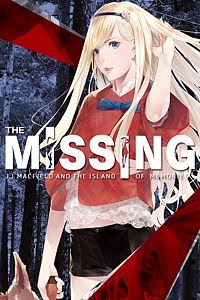

The Missing: J.J. Macfield and the Island of Memories is the kind of game that strolls into a party wearing a clown mask, announces it has terrible news about your family, and then sits you down for a very sincere talk. Designed by Hidetaka Suehiro (aka Swery), the game is a small, knotty puzzle-platformer whose central mechanic - you cannot die, so you must maim yourself creatively to progress - is as shocking on description as it is thematically purposeful in practice. On the Switch it plays like a compact, bitter-sweet fever dream: an intimate story told through grotesque physicality and moments of quiet revelation. At the center of the experience is Jackie "J.J." Macfield, who arrives at the Island of Memories after her friend and love interest Emily goes missing during a storm. A bolt of lightning grants J.J. an impossible property: wounds, decapitations, and being dropped off cliffs are inconvenient, not final. The island becomes a theatre for memory, guilt, trauma, and, crucially, identity. The narrative is primarily revealed through environmental setpieces and unlockable text messages that, like pieces of flayed skin, expose the raw tissue beneath the surface plot. That revelation is where the game does its best work: J.J.'s external quest to find Emily slowly becomes an inward journey from self-loathing and concealment toward acceptance and survival. The Missing earned praise for its ambition and sensitivity in addressing queer themes, while simultaneously provoking controversy because its puzzle loops are built around self-harm. The game's bluntness can make players squirm, but it also punishes easy distance; wounds are literal, but they also function as metaphors. If you play it on Switch expect the same story and design, but also the same rough edges that led critics to call the Switch version "mixed or average" compared to other platforms. Where the PC/PS4/Xbox versions were crowned with slightly higher aggregate scores, the Switch release still delivers the emotional core - and that's what makes it worth recommending to the right player.
The Missing is not trying to be Subnautica; it's a focused platforming puzzle game with a twist so memorable that people will either bring it up at parties or use it as a poor attempt at dark humor. Gameplay-wise you run, jump, and interact like in any competent 2D puzzle-platformer, but the twist is the death-optional-but-useful loop. When J.J. gets dismembered, she can regenerate because of the lightning strike. So if you need to cross a gap but the only obvious tool is a severed arm, congratulations: that's a legitimate solution. This mechanic feeds into a steady parade of imaginative puzzles. Some sections ask you to act like a walking jigsaw, rearranging your own limbs to hit switches; others force you to trick enemies or reconfigure the environment by sacrificing a bodily part. The puzzles rarely feel arbitrary because they're tied to the emotional language of the story: self-inflicted pain used as problem-solving is always observed through the lens of J.J.'s psychology. Collectibles unlock text messages and message threads that act as flashbacks - they're the scaffolding for the character study. Each unlocked text brings us closer to the buried truth: J.J. is a closeted trans woman in a hostile environment. The bullying, the harassment, the shame, the counseling intended to "fix" her - these texts aren't just exposition, they recontextualize the mechanical choices you've been making. When you saw fit to cut off a limb to finish a level, the game gives you a paragraph of a text message: you realize J.J. has been cutting herself in the real world, too, and the game's brutality ceases to be a mere gimmick. The Hairshrieker - a monstrous, oversized J.J. that chases after you with a box cutter - functions both as a gameplay hazard and an emblematic antagonist. Gameplay-wise it appears in hunt sequences: pressure builds, you flee, and the mechanic forces you to use your immortality creatively (or inelegantly) to buy time. Symbolically the Hairshrieker is guilt and shame in a coat of flesh: the more you try to outrun it, the more you're dragged toward the center of J.J.'s trauma. The best sections of the game are those in which puzzle design and symbolism harmonize. A room that forces you to hang yourself to progress is stomach-churning and also narratively precise: it replicates J.J.'s suicidal instincts within a ludic structure that refuses to let that impulse exist in isolation. The game's structure oscillates between linear episodes with distinct themes and a dream-like fluidity that preserves the sense of being inside someone's memory. Pacing is tight: The Missing is compact and doesn't overstay its welcome, though that compactness can feel abrupt when certain emotional beats - like the revelation that events on the island mirror a real-world suicide attempt - land and demand time to breathe. For players sensitive to depictions of self-harm, the game is frank and at times graphic. However, the narrative payoff - J.J. waking up in the real world after being shocked by a defibrillator and then choosing to survive out of love for Emily - justifies, for many, the discomfort endured to reach it. On Switch the controls are serviceable; the puzzles translate well to the Joy-Cons and handheld play. The biggest gameplay caveats are occasional frame dips and longer load times versus other platforms, which can slightly blunt the immediacy of chase sequences or the visceral impact of certain stunts. These are not game-breaking, but they occasionally remind you that a portable console is doing heavy emotional lifting for a game designed with a broader technical margin in mind.
Visually, The Missing strikes a peculiar balance between cartoony and grotesque. Artist Wataru Nishide outfits J.J. and the island in a palette that can be alternately playful and oppressive: children's drawings sit beside blood-slick mechanics, and that juxtaposition works because the art style never lapses into realism. The game's animation and staging are consistently strong; moments of transformation and body horror are rendered with an uncomfortable elegance that the game leans into rather than apologizes for. Destructoid's description of "gorgeous animation" and "stomach-churning sound effects" hits the nail on the head - the audio design is often the unsung hero, turning simple jump-scare beats into sequences that unsettle long after you mute the console. On Switch, however, fidelity takes a minor hit. Backgrounds sometimes lose fine detail in portable mode, and a few effects - particle systems, post-processing - are toned down compared to the PC and console builds. These downgrades don't ruin the experience but they slightly dull the jagged edges that make the island feel otherworldly. If you're playing docked the difference is less pronounced, though Switch owners reported the overall package scoring "mixed or average" at release compared to higher-scoring versions on other machines. The takeaway: the art and animation remain the emotional backbone, but the Switch's hardware constraints mean you're seeing a slightly more economical version of Swery's vision.
The Missing is less a puzzle game about solving platforming rooms and more a small, bold novel disguised as a 2D side-scroller. Its central relationship - J.J. and Emily - is the tether that keeps a series of increasingly surreal and often brutal set pieces from veering into exploitation. J.J. herself is the clearest triumph: her arc moves from concealment and self-harm to revelation and determination. The texts you uncover act like autopsies of character, revealing why J.J. mutilates herself in the dream as a reflection of her real-world suffering. Emily's arc is shorter and more enigmatic - missing, dead in the island's clock tower, angry in a dozen different ways when the dream and reality collide - but that enigmatic quality fits the game's emotional geometry: sometimes the person you love is both your saving grace and the mirror that shows you what you hate. Secondary characters - the mother, the counselor, the classmates - are painted with broad strokes: they're less characters than forces, the social currents that push J.J. toward hiding. That's an intentional choice. The Missing isn't interested in nuanced side-characters so much as in diagnosing the particular societal pressures that make a closeted trans woman feel like self-destruction is the only exit. For Switch players willing to be uncomfortable, the game rewards with a sincere, affecting finale: a confrontation with the Hairshrieker that is both violent and cathartic, followed by a real-world rebirth and a promise of togetherness with Emily. The Switch port isn't flawless - technical compromises and a slightly cooler critical reception should be acknowledged - but the core of the experience, the story of J.J.'s painful climb back into life, survives intact. If you are drawn to character-driven games that use mechanics to interrogate trauma, and if you can handle explicit depictions of self-harm used as metaphor rather than titillation, The Missing will likely stay with you. Play it when you have a couple of hours to spare, headphones for the sound design, and patience for a game that would rather yank your teeth than smile politely. It's messy, sometimes outrageous, frequently heartbreaking, and because it's brave enough to make its protagonist suffer visibly on-screen, it earns its emotional victories. On Switch, that emotional core is still alive, even if a little softer around the edges. Score: 7.5/10.
 Crash Bandicoot: The Wrath of Cortex on PS2
 MLB The Show 22 on Switch
 Ōkami on PS2
 Tintin: Destination Adventure on PlayStation
 One Piece Grand Adventure on PS2
 Professor Layton and the Last Specter on DS
 Puzzle by Nikoli 4: on PS4










 Another SquareThought Site