

 Jan 2023
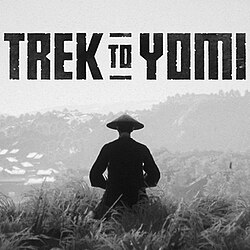

Trek to Yomi is a moody, black-and-white samurai side-scroller that looks like it was shot by a Hitchcock-enthusiast with a katana. On Switch it brings the same little cinematic revenge saga Flying Wild Hog cooked up with director Leonard Menchiari - short (around five hours), stylish, and deliberately old-school. If you're coming for the visuals, it's an easy sell; if you're coming for a fight, expect a minimalist toolbox that punishes sloppy inputs and rewards patient, Sherlock-level observation. This review zeroes in on the challenge side of things: what makes the combat tick, which skills the game actually trains into you, and whether the Switch version hands you a sword or a butter knife.
Trek to Yomi wears its difficulty on its sleeve: the developers said they designed it to be challenging, and the mechanics follow through. Combat is stripped back to two basic attack types-light and heavy-plus movement-direction combos and a block that, when timed correctly, will break an enemy's guard and create a window to counterattack. There's no flashy skill tree to pad your ego: instead the game makes you work for wins by asking you to read animations and react with precision. If you like button-mashing, you will be underwhelmed; if you like learning opponents like a chess player reads a board, this is your jam. The core skill Trek to Yomi drills is timing. Light attacks are quick but chip away; heavy attacks are slow and hit harder. The trick is not damage-per-hit math, it's rhythm: bait a block, then hit the gap, or force the enemy into a stance you can exploit. The block mechanic is less a shield and more a conversation about who blinks first. Well-timed blocks break guards-this is the game telling you "don't play dumb." The directional combos (thrusts, turn-and-slash for enemies behind you) add a lateral thinking element: you don't just press attack, you position and angle your aggression. This turns fights into micro-puzzles where the solution is a short sequence of correct inputs rather than raw reactions. Observation is equally important. Enemies telegraph stances and attack angles; learning those tells is the fastest route to surviving a gauntlet. Bosses and mythological enemies introduce pattern recognition and patience: they hit harder, and some are less about exploiting a single opening and more about chaining correct reads under pressure. Environmental kills exist and feel like a designer wink-useful if you spot them, but rare enough that you can't plan an entire run around falling chandeliers. The game rewards players who scan each set piece for opportunities, whether that's a collapsing beam or a ledge that funnels foes. Resource management adds a layer of strategy. Health and stamina are finite; shrines restore both, but each shrine can only be used once per playthrough, which forces you to ration healing like you're smuggling medicine across feudal Japan. Secret areas contain upgrades for health and stamina, and finding them is the only reliable way to make the later chapters feel less like a coin flip. Exploration isn't deep, but it's meaningful: if you snoop through the scenery you're likely to be better prepared for the harder encounters. Difficulty options exist to tune the experience. Cinematic mode dials back challenge for players who want the filmic vibe without the teeth; once you clear the game on a run you unlock a die-on-hit mode where one stray cut ends your journey. That hardcore option is essentially the game's applause for players who mastered its rhythms. The presence of both modes shows Trek to Yomi understands two audiences: those who want to watch a moving picture and those who want to be tested. Where the challenge falls short is in depth-combat systems here are satisfyingly surgical but not endlessly deep. Reviews pointed out repetitive encounters and occasional janky input feel; those are real. On Switch you might find the tactile feedback and frame consistency matter more because the game's success hinges on responsiveness. When the controls are crisp, the combat is rewarding; when they feel sluggish, the trial-and-error becomes more tedious than instructive. Expect to die sometimes because you misread an enemy, and a few times because the game didn't quite translate your intent. Still, on the whole, Trek to Yomi rewards the patient: learn the tells, conserve your shrine uses, and exploit directional attacks and parries, and even the mythic bosses stop feeling insurmountable. Finally, choices in the final confrontation (Love, Duty, Hatred) and the possibility of an alternate Chapter 3 outcome give the challenge some meta-level consequences. Getting the extra ending requires not only combat skill but also awareness of branching conditions-so the game nudges you to be thorough. If you're hunting for perfect runs, those conditions extend replay value beyond the five-hour baseline.
The game's grayscale aesthetics are the reason half of the internet fell in love with it. Trek to Yomi is a living monochrome diorama-carefully composed frames, weather effects, and cinematic camera swaps turn each level into a photograph in motion. For a game focused on the feel of samurai cinema, visuals are not just decoration; they set pacing. The fixed-camera, side-scroller setup borrows from silent-era staging and Kurosawa-style wides, which both helps and hinders challenge. The positives: wide shots let you see enemy groupings and plan your approach; tight angles on bosses force you into close-quarters reading of animations. The negatives: camera shifts can obscure threats or make depth perception awkward in a fight that depends on timing. On Switch the art direction survives remarkably intact. Black-and-white means the team can lean into contrast and lighting to communicate enemy intent: a silhouette raising a blade reads easier than a color-saturated chaos blob. That said, because so much of the gameplay relies on reading small animations, graphical clarity matters. The Switch's resolution and handheld mode can make subtle tells harder to spot at a glance, which ups the Challenge™ in a way that isn't always fun. If you play docked with a larger screen, the visuals not only look stunning, they're functionally useful for spotting micro-tells. The soundtrack, built from traditional instruments like taiko and shamisen, is an additional gameplay tool: drums and rises often coincide with enemy aggression, so your ears become part of the skill set.
If Trek to Yomi were a dojo, it would teach restraint and observational kung-fu rather than flashy juggling combos. The Switch port delivers the same austere samurai lesson: to succeed you must time your blocks perfectly, read enemy stances, manage limited healing, hunt for upgrades, and exploit directional attacks and environmental opportunities. The game is short and deliberately narrow in its mechanical range, so its challenge is focused rather than sprawling. That focus is a blessing if you like surgical design and a curse if you wanted a deep, evolving combat system. For a player seeking cinematic atmosphere plus a respectful but compact combat test, Trek to Yomi is a satisfying duel partner: elegant, demanding, and occasionally frustrating in ways that feel more like design limits than malice. If you prefer a higher skill ceiling or endless mechanical variety, this is not Sifu 2.0; it's a measured, stylistic experience that asks for patience, observant hands, and the humility to be punished for rushing. On Switch it's a moody pocket samurai that looks great, sounds wonderful, and makes you earn every meaningful win. Sharpen your timing, conserve your shrines, read the tells, and you'll walk out of Yomi having improved some actual skills-plus you'll have a gorgeous black-and-white story to tell between practice sessions.
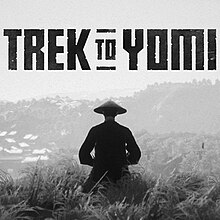 Fantasy Strike on Switch
 TowerFall on Switch
 Tintin: Destination Adventure on PlayStation
 One Piece Grand Adventure on PS2
 Taiko no Tatsujin: Dokodon! Mystery Adventure on Switch
 Onimusha: Dawn of Dreams on PS2
 Evil West on PS5
 Evil West on PS4
 Hard Reset Redux on PS4
 Juju on PS3










 Another SquareThought Site