

 Jul 2019


If you were ever charmed by the Trine series' fairytale vibes-think enchanted castles, physics puzzles, and a trio of heroes who have learned that teamwork sometimes means 'I hold this plank while you do the stabbing'-then Trine 3: The Artifacts of Power on Switch will feel like a weirdly cozy reunion. Developed and published by Frozenbyte, this entry was the series' first attempt to shove its mostly 2D charm into a 3D world without losing the side-scrolling soul that made Trine 1 and 2 delightful. You play as the familiar trio: Pontius, the sword-and-shield knight who never met a statue he wouldn't try to punch; Zoya, a nimble thief with a grappling hook and a bow (the kind of person you want on your roof during a zombie apocalypse); and Amadeus, the wizard who can summon and levitate objects because sometimes the solution to 'How do I get across this gap?' is 'nope, teleport in an IMAX of scaffolding.' The story is medieval melodrama with a side of magical bureaucracy: the Trine artifact is broken, an evil wizard named Sarek gets freed, and you're off to fix the mess-but Trine 3 leaves a few plot threads dangling like ornaments on a half-built holiday tree. It's charming, occasionally brilliant, and also kind of the gaming equivalent of ordering a delicious starter and being told the main course is coming soon... and then not arriving.
Trine 3 mostly plays like its predecessors: swap between Pontius, Zoya, and Amadeus on the fly, use their distinct abilities to solve environmental puzzles, and bash or be bashed by enemies. Pontius is your beefy, slightly awkward tank-he slices, parries, and acts as a human battering ram when you ask politely. Zoya does the graceful acrobatics, peppering enemies with arrows and zipping across chasms with her grappling hook. Amadeus is the real chaos enthusiast: summon a box, levitate it above a pressure plate, and then watch physics do the rest. The new wrinkle is that Trine 3 experiments with full 3D environments while keeping a 2D platforming focus, which sometimes feels like strapping a wingsuit onto a tricycle. It mostly works, but there are moments when that extra depth makes positioning fiddlier than it should be-especially on the Switch's portable controls. The game supports single-player and up to three-player co-op, which is where Trine shines brightest. Puzzle-platformers that let friends argue about which side of a movable crate counts as 'obvious' are objectively better for relationships (or at least for comedic chaos). The level editor and challenge levels add some replayability, and Frozenbyte even released a free new level post-launch for desktop versions-small mercies for completionists. On the downside, the most notorious criticism of Trine 3 is that it's short. Players expected a sprawling sequel on par with Trine 2, but Frozenbyte delivered something more compact. Reviews and player feedback made it clear: people wanted more. The studio explained the grim math-expanding the game significantly would have ballooned the budget from $5.4 million to something like $15 million, a jump they couldn't stomach. That budget itself was already triple Trine 2's, and the move to 3D brought headaches in redesigning character abilities to fit the new space. It's an honest, frustrating production tale: ambition, limited funds, and the awkward reality that sometimes creativity gets put to bed early so the lights don't go out. The gameplay moments you do get are generally delightful-clever physics puzzles, neat interactions between characters' skills, and a few genuinely lovely set pieces-but there's a lingering sense of 'there could have been more' that never quite leaves.
Graphically, Trine 3 is absolutely trying to seduce you. Frozenbyte dialed up the painterly fantasy aesthetics, and many scenes look like someone dropped a storybook into an HDR filter, then polished it until the trees gleamed. The move to 3D lets camera angles and environmental detail breathe a bit more than before; foreground and background layers have depth, light and shadow play nicely, and character animations are expressive-Pontius stomps with the conviction of a man who thinks every boulder is personal, Zoya flips with the nonchalance of someone who has a lot of trust in her grappling hook, and Amadeus gestures like a stage magician on espresso. That said, the shift to 3D also introduced some awkwardness. The game's heart is still 2D puzzle-platforming, and occasionally the extra dimension leads to camera niggles or moments where your trajectory feels off by a pixel and a prayer. On the Switch, performance is respectable for a port, but you can notice the difference between docked and handheld modes-textures simplify, and the frame-rate can wobble during fire-and-physics-heavy scenes. It's far from broken, and the visual charm usually masks the technical compromises, but if you're buying Trine 3 expecting a flawless 3D spectacle, you'll want a slightly more forgiving lens.
Trine 3 on Switch is a tiny fantasy novella of a game: lovingly illustrated, frequently clever, and with characters you'll root for. It's the kind of game you'll play, smile through a few puzzles, and be delighted by the cooperative chaos of three friends arguing over who's supposed to levitate the box. It's also the kind of game that leaves you checking the map for missing chapters. If you want a charming, bite-sized co-op puzzle-platformer for the Switch that looks pretty and plays well in short bursts, Trine 3 delivers more than enough magic for its price-especially if you snag it on sale. If you're hungry for a full-course sequel with all the trimmings, Trine 3 might feel unsatisfying: critics and players flagged its brevity, and Frozenbyte admitted they bit off more scope than their budget allowed. The Metacritic consensus sits in the mid-60s (Switch: 64/100), which nicely sums up the experience: pleasant, competent, but not quite essential. In short: play it for the art, the puzzles, and the cooperative mayhem; don't play it expecting to be full afterward. Also, keep an eye on Trine 4 if you want the ending that Trine 3 hints at-spoiler: the egg was not lying. Overall score: 6.5/10-a magical snack rather than a banquet, but a tasty snack nonetheless.
 Trine 2 on PS3
 Trine: Enchanted Edition on Switch
 Tintin: Destination Adventure on PlayStation
 One Piece Grand Adventure on PS2
 Onimusha: Dawn of Dreams on PS2
 Taiko no Tatsujin: Dokodon! Mystery Adventure on Switch
 Trine on PS3
 Has-Been Heroes on PS4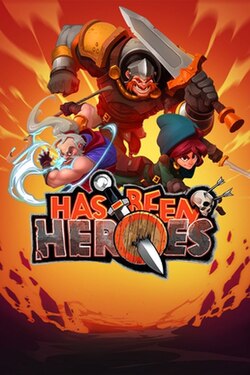










 Another SquareThought Site