

 Nov 2023
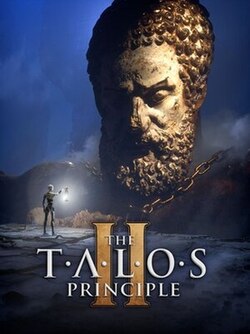

In the era before every box claimed to be a cinematic experience, we used to judge games by their ideas and the stubbornness of their puzzles. The Talos Principle 2 arrives like a slab of that old-school conviction, serious in tone, patient in design, and quietly smug about the fact that it expects you to be cleverer than the average modern first-person puzzler. Croteam and Devolver Digital have taken the contemplative tone of the original and placed it inside a much larger, smarter machine powered by Unreal Engine 5. The result is not a spectacle for spectacle's sake, but a patient, demanding, and at times moving sequel that asks you to think, to wander, and to make choices that matter to the story it tells about machine minds carrying the last torch of humanity.
If you played the first game, the basic rhythm of The Talos Principle 2 will feel familiar: first-person puzzles inside open-ish areas, a cast of devices that must be combined in imaginative ways, and the relentless satisfaction of solving an enclosed logic problem then pressing the button and walking away triumphant. The sequel keeps that rhythm and adds an embarrassment of engineering toys. Where the first Talos favored lasers, connectors, fans and cubes, the second game dresses its mechanics up with color theory, gravity tricks and creature-like drones, then asks you to choreograph them across twelve sprawling regions. Progression is straightforward on paper and fiendish in practice. Each of the twelve main areas contains eight story puzzles. Clearing those eight allows you to tackle a tetromino-style bridge puzzle that opens access to the central structure in that region. No map is handed to you; instead a utilitarian compass marks key locations, and exploration becomes part of the reward. The designers remain fond of giving you a modest kit and then demanding mastery. Sparks are scattered about if you want mercy; each spark lets you bypass a single puzzle, a thoughtful concession that stops the game from punishing curiosity with impassable walls. Returning mechanics like lasers, connectors and jammers are present, but the sequel introduces a long list of new toys. RGB converters allow red and green beams to become blue, inverters flip colors, and accumulators store a color and emit it on demand. Drillers can cut temporary holes in certain walls so a beam or object can pass. Swappers force you to think in trades by exchanging items. Anti-gravity beams bend physics for an object or yourself, letting platforms become vertical or inverted. Blank robots can be teleported into, leaving their original bodies as props or tools. Activators let a correctly colored beam energize anything in a radius, making puzzle design feel like building Rube Goldberg machines with very strict rules. Teleport pads and drones that ferry items along set routes add another layer of choreography. The game even includes walkable walls in certain levels so orientation becomes another tool to be manipulated. Design wise, the puzzles are pedagogical and then merciless. The opening of an area will quietly teach you a new tool in isolation and then immediately force you to combine it with everything else. This is where the roots of the original are strongest: you rarely get thrown contraptions without a scaffold for your understanding. Yet when Lost puzzles and Golden Gate challenges appear, the game unapologetically expects lateral thinking. Lost puzzles are tougher versions of the main fare; collect them all and you unlock the Golden Gates, which house even harder tests that nudge the ending. There are also collectible stars tied to three statue types, each with bespoke challenges that riff on the area mechanics. Collecting every star lifts the veil on an extra cutscene, and for completionists the temptation to eke out every secret is difficult to resist. Combat is effectively absent, which keeps the tone meditative rather than twitchy. You can die mostly by falling into deep water or from lethal heights; the turrets of the first game are gone and roving drones only appear in optional stealth sequences. This is a puzzle game that trusts your brain more than your trigger finger. The puzzle variety, the expansion of rules, and the careful pacing combine to make the game feel enormous without ever bloating for its own sake. Narratively, the game uses its puzzles as both gameplay and metaphor. You awaken as the thousandth android, designated 1k, and are escorted into New Jerusalem, a robotic civilization built from the ashes of humanity. The plot gradually reveals itself via recordings, holograms and charismatic philosophical interlocutors: projections of Prometheus, Pandora and the Sphinx that act as Athena's hopes, fears and self-doubts. The central megastructure, the singularity, and the mystery of Athena and Miranda provide genuine stakes by midgame. Your choices, particularly philosophical ones, can alter leadership in New Jerusalem and the final solution you take when faced with Athena at the machine's core. These branches are meaningful enough to reward replay, and they are handled with surprising emotional intelligence for a game that could easily have been all puzzles and no heart. Croteam also supports the game with expansion content. Road to Elysium, released in June 2024, adds three narrative chapters that explore memory reconstruction, personal growth, and an android trapped in Athena's subconscious. The DLC demonstrates that the game's puzzle systems are resilient and fertile enough to support new storytelling without retreading old ground. There are minor annoyances. The lack of an in-depth area map means a little more backtracking and head-scratching than some players prefer. On Xbox Series X/S, performance and load characteristics did not always match the silky presentation of next-gen exclusives, and occasionally a puzzle's solution hinges on an unintuitive physics interaction that can feel more like luck than deduction. Still, those are quibbles in an otherwise rigorous experience.
Visuals were never the primary selling point of the first Talos; its architecture and light were always functional, beautiful, and a little lonely. In the sequel Croteam shifted to Unreal Engine 5 and it shows. The environments are larger and more detailed, and the technologies under the hood such as Nanite and Lumen pay dividends in fidelity. Surfaces catch light in believable ways, vegetation and distant constructions give you sense of place, and the central megastructure has that retrofuturist heft the series does so well. On Xbox Series X/S the game wears its engine proudly. Expect crisp geometry on the better hardware, well-implemented virtual texturing, and convincing local lighting that elevates the mood of exploration. The art direction continues to balance ruins-of-civilization melancholy with the clean, purposeful design of a society that treats engineering as religion. Animations and object interactions are solid; when a fan lofts a connector or a drone ferries a cube along a track, the mechanical choreography feels tactile. There are moments when the engine's ambition bumps against the practicalities of a multiplatform release: shadow detail and some of the most advanced features present on higher-end PCs are dialed back, and loading times between puzzle enclaves can be noticeable. Nevertheless, for a game that is fundamentally about thought and atmosphere, the graphical presentation on Xbox Series X/S is more than enough to immerse you in its clinical, haunted world.
The Talos Principle 2 is the kind of sequel that remembers what made the original wise and then refuses to repeat its own answers. It expands the puzzle vocabulary generously, asks questions about personhood with an unusually sincere narrative voice, and dresses the whole package in a quietly confident modern engine. This is not a relaxing walk in a gallery; it is a demanding, brainy adventure that rewards patience, curiosity, and the occasional stubborn revisit of a single puzzle for an hour until the elegant trick reveals itself. If you want a game that treats you like an intelligent player rather than a consumer of spectacle, it will repay your time. Those who crave instant gratification or twitch-driven thrills will find little to latch on to. For players who remember the long-form magazine reviews of the 1990s and the pleasure of being challenged rather than coddled, The Talos Principle 2 is an excellent modern heir. On Xbox Series X/S it delivers most of that experience with only minor technical compromises, and with a DLC that adds meaningful side stories, Croteam proves the world they built was worth returning to. Play it if you like puzzles that make you think, and endings that make you feel something afterward.
 The Talos Principle on Switch
 Prey on PS4
 Tintin: Destination Adventure on PlayStation
 One Piece Grand Adventure on PS2
 Professor Layton and the Last Specter on DS
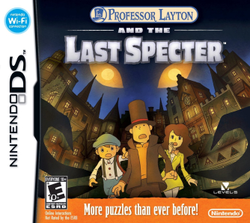 Puzzle by Nikoli 4: on PS4
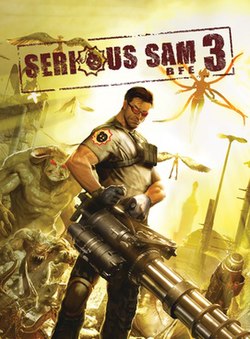 Serious Sam 4 on PS5
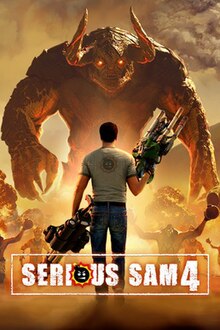 Serious Sam 4 on Xbox Series X/S










 Another SquareThought Site