



If you grew up thinking teenage heroes should be equal parts sass, spy gadgets and wardrobe confidence, Disney's Kim Possible: What's the Switch? arrives like a nostalgia-powered grappling hook. This was the franchise's first proper leap off tiny handheld screens and onto a home console - a PS2 debut that promised bigger levels, voice acting and the kind of plotline that sounds like it was written during a particularly caffeinated cartoon writers' meeting. The game throws Kim Possible and her arch-nemesis-turned-odd-couple Shego into a globe-trotting chase after the Mystical Monkey Idol. Someone swaps bodies, someone steals the idol, and somewhere between the chases the player gets to control Kim, Shego, and occasionally a very expressive naked mole rat named Rufus. It's an adventure that knows its audience: younger players who want to feel heroic, and slightly older players who enjoy the guilty pleasure of watching a cartoon villain begrudgingly team up with their favorite hero. Developed by Artificial Mind and Movement and published by Disney Interactive Studios, What's the Switch? leans into the show's tone: colorful, frantic and plot-heavy (in a good cartoon way). The game got generally favorable reviews at launch - Metacritic aggregated it to the mid-70s - and even snagged a nomination for Children's Game of the Year at the D.I.C.E. Awards. If the idea of a PS2-era, voice-acted Kim Possible romp sounds like a good time, this one delivers more than just a few memorable moments.
Think action platformer with cartoonish swagger. Gameplay revolves around switching control between Kim and Shego as the story hurtles you from one set-piece to the next. Levels are structured around the chase: you and your rival are both after the Mystical Monkey Idol, and control is relayed between the two characters as they pursue Professor Dementor and Monkey Fist around the world. That relay mechanic becomes the game's beating heart - it keeps the pacing brisk and gives you a sense of playing both sides of a tape-recorded fight scene, which is oddly satisfying. Both Kim and Shego are playable, and the game uses that rivalry-to-teamup thread to design levels and encounters where the characters' different strengths (and attitudes) matter. You'll spend time jumping, climbing, tackling minor environmental puzzles and duking it out with henchmen. Ruthless slapstick is the order of the day: enemies show up, you dispatch them, then you move to the next objective. Rufus, the naked mole rat, even makes cameo gameplay appearances when you're playing as Kim, which is a delightful touch that fans of the show will appreciate; yes, you get to be the mole rat sometimes, and it's oddly fun. The plot is playfully chaotic: Ron and Drakken swap minds (because of course they do), Professor Dementor swoops in and nabs the idol, and suddenly Kim and Shego are both chasing after different shades of disaster while occasionally being forced to cooperate. Voice acting from the show's cast strengthens the presentation, making cutscenes feel like extended episodes rather than awkwardly dubbed game scenes. That helps keep momentum and injects personality into otherwise standard platforming chores. On difficulty, the game leans toward accessibility - it was designed for a younger audience and families - but it's not insultingly easy. Expect some light platforming challenges and boss fights that require pattern recognition rather than twitch-perfect execution. If you grew up on the GBA Kim Possible titles, this PS2 entry feels like a beefed-up cousin: larger environments, more set pieces and a little more cinematic flair. The game's structure is straightforward enough to finish in a weekend or two if you're determined, but casual players will enjoy dipping in for the cartoon fun without feeling punished for taking their time.
This being a PS2-era title that marked the series' first home console outing, the visuals emphasize a bigger, bolder presentation compared to the handheld predecessors. The game doesn't pretend to be something it isn't; it favors bright, cartoony visuals and straightforward 3D environments over gritty realism. The presentation leans into clean character models and colorful locales that echo the animated series' aesthetic, and the voice acting helps sell the on-screen performances. Because the source document focuses more on release and features than frame rates and polygon counts, it's fair to say the graphics serve their purpose: they make the jump from GBA sprites to living, breathing (if still slightly PS2-ish) characters. If you're expecting cutting-edge visuals, this won't blow your socks off - but if you're more interested in faithful cartoon vibes, the game delivers. Animation and character expressions are enhanced by the official voice cast, which adds personality that a few extra polygons can't buy. In short: it looks like a Kim Possible cartoon that learned to walk in 3D, stumble a little, and then strike a heroic pose.
Disney's Kim Possible: What's the Switch? is not a revolutionary title, nor does it try to be. What it does attempt - and largely succeeds at - is delivering a charming, accessible action-platformer that feels like an extended episode of the show with player agency. It earned generally favorable reviews (Metacritic and GameRankings sit in the mid-70s) and a D.I.C.E. nomination for Children's Game of the Year, which is a solid pat on the back for a licensed game in a crowded market. The developer, Artificial Mind and Movement, took the franchise from handhelds to a living-room scale without losing the characters' personality, and the voice acting helps make the storytelling entertaining. If you're a Kim Possible fan, this is a must-play for the nostalgia and the novelty of controlling both Kim and Shego through a plot that refuses to behave itself. If you're a casual player who enjoys light action-platformers with a sense of humor, What's the Switch? is a neat little detour on the PS2 - not a classic, but a reliably fun afternoon. For everyone else, it's a solid curio: a well-made licensed game that remembers it's supposed to be fun first and a curriculum in game design second. Consider it recommended for fans and curious retro players who don't mind a little cartoon chaos with their platforming.
 MLB The Show 22 on Switch
 Mortal Kombat 11 on Switch
 Terraria on Switch
 Tintin: Destination Adventure on PlayStation
 Disney's Chicken Little: Ace in Action on PS2
 Onimusha: Dawn of Dreams on PS2
 Action Man: Operation Extreme on PlayStation
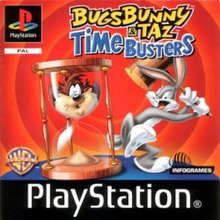 Disney's Kim Possible: Global Gemini on DS
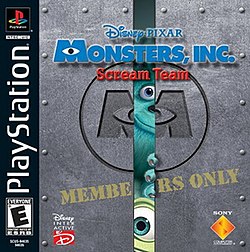
 Monsters, Inc. Scream Team on PlayStation
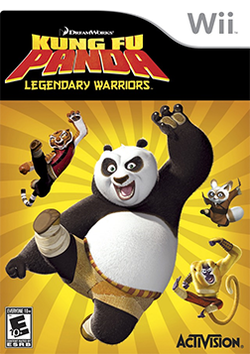
 Kung Fu Panda: Legendary Warriors on DS
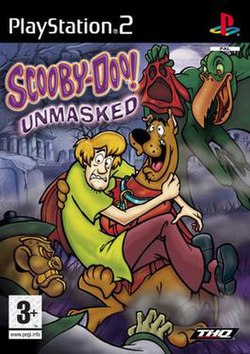
 Scooby-Doo! Unmasked on DS
 Disney's Kim Possible: Kimmunicator on DS












 Another SquareThought Site