

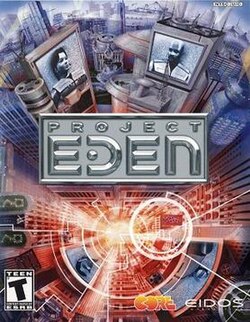

Project Eden is the kind of game that politely asks you to put your run-and-gun tendencies in a locker, hand over the key, and then solves half the mystery by making you swap to someone else and pull a lever. Released for PlayStation 2 in late 2001 by Core Design (yes, the Tomb Raider folks), Eden drops four Urban Protection Agency agents - Carter, Andre, Minoko and Amber - into the bowels of a futuristic mega-city to investigate disappearing people, gene-spliced monsters, and existential family drama. If you were expecting simple blasting, prepare to be pleasantly annoyed: Project Eden is puzzle-first, combat-awkward-but-serviceable second, and narrative-curious third. It's a weird, occasionally brilliant stew of ideas that didn't quite boil over into mainstream fame, but leaves enough flavour to be worth a taste today.
The heart of Project Eden is its squad-based puzzle design. You control a team of four specialists, each with unique abilities, and you either switch between them on the fly in single-player or hand each to up to three friends for local multiplayer. It's a clever trick: instead of loading you up with an inventory the size of a hoarder's garage, the game asks you to use the right person for the right job. Minoko's personal backstory - involving a sister named Lucy and a family tangled in genetic misadventures - threads into several encounters, which gives the gameplay a narrative nudge when you're not busy trying to figure out how to cross an electrified floor without everyone becoming toast. Puzzles range from environmental brain-teasers to cooperative choreography that feels like teaching a tiny robot ballet to not fall off cliffs. The designers clearly spent time making sequences that reward clever thinking and teamwork; many of the best moments are "aha" scenes where you realize the four characters are essentially a puzzle toolbox. The downside is that sometimes the toolbox closes on your fingers. Puzzles can be linear to the point of railroading, and a few throw curves that are less "logical deduction" and more "trial and error with mild bruising to your patience." When the game is at its best you'll feel like a mastermind orchestrating a rescue. When it's at its worst you'll blame the controller, then yourself, then the universe. Combat is functional but feels like an afterthought next to the puzzles. Enemies mutate from innocent city animals and gang members into grotesque creatures, which makes for atmospheric encounters, but the combat engine never quite hits the sweet spot. Enemy AI can be inconsistent - sometimes they provide satisfying challenge, sometimes they run straight into a wall like confused pigeons. The game gives you a Timeshock-like device (and later reveals time dilation mechanics in the story), which spices up encounters and puzzles alike, but the weapons-and-fighting portions are better viewed as a supporting act than the headliner. One neat practical effect of the design is emergent teamwork: in single-player you're constantly swapping characters to achieve small victories, and that slot-machine of personalities can feel like juggling four slightly different handheld tools. In multiplayer, the experience is messier but a lot of fun when you have friends who enjoy cooperating rather than hogging the health packs. The multiplayer is limited by the same combat shortcomings and some shallow reuse of puzzle mechanics, but it's a nice novelty - think of it as local co-op brain-teasing with occasional monster punching. Story-wise Project Eden gradually pulls you deeper (literally) into the city's strata: from St. Lucia's Church to a former zoo full of cannibals, down to Ground Zero and the Eden Bunker beneath it. The plot about gene splicing, a father named Dr. Molenski trying to save a daughter with dubious ethics, and Lucy - who alternates between being haunting and macabrely tragic - gives the journey a satisfying emotional spine. It's not Shakespeare, but it's a surprisingly thoughtful sci-fi yarn for a game obsessed with locks, levers and mutated canines.
For a 2001 PS2 title Project Eden looks solidly competent. The environments convey the sense of a layered mega-city you're descending through: grime-stained cathedrals, cramped tech corridors, and surreal bunkers with a mad-scientist sheen. Character models and monsters don't always win beauty contests, but their designs are memorable enough to stick in the brain - particularly the uncanny little girls called Lucy who flip from creepy to downright dangerous. Lighting and level art do a lot of the heavy atmospheric lifting; many areas have a lived-in, slightly grimy look that supports the mood. Technical rough edges exist, as you'd expect. Animation can be stiff in places and enemy pathfinding sometimes behaves as if it had an off-day. The combat camera occasionally has the gall to be unhelpful, nudging you to reposition just when you thought you'd nailed a shot. Still, the game's art direction is interesting, the mutant designs are imaginative, and the variety in settings keeps the eyes busy even when the PS2's polygons show their age. In short, it's not a show-off title for the console, but it's got charm and atmosphere in spades - a compelling aesthetic if you're into dystopian dungeons and gene-splicing gone sideways.
Project Eden is a charmingly odd relic of early-2000s game design: part cooperative puzzle-platformer, part sci-fi mystery, and part squad-management headache. Critics at the time gave it middling-to-good scores (Metacritic sits around the low 70s for PS2), which feels fair - the game excels in creativity, level design and story beats, but fumbles where combat systems and AI consistency are concerned. If you're the kind of player who loves using your brain to unlock progress rather than your trigger finger, Eden is a rewarding trip down into a beautifully nasty little world. Bring patience, a pen to sketch flowcharts for the trickier puzzles, and perhaps a friend to laugh with when an enemy AI decides the wall is more interesting than you. Recommendations: pick this up if you like squad puzzles, atmospheric storytelling, and retro PS2 vibes. Skip it if you want tight third-person shooting or infinite replayability. Either way, Project Eden will leave you with at least one memorable twist and the sense that Core Design tried to build something different. That alone is worth a 7.5 in my book - and if games were graded on ambition and weird little delights, Eden might just be a solid A-minus.
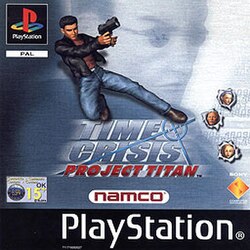
 Time Crisis: Project Titan on PlayStation
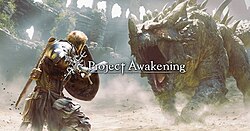
 Project Awakening on PS4
 Project Cars on PS4
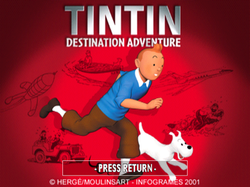
 Tintin: Destination Adventure on PlayStation
 Disney's Chicken Little: Ace in Action on PS2
 One Piece Grand Adventure on PS2
 Taiko no Tatsujin: Dokodon! Mystery Adventure on Switch
 Tomb Raider II on PlayStation
 Firestorm: ThunderHawk 2 on PlayStation
 Virtual Golf on PlayStation
 Machine Head on PlayStation
 Fighting Force on PlayStation












 Another SquareThought Site