

 Aug 2023
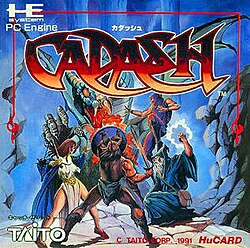

There are moments in gaming history when two genres collide like gladiators in a coliseum and, for better or worse, spark something that lingers. Cadash is one of those collisions: part side-scrolling platformer, part action-RPG, delivered with the kind of coin-op urgency that once made grown men glide quarters from pockets like magicians. First appearing in arcades in 1990, Taito's Cadash attempted to graft leveling, gold-hungry shops and spellcasting atop jump-and-slash arcade DNA. The result is neither flawless nor forgettable - it is, in the old parlance, a curious hybrid that still has teeth. The Arcade Archives re-release on PS4 gives the original cabinet behavior another life, timer ticks and all, preserving the game in an emulation wrapper for anyone who misses the smell of detergent and freedom fries in a crowded arcade. This review approaches Cadash as a 1990s magazine critic might: measured, a little stern, and secretive about where the best secrets are hiding.
Cadash opens with a familiar varnish of sword-and-sorcery: a kidnapped princess, an ancient subterranean evil called the Balrog, and the inevitable promise of a kingdom for whoever rescues royalty. That setup matters only as far as it gives you someplace to stab things; the meat of Cadash is its hybrid systems. The arcade original is a platform-RPG in the first pomp of the trend, offering up to four simultaneous players on cabinet hardware and a single-player or two-player experience on its console ports. You pick one of four archetypes - Fighter, Mage, Priestess, Ninja - and proceed through five stages that range from pastoral meadows to underwater caverns and, finally, Castle Cadash itself. What makes Cadash distinctive is how it layers RPG staples onto an arcade template. Enemies drop gold, you visit villages and inns, buy equipment and herbs, and earn experience to level up. Combat is reflex-driven but influenced by stats: the Fighter is a muscle-bound close-range workhorse with shields to block projectiles; the Mage is glass cannon who becomes the ultimate boss-killer if you baby his mana; the Priestess is the defensive linchpin with healing and protection spells that make her friendly to newcomers; the Ninja is the sniper of the set, with projectiles that make quick work of surface-level trash. Balance quirks are a feature here - not a bug. Each class feels distinct and encourages replay. Arcade Cadash added urgency with a visible time limit, a charmingly brutal mechanic that forced players into the inescapable calculus of exploration versus the clock. You could buy hourglasses at shops to stretch playtime, or rely on the Priestess's spell to add seconds; under the quarter-eating ethos of the era, those seconds were sacred. The Arcade Archives PS4 port preserves this; the timer is not an artifact to be hidden but a central piece of the original experience. For players used to modern save-anywhere comforts, that will read as mean-spirited. For veterans, it reads like discipline. The game's level design favors breadth over depth. Stages are split into above- and below-ground sections, with the third stage even branching into three worlds. Bosses occupy set pieces that reward pattern recognition and smart use of class abilities. Shops and inns pepper the route and can dramatically change outcomes: buying better weapons, armor or medicinal herbs can turn a bruiser into an unstoppable force, and learning when to spend gold is part of the meta-game. There are version-based differences worth noting: TurboGrafx-16 and Genesis ports removed the arcade's time limit, and the Genesis release cut two playable classes, leaving only the Fighter and Mage. The PC-Engine/TurboGrafx translation, handled by Working Designs, rebalanced stats and restructured levels into interconnected rooms - a concession to hardware and playstyle that also changed pacing. Multiplayer in the arcade was a particular bit of spectacle: up to four players (or linked cabinets) could cooperate, though some constraints - like enforced horizontal progression so players couldn't split-screen the map - kept the balance tight. The Arcade Archives rendition keeps local single-player and the authentic feel of cabinet mechanics; online co-op is not part of the package, so your communal heroics will need to happen in the same room or in your nostalgic imagination. In short, Cadash is a beast of its era: immediately accessible, occasionally punishing, and happiest when you treat it like an arcade game that happens to let you level up.
Cadash's visuals wear their vintage proudly. The arcade original favors darker palettes, moody backdrops and chunky sprites that pop cleanly against dungeon floors. Character animations are economical but effective - a few frames capture enough swagger in a Fighter's swing or enough menace in a boss's charge. The TurboGrafx-16/PC-Engine port, translated by Working Designs, adds a splashier, more colorful coat that converts the game's atmosphere into something almost cheerful; this version divides levels into rooms and spruces up sprite work to reflect the platform's strengths. The Genesis port keeps the general look but leans into darker tones and, in true early-'90s console fashion, simplifies or removes certain set pieces (giant kelp boss, we barely knew ye). The Arcade Archives PS4 release is an emulation of the arcade ROM, so you'll see the original palette and spritework rather than the brightened home-port variants. On modern displays, the result is simultaneously charming and exposed: sprites hold up because they were designed to be read clearly in noisy arcade conditions, but some background tiles and effects show their age at 4K. If you have nostalgia for CRT bloom and scanlines, the Archives interface often offers visual filters to approximate that experience. Audio-wise, the arcade soundtrack (credited to Pinch-Punch in the original) is functional and atmospheric rather than symphonic; it sets the mood without stealing attention from the swordplay. Expect melodies that loop like a tape deck on a long road trip - pleasant until you've heard them a dozen times.
Arcade Archives: Cadash is not a museum piece hidden behind velvet ropes; it's an honest re-release of a game that exemplifies a particular moment when Japanese arcades flirted with RPG mechanics. It carries the strengths of that era - clear character archetypes, shop-driven progression, and boss fights that reward study - while also carrying the era's weaknesses: balance quirks between classes, a sometimes punitive timer, and level design that favors linearity over modern exploration. The PS4 package is a faithful emulation of the arcade original, and if you want the experience as coin-op-governed in 1990, this is the way to play it. Score-wise, Cadash earns a solid 7/10: a game with real historical flavor and satisfying moments for fans of platform-RPG hybrids, but one that shows its age and occasionally asks for patience only a quarter-fed generation can supply. If you grew up in the '90s with a joystick in one hand and a strategy column in the other, Cadash will likely speak to you in the old tongue. If you're arriving cold from the modern indie renaissance, approach it as you would an antique sword: respect the craftsmanship and understand that it was once cutting-edge.
 Arcade Archives 2: Air Combat 22 on Xbox Series X/S
 Arcade Archives 2: Ridge Racer on PS5
 Combat Elite: WWII Paratroopers on PS2
 Onimusha: Dawn of Dreams on PS2
 Disney's Chicken Little: Ace in Action on PS2
 Tokyo Xanadu eX+ on PS4
 Densha de Go! Professional 2 on PS2
 Densha de Go! Final on PS2
 Street Fighter V: Arcade Edition on PS4
 Densha de Go! on PlayStation
 G-Darius on PlayStation










 Another SquareThought Site