

 Oct 2018

Starlink: Battle for Atlas is the sort of space-opera playground that hands you the keys to a modular spaceship and says, "Make it your problem." On PS4 the game slides between relaxed planet-side exploration and frenetic space combat with enough frequency to keep your thumbs working and your brain slightly bewildered. Ubisoft Toronto gave players the freedom to tinker-wings, weapons and pilots can be mixed and matched on the fly-and on PS4 that freedom translates into a steady stream of mechanical challenges rather than a single steep learning curve. If you like your challenge served with equal parts twitch aim, strategic loadout swaps and occasional inventory fiddling, Starlink will politely beg you to prove you're the galaxy's most adaptable handyman.
The gameplay loop is a mash-up of piloting, combat, and light-world-tweaking that requires a surprisingly broad set of skills. At its core, Starlink asks players to master three overlapping skill domains: piloting (space and atmosphere), loadout optimization (weapons/modules/pilot abilities), and tactical decision-making (enemy counters, environmental hazards, and alliance choices). Piloting is deceptively deep. Ships shift between free-flight space dogfights and planet-atmosphere skimming, and the transition is seamless-no loading screens, just a kinetic change in how you handle inertia and obstacles. Your ability to read momentum and correct for it matters more than raw button-mashing. Tight strafes around asteroids or skimming cliff faces demand spatial awareness and precise throttle control. In dogfights the game favors strafing and burst damage over tanking; staying mobile, lining up shots while dodging missile salvos, and timing evasive rolls are essential. If you're the sort of player who treats a joystick like a suggestion, your first missions will remind you why finesse and situational awareness exist. Combat requires both twitch skills and pattern recognition. Different enemy types respond to different weapons and tactics, so learning to identify threat archetypes is part of the challenge. Hitscan-like weapons are great for shredding lightweight fighters, while heavy-hitting but slow weapons punish clumsy aimers and reward predictive shooting. The game nudges you to experiment: wings, weapons and ship modules can be swapped mid-run, and pilots bring special powers (friends of the slow-mo option rejoice) that change engagement windows. Real challenge comes from combining these elements under pressure-switching to an EMP module to disable shields, cueing a pilot ability to freeze time for a few precious seconds, then unloading a charged weapon requires both quick hands and pre-planned thinking. Loadout optimization is where the game becomes almost an equipment puzzle. You'll be asked to pick tools for an array of hazards-radioactive storms, carnivorous flora, armored Warden tech-and each planet's flora, fauna and hazards shift how effective your choices are. That pushes players toward experimentation and adaptation: a kit that crushes enemies on one planet can be laughably ineffective one hyperjump later. The toys-to-life aspect is optional on PS4-which is a relief for the indecisive-because anything you buy physically also unlocks the digital part, but you can juggle parts in the in-game menus without spending cash. Successful players will balance risk and utility, and won't be afraid to swap a wing or two when a mission's conditions roll a proverbial 7. Tactical decision-making isn't just about guns. The game's faction and alliance systems shift the world state, creating feedback loops that alter mission structure and enemy dispositions. Forming alliances can make your life easier in a region, but it also changes what you'll face next. That meta layer rewards strategic thinking and long-term planning, and it's easy to feel the consequences of a hasty diplomatic move. Co-op split-screen on PS4 introduces a social skillset: communication. Two-player exploration is fun, but effective teamwork means coordinating loadouts, sharing pilot abilities at the right moments, and not stealing the other player's hard-earned salvage like some kind of space raccoon. The game's difficulty balances for both single and split-screen, but success with a partner leans more on communication and role division than raw individual skill. Where the challenge stumbles is repetition. Critics pointed to repetitive mission design, and that becomes a skill-check of patience. The game keeps tossing similar fetch-and-clear tasks with small mechanical twists; your challenge evolves into extracting maximum variety out of limited mission types. That's not a failing skill to have, but it changes the nature of the challenge from "Can I beat this fight?" to "Will I still care enough to beat this fight for the tenth time?" The most engaged players will tackle that by setting personal goals-no swap runs, speed clears, or pure weapon-only challenges-to keep their skills sharp. Overall, Starlink rewards a blended skillset: twitchy piloting, adaptive loadout strategy, environmental awareness and cooperative coordination. If you enjoy learning enemy behaviors and punishing mistakes with better kit choices, you'll find a steady, engaging challenge. If repetition or a desire for an escalating difficulty ladder are dealbreakers, the game can feel like a sandbox that never quite graduates you into more rigorous trials.
On PS4 the Snowdrop engine delivers colorful planets and satisfying ship models. Visual cues are clear, which is important when the game asks you to make split-second decisions in chaotic encounters. Planetary biomes pop with character and the Warden ruins have enough visual weight to sell the sense of discovery. Frame stability is mostly solid; the game prefers readable spectacle over photorealism, which is exactly what you need when your survival depends on spotting an incoming missile or a subtle environmental hazard. The HUD is functional and communicates loadout states and pilot abilities well, helping you make high-pressure choices without sifting through menus mid-dogfight.
Starlink on PS4 is a competent, occasionally brilliant test of a variety of gameplay muscles. It won't grind your teeth with unfair death loops, nor will it force you into punishing difficulty spikes; instead it asks you to be adaptable, inventive with loadouts, and consistently competent with your flying. The optional toys-to-life bits are a cute throwback that don't gate core challenge, and split-screen co-op adds a cooperative tactical layer if you've got a friend to yell at. Repetition gnaws at the edges, but the combat, piloting and customization systems keep the core loop entertaining. If you appreciate a game that asks more of your brain and your thumbs than about your patience with repetitive side quests, this is a solid pick. Score: 7/10-fun, well-made, and a neat toolkit for players who like to earn their victories through skill and smart gear choices.
 Bakugan Battle Brawlers: Battle Trainer on DS
 Orphen: Scion of Sorcery on PS2
 Tintin: Destination Adventure on PlayStation
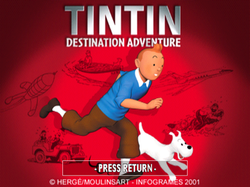 Disney's Chicken Little: Ace in Action on PS2
 One Piece Grand Adventure on PS2
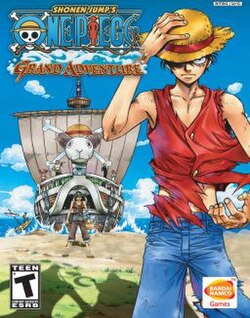 Taiko no Tatsujin: Dokodon! Mystery Adventure on Switch
 Far Cry 5 on PS4
 Far Cry 6 on Xbox Series X/S
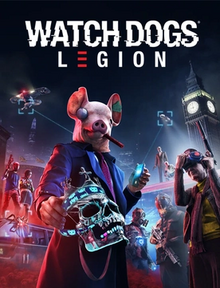
 Watch Dogs: Legion on PS5
 Far Cry 6 on PS4
 Far Cry 6 on PS5










 Another SquareThought Site