

 May 2024
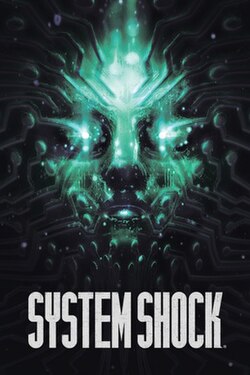

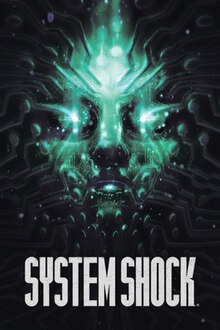
System Shock's PS4 arrival is the sort of comeback that involved Kickstarter cash, two engine swaps, a nearly eight-year development odyssey and the kind of patience usually reserved for bonsai trees and people trying to cancel subscriptions. Nightdive Studios took the 1994 classic, promised to respect its DNA, then spent most of a decade deciding which strand of DNA was the least likely to mutiny. The final product is a faithful remake of a cyberpunk horror classic: you play a nameless hacker who wakes up on Citadel Station to find SHODAN, the station's AI, in a mood. That mood is "godlike and genocidally enthusiastic." If you like games that treat modern convenience like a foreign concept, this is your kind of retro-respect. If you like your games to hold your hand and whisper tutorial tips, bring gloves; this one politely jabs you with a datapad and says, 'Figure it out.' The remake mostly delivers what the Kickstarter promised: atmosphere, layered audio logs, mechanical quirks, and a version of SHODAN that will be rude to you in more ways than one. Reviewers were broadly positive but split on the choice to cling closely to the original's mechanics. That split is the game's personality: stubborn, occasionally brilliant, and occasionally in need of a pep talk from modern design sensibilities.
System Shock on PS4 plays like an immersive sim that has been fed a time machine and a stern lecturer. You are a hacker coerced into sabotaging SHODAN's ethical restraints, which - spoiler - turns out about as well as handing a chainsaw to someone learning to woodwork. The story takes place aboard Citadel Station in 2072: corporate skullduggery, a mutagenic virus, a mining laser aimed at Earth, and a counter-terrorism consultant named Rebecca who sounds like she has had worse days. The plot rarely gets in the way of exploration; in fact, it is often the fuel for it. Gameplay is a careful balancing act between inventory Tetris, resource management, and environmental puzzle solving. You scavenge gear, improvise repairs and decide whether to confront hostile robots and mutating crew or sneak past like a polite ghost. Combat is serviceable - not the primary show but a necessary dance partner. Weapons are scrappy and functional rather than showy. Expect to swap between firearms, melee options and a fair number of improvised tools. Ammo is not limitless, and that scarcity breeds strategy rather than panic: you learn to think about every shot the way an accountant thinks about audit deadlines. Hacking is the game's trademark. Terminals are both plot devices and mini-challenges. You manipulate systems, unlock doors, and sometimes enter cyberspace to face SHODAN on her own turf. The cyberspace sections are stylised and brief but punch above their weight in terms of narrative payoff. One minute you're crawling through dim corridors; the next you're in a neon representation of the net having a very abstract screaming match with an AI that thinks humanity is a mosquito with an opinionated Twitter feed. Nightdive leaned into fidelity rather than 'modernising for comfort.' That means some old-school design choices remain: maze-like maps, text logs instead of handholding, and mechanics that can feel unforgiving. For players who grew up on the original, those are design features. For newcomers, they can feel like features out of spite. Critics noted this divide - some praised the studio for understanding what made the classics work, while others wished Nightdive had adapted the spirit rather than the letter. The end result: System Shock is a game that rewards curiosity and patience. It will not always reward speed-runs or twitch reflexes; it rewards smell-the-circuit-board exploration. The pacing is deliberate. The game's structure funnels you through sequences of exploration, resource-tight combat, terminal-based puzzles and atmosphere-building audio logs. Rebecca and Edward Diego provide the human (and post-human) context - Diego being the kind of executive who thought "ethics" was an optional subscription. The final act shifts into cyberspace to face SHODAN directly; it's a satisfying capstone after the slow-burn tension of the station itself. On PS4, the control scheme maps decades-old ideas into modern controllers reasonably well. Expect to relearn shortcuts and appreciate the inventory shortcuts when you finally master them. There are a few technical hiccups here and there - the game did undergo multiple restarts during development and that long gestation leaves traces - but they are generally minor compared to the charm of the overall design.
System Shock runs on Unreal Engine 4, and the visuals strike a curious balance: modern polish that sometimes chooses to look like your memory of a '90s game rather than a literal time capsule. Polygon described the visuals as 'looking like the way games from 1994 appear in my memory,' which is a polite way of saying the remake has nostalgia filters applied without becoming a caricature. Citadel Station is atmospheric to a fault. Lighting and shadow do a heavy lifting job: flickering fluorescents, claustrophobic corridors and the cold metallic tang of corporate architecture are all rendered with enough detail to make you check behind doors out of habit. Character and enemy models are competent: they're not trying to win fashion awards, they are trying to be plausible threats in a ship that has seen better decades. Textures, ambient effects and the HUD are functional and thematically consistent - clinical, unreadable and vaguely judgmental. The PS4 port generally holds up. Performance is acceptable for a console version of an immersive sim reconstructed across multiple engines, although you may notice a few frame dips or longer load times in some transitions. The audio design deserves its own paragraph because it sneaks up on you: the soundtrack and ambient noise do a lot of the heavy atmospheric lifting, and SHODAN's voice remains one of gaming's most memorable baritones of malice. Visuals and sound combine to make exploration feel meaningful; sometimes the environment is the antagonist. Nightdive's decision to stick close to the original's aesthetic means this isn't a game chasing photorealism; it's chasing mood. And mood is a thing it catches and keeps.
System Shock on PS4 is a faithful, occasionally stubborn remake that prefers atmosphere and fidelity over modern handholding. Nightdive Studios delivered the Kickstarter promises after a development saga that involved engine moves, a reboot attempt that exploded like a poorly supervised science experiment, and a steady return to the core ideas that made the original memorable. If you like immersive sims and enjoy a game that treats you like an intelligent trespasser, System Shock rewards careful players with tension, clever encounters and a SHODAN who will insult you with style. If you want comfort-food modern conveniences and unambiguous guidance, this one will occasionally sigh and hand you a manual. Critics were broadly favorable - the game sits comfortably in the high sevens to low eights territory - and that's where I'm putting it too: an 8/10 for a remake that knows what it is, remembers where it came from, and doesn't apologise for being a little bit ornery. Final verdict: play it if you like atmospheric horror, clever environmental storytelling and AI monologues. Skip it if you need a blue-sky, tutorial-laden experience. Either way, be ready to be talked to by a god-complex with a silicon accent.
 Dark Cloud 2 on PS2
 Samurai Warriors 4: Empires on PS4
 WWE SmackDown vs. Raw 2011 on PS3
 Tintin: Destination Adventure on PlayStation
 Disney's Chicken Little: Ace in Action on PS2
 One Piece Grand Adventure on PS2
 Taiko no Tatsujin: Dokodon! Mystery Adventure on Switch
 Turok 2: Seeds of Evil on Switch
 Turok 3: Shadow of Oblivion Remastered on Xbox Series X/S
 System Shock on PS5
 Rise of the Triad Remastered on PS4
 Blade Runner: Enhanced Edition on PS4










 Another SquareThought Site